First Aid Kit Buying Guides
Travel First Aid Kit Carry-On Checklist: Build and Pack It (2026)
By First Aid Kit Spot Editorial Team • Published 2026-08-18
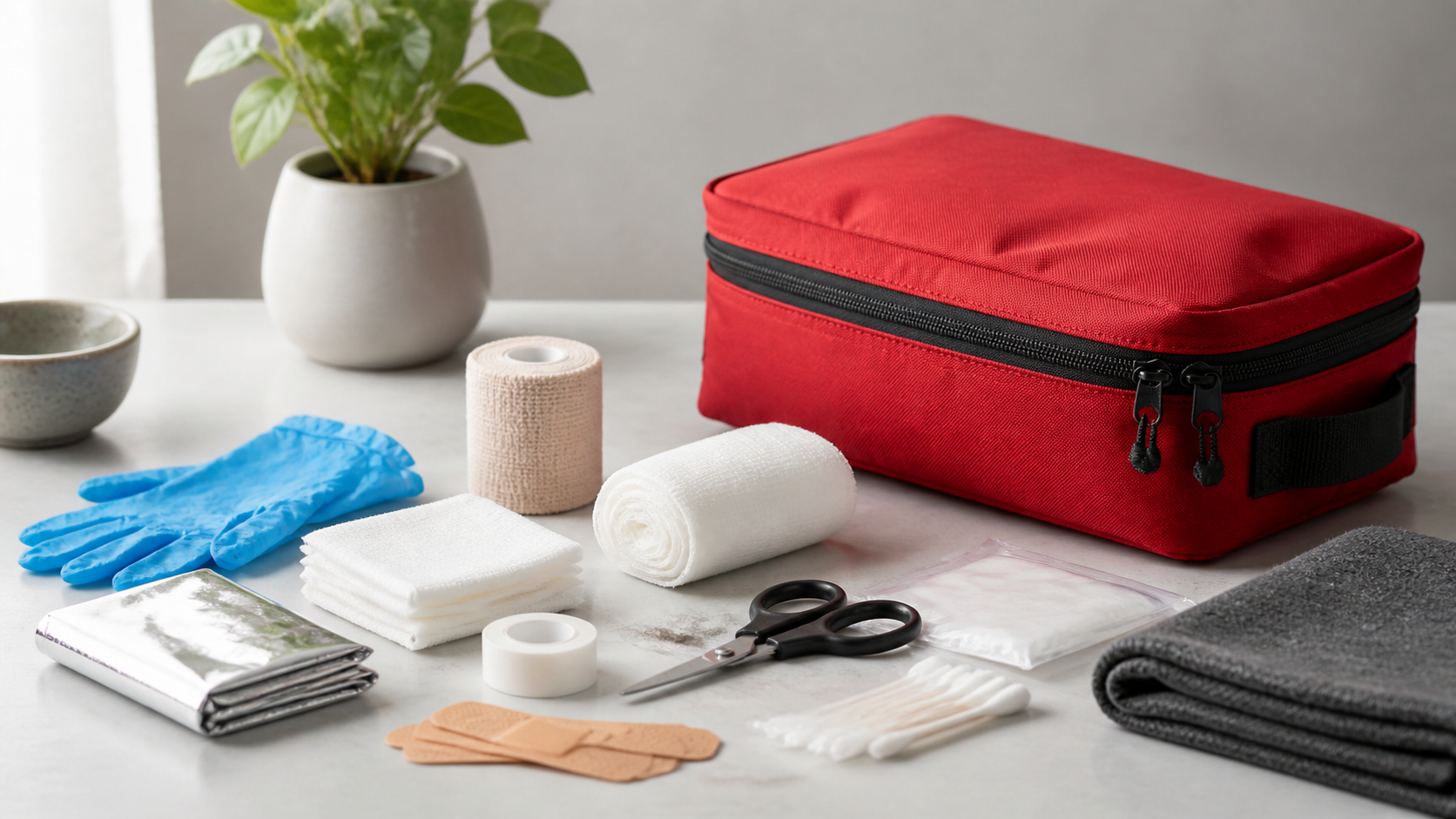
Quick answer: start with a compact core of dressings, tape, nonlatex gloves, wipes, tweezers, a barrier device, emergency instructions and personal medical information. Add destination- and traveler-specific items only after checking expiration dates, storage temperatures, TSA or local security rules, airline policies and destination laws. Keep essential medication in original, clearly labeled packaging where practical, and never assume a prepacked kit is complete for your trip.
Affiliate disclosure: First Aid Kit Spot may earn a commission from qualifying purchases made through clearly marked Amazon links. We have not hands-on tested the products returned by the retailer search in this article. This checklist compares contents, labeling and container features rather than ranking named kits.
A kit does not replace first aid training, professional care or emergency services. Call the local emergency number for serious illness or injury. Do not use an unfamiliar item merely because it is in the pouch. Obtain medical advice for prescription medicines, severe allergies, pregnancy, chronic conditions, infants, remote travel and destinations with special health risks.
Table of Contents
- Define the trip before the kit
- Carry-on core checklist
- Personal medications and documents
- TSA, FAA and airline checks
- Scissors, sharps, liquids and aerosols
- Container and organization
- Customize by trip type
- How to evaluate prepacked kits
- Packing and inspection protocol
- Buying checklist
- Frequently asked questions
- Sources and editorial method
Define the trip before the kit
A “travel kit” for a weekend in a major city is different from one for a remote hike, cruise, road trip or international journey. Write a short risk profile before buying supplies.
Travelers
Record:
- Number of adults and children.
- Known allergies.
- Prescription medicines and administration devices.
- Chronic medical conditions.
- Mobility, vision, hearing or communication needs.
- Pregnancy or postpartum needs.
- Clinician-provided emergency plans.
- Emergency contacts and insurance information.
Do not place sensitive medical details on an exterior label. Store them securely but accessibly to the traveler or designated companion.
Destination
Consider:
- Urban versus remote access to care.
- Language and local emergency number.
- Climate and storage temperature.
- Altitude, terrain, insects, sun and water exposure.
- Local medication and import laws.
- Pharmacy access and opening hours.
- Travel advisories and recommended vaccines.
Use official destination health and customs sources. A retailer’s “international travel” label does not establish legal entry.
Activities
Match the kit to actual activities: sightseeing, driving, boating, hiking, sport, camping or business travel. The American Red Cross’s hiking kit guidance emphasizes tailoring supplies to group size, trip length, terrain, remoteness and personal medical needs.
Duration and resupply
Longer travel increases quantities, but duplicate every item only when justified. Identify where supplies and medicines can be replaced. Keep critical personal medication independent from a general minor-injury kit.
Carry-on core checklist
The American Red Cross home-and-family first aid list is a useful starting point, but a carry-on kit must be smaller and security-compliant. Adjust quantities to the group and trip.
Wound-covering supplies
- Assorted adhesive bandages in sealed wrappers.
- Sterile gauze pads in at least two practical sizes.
- One compact roller bandage.
- Medical adhesive tape.
- A non-adherent dressing if indicated for your plan.
Inspect wrappers. An intact package and readable expiration or lot information matter more than a high “piece count.” Fifty identical tiny bandages do not create broad capability.
Barrier and hygiene items
- At least two pairs of nonlatex disposable gloves in appropriate sizes.
- Antiseptic wipes in sealed packets.
- Hand-cleaning product compliant with travel rules.
- CPR breathing barrier with one-way valve if trained to use it.
- Small waste bags.
Store gloves away from heat and sharp objects. Replace degraded, sticky or torn gloves.
Simple tools
- Tweezers.
- Safety pins if permitted.
- Small light source.
- Pencil and waterproof or durable note card.
- Thermometer if appropriate and permitted.
Scissors and sharp tools require separate security checks. Do not pack them automatically.
Support and comfort
- Triangular bandage or compact cloth.
- Elastic wrap if you know how to use it and the traveler has no contraindication.
- Emergency blanket where climate and trip type justify it.
- Instant cold pack only after checking airline and security rules.
Do not apply tight wraps or splints without appropriate knowledge. Numbness, color change, severe swelling, deformity or major trauma requires medical assessment.
Information
- Concise first aid instructions from a recognized training organization.
- Local emergency numbers.
- Emergency contact.
- Allergy and medication information stored securely.
- Travel insurance contact and policy access.
- Accommodation address.
A phone may fail, run out of battery or have no service. A small paper backup is useful.
Personal medications and documents
Personal medication is not simply another first aid-kit component. It needs a separate plan made with the traveler’s clinician or pharmacist when appropriate.
Keep essential medicine accessible
Do not place all essential medication in checked baggage. Delays and loss occur. Follow carrier and security rules, and consider splitting permitted backup supplies between responsible adults when clinically and legally appropriate.
Preserve identification
Keep original pharmacy labels where practical. Carry a copy of prescriptions or clinician letter when needed, especially for controlled medicines, injections, refrigerated medicine or devices. Names on medication and travel documents should be consistent.
Check destination law
A medicine legal at home may be restricted elsewhere. Confirm with the destination’s embassy, consulate, health ministry or customs authority. Do this before travel, not at the airport.
Temperature and light
Follow the medicine’s storage instructions. Do not assume an ice pack is necessary or safe for every medicine. Use a validated medical travel container when temperature control is required and confirm what the airline permits.
Emergency plans
Travelers with severe allergy, diabetes, seizures or other conditions may need clinician-directed emergency medication and a written plan. Companions should know where the plan is and what they are trained and authorized to do.
TSA, FAA and airline checks
Rules can change and screening decisions are context-specific. Check official sources shortly before every trip.
TSA screening in the United States
The TSA’s travel guidance says medications in pill, liquid or other solid form are allowed but subject to screening. Medically necessary liquids, medications and creams may be brought in quantities exceeding the normal 3.4-ounce or 100-millilitre carry-on limit, with separate screening. Travelers should review current TSA instructions and declare or present items as directed.
The TSA “What Can I Bring?” tool should be checked for each tool or supply. Even generally permitted items may receive additional screening or be refused if they appear altered or present a security concern.
FAA hazardous-material rules
The FAA’s PackSafe medicinal and toiletry guidance describes aggregate and container limits for certain medicinal and toiletry articles, including aerosols, and says aerosol release devices must be protected from accidental discharge. TSA checkpoint liquid limits still apply to ordinary carry-on liquids.
Airline rules
Airlines can have additional restrictions, especially for batteries, oxygen, needles, cooling devices and use during flight. Contact the carrier when the item is medically essential or unusual. Obtain written confirmation where possible.
International screening
TSA rules apply to US security checkpoints, not every country. Check departure, transit and arrival authorities. A trip may pass through several rule systems.
Scissors, sharps, liquids and aerosols
Scissors
Do not rely on an old blog’s blade-length rule. Search the current TSA or relevant authority database for scissors and measure from the required reference point. Pack rounded-tip alternatives when suitable. Security officers retain discretion.
Tweezers and pins
These are commonly accepted in many contexts but still require current verification. Keep them clean, protected and easy to inspect.
Needles and injection devices
Travelers who medically require needles, syringes or autoinjectors should follow official screening and airline guidance and carry supporting medication labels or documentation. Do not place loose sharps in a general pouch. Plan safe disposal at the destination.
Liquids, gels and creams
Separate ordinary toiletries from medically necessary items. Keep labels readable and caps secure. A packet format may reduce bulk, but confirm that the product remains identifiable and within expiration.
Aerosols
Check both security and aviation hazardous-material rules. Protect caps or nozzles. Do not pack flammable or prohibited sprays merely because the can is small.
Chemical cold packs
An instant cold pack may contain chemicals or liquid once activated. Check current rules and whether the kit genuinely needs one. A flight crew may have its own medical supplies and procedures; ask rather than improvising use in a confined cabin.
Container and organization
Size
The pouch should fit in the personal item or carry-on without being crushed. Reserve enough space that supplies are visible rather than packed as one dense block.
Opening style
A clamshell or lay-flat opening provides faster inventory than a deep single compartment. Clear internal pockets can help, but do not expose private medical details.
Labels
Use functional groups:
- Gloves and barriers.
- Cleaning.
- Dressings.
- Tape and wraps.
- Tools.
- Personal medication.
- Documents.
Avoid labels that imply an untrained person can perform advanced procedures.
Water resistance
Water-resistant fabric protects against ordinary spills. A waterproof inner bag may be useful for wet trips, but trapped moisture can damage packaging. Dry the kit before resealing.
Tamper evidence
For group travel, a simple seal or inventory card can show whether the kit was opened. It should not delay access during an emergency.
Accessibility
All responsible adults should know the location. Do not bury it under luggage. Keep it out of unsupervised children’s reach while making it available to trained caregivers.
Customize by trip type
City flight
Prioritize personal medication, a small dressing core, contact information and security compliance. Pharmacies and medical care may be readily available, so excessive volume adds little value.
International trip
Add translated medical information where appropriate, insurer contact, destination emergency number and legally verified medication documentation. Check every transit country.
Road trip
Vehicle heat can degrade supplies and medication. Do not store the kit permanently in extreme temperatures. Add a separate roadside emergency kit; it is not the same as first aid supplies. Our car first aid kit guide covers vehicle-specific organization.
Cruise
Check cruise-line prohibited items and onboard medical services. Excursions may be far from the ship, so prepare a smaller day pouch. Motion-sickness medication should be selected with a clinician or pharmacist when needed.
Hiking or camping
Group size, remoteness, water exposure, blisters, sun and evacuation time change the kit. Training matters. The Red Cross recommends customization by terrain, trip length and known medical needs rather than treating a generic kit as sufficient.
Travel with children
Use age-appropriate supplies and clinician-approved medication dosing. Store medicines and sharp tools securely. Adult medication is not automatically suitable for a child.
How to evaluate prepacked kits
Match contents to training
A supply has limited value when nobody in the group recognizes it or understands its safe use. Before travel, take an accredited first aid course appropriate to the activities and destination. Practice locating gloves, dressings, emergency instructions and personal medication without opening sterile packaging. Agree who will call for help, who will meet responders, and who can communicate medical information.
Advanced-looking equipment can create false confidence. Do not add airway devices, wound-closure tools, tourniquets, splints or medicines merely to make the pouch appear comprehensive. Include them only when they are appropriate to the trip, legally carried, supported by current guidance, and within the user’s training or clinician-directed plan. In a serious emergency, activate professional help early and follow dispatcher instructions.
Separate the kit from a disaster bag
A travel first aid pouch addresses immediate minor injuries and supports an initial response. It is not a full emergency supply kit. Water, food, radio, chargers, sanitation, clothing, cash and copies of documents belong in a wider preparedness plan when the trip or destination requires them. Ready.gov and the Red Cross publish separate emergency-supply lists.
Keeping the categories distinct makes inspection easier. It also prevents useful dressings from being buried beneath unrelated gear. A small first aid pouch can sit inside a larger evacuation bag while remaining removable and clearly labeled.
Ignore headline piece count
Count clinically and practically useful categories. A kit padded with dozens of tiny bandages, cotton swabs or safety pins may look large while lacking suitable gauze, tape, gloves or instructions.
Demand an itemized list
The listing should state item names, quantities, sizes, model or manufacturer where relevant, and expiration handling. “200 pieces” is not an inventory.
Check regulatory language carefully
Terms such as “FDA approved kit,” “hospital grade” or “OSHA compliant” may be misleading without a specific applicable requirement. Individual medical devices may have regulatory status; that does not make every assembled pouch universally approved for every use.
Inspect on arrival
Open the kit. Compare every item against the list. Check seals, sizes, gloves, labels and dates. Replace unsuitable contents before travel.
Customize
The Red Cross explicitly recommends adding personal items, medicines and emergency numbers and checking kits regularly. Prepacked should mean “starting inventory,” not “finished plan.”
Packing and inspection protocol
Four weeks before travel
- Review destination health and customs requirements.
- Arrange prescriptions, letters or vaccines.
- Check airline special-assistance processes.
- Select pouch and core supplies.
One week before
- Verify current TSA or departure-security rules.
- Inventory quantities and expiration dates.
- Test thermometer or light if included.
- Confirm medicine storage plan.
- Print contacts and insurance information.
Packing day
- Keep essential medication in carry-on.
- Protect liquids from leakage.
- Remove prohibited or unchecked tools.
- Place the pouch where it remains accessible.
- Photograph the inventory for personal reference without exposing private data.
After each use
Record what was used, replace it promptly, clean the container according to instructions and reassess whether medical follow-up is needed.
After the trip
Remove medicines that should not remain in a hot car or stored bag. Check dampness, damage and dates. Restock before storing.
Buying checklist
- The kit has an itemized inventory, not only a piece count.
- Dressings include useful sizes and sealed packaging.
- Gloves are nonlatex and fit intended users.
- Instructions come from a recognized source.
- The pouch opens fully and has labeled groups.
- Personal medications are planned separately.
- TSA or local screening rules were checked recently.
- FAA and airline rules were checked for aerosols, batteries or medical devices.
- Destination medication laws were verified officially.
- Scissors and sharps are permitted and safely stored—or omitted.
- Contents fit expected climate and storage temperatures.
- Expiration dates and replacement supplies are manageable.
- The seller provides transparent contents and return terms.
If you want a compact base pouch to customize, you can compare current travel first aid kit inventories on Amazon. This is a retailer search, not a tested recommendation. Verify every item, date, tool and rule before travel.
For a broader inventory, use our first aid kit checklist. For family needs, see home first aid kits and children’s first aid kits.
Frequently asked questions
Can I take a first aid kit in carry-on luggage?
Generally, many basic supplies are allowed, but each item is screened under current rules. Check TSA or the relevant security authority for scissors, liquids, gels, aerosols, sharps and medical devices, plus airline restrictions.
Should medicine go in the first aid pouch?
Essential personal medicine should have a dedicated, accessible plan with labels, documents and temperature control where required. It can travel beside the general kit without being mixed into unmarked pockets.
Are scissors allowed?
Rules depend on blade size, measurement method, checkpoint and country. Verify the exact scissors in the current official database shortly before travel. Security officers may still inspect or refuse an item.
What liquids can exceed 3.4 ounces?
At US checkpoints, TSA allows medically necessary liquids, medications and creams above the ordinary limit with additional screening. Follow current declaration and separate-screening instructions.
Do airlines carry first aid kits?
Aircraft carry required emergency and medical equipment, but contents and crew procedures are not a substitute for personal medication or a suitable minor-injury travel kit. Tell crew about an onboard emergency.
How many bandages should I bring?
Base quantity on travelers, duration, activity and resupply. Include several useful sizes rather than maximizing count. Replace any used or damaged package.
Do first aid supplies expire?
Many medicines, ointments, wipes, sterile items, adhesives, gloves and devices have dates or degrade with heat and moisture. Inspect before every trip and follow manufacturer replacement instructions.
Is a prepacked kit enough?
Usually not by itself. Inventory and customize it for medical needs, destination, activities, duration and rules. Training and emergency planning are also necessary.
Sources and editorial method
This guide was prepared by the First Aid Kit Spot Editorial Team. We used official Red Cross, TSA, FAA and federal preparedness sources; separated security rules from medical advice; and did not claim hands-on testing or universal regulatory approval for any retailer kit.
Sources:
- American Red Cross: anatomy of a first aid kit
- American Red Cross: travel first aid kit essentials
- American Red Cross: hiking and backpacking kit checklist
- TSA: travel tips and medication screening
- FAA PackSafe: medicinal and toiletry articles
- Ready.gov: emergency supply kit checklist
Last reviewed: August 18, 2026. Security, aviation, destination and medication rules can change. Recheck official sources immediately before travel.