First Aid
What Every First Aid Kit Should Contain (Checklist 2026)
By First Aid Kit Spot Editorial Team • Published 2026-03-18
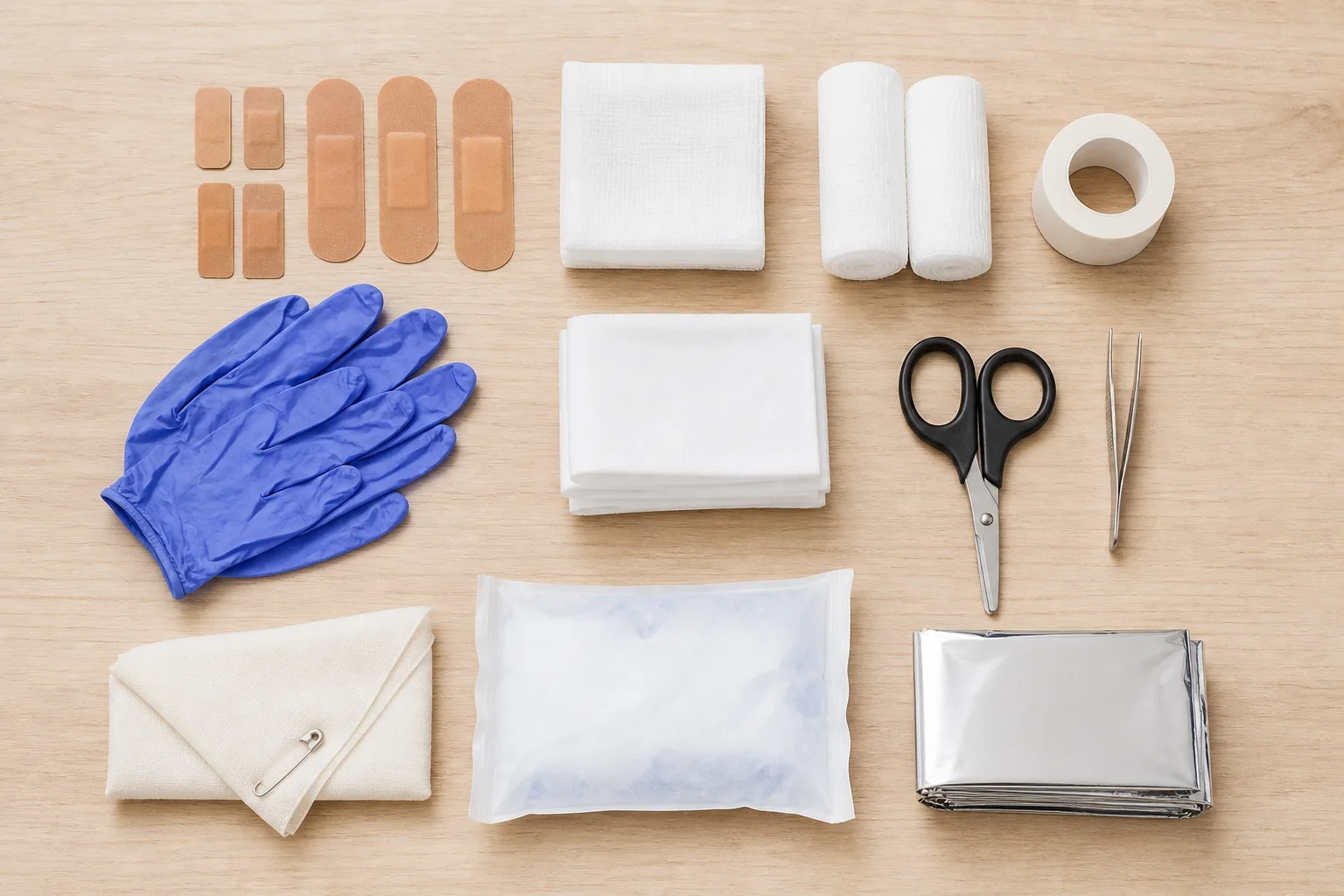
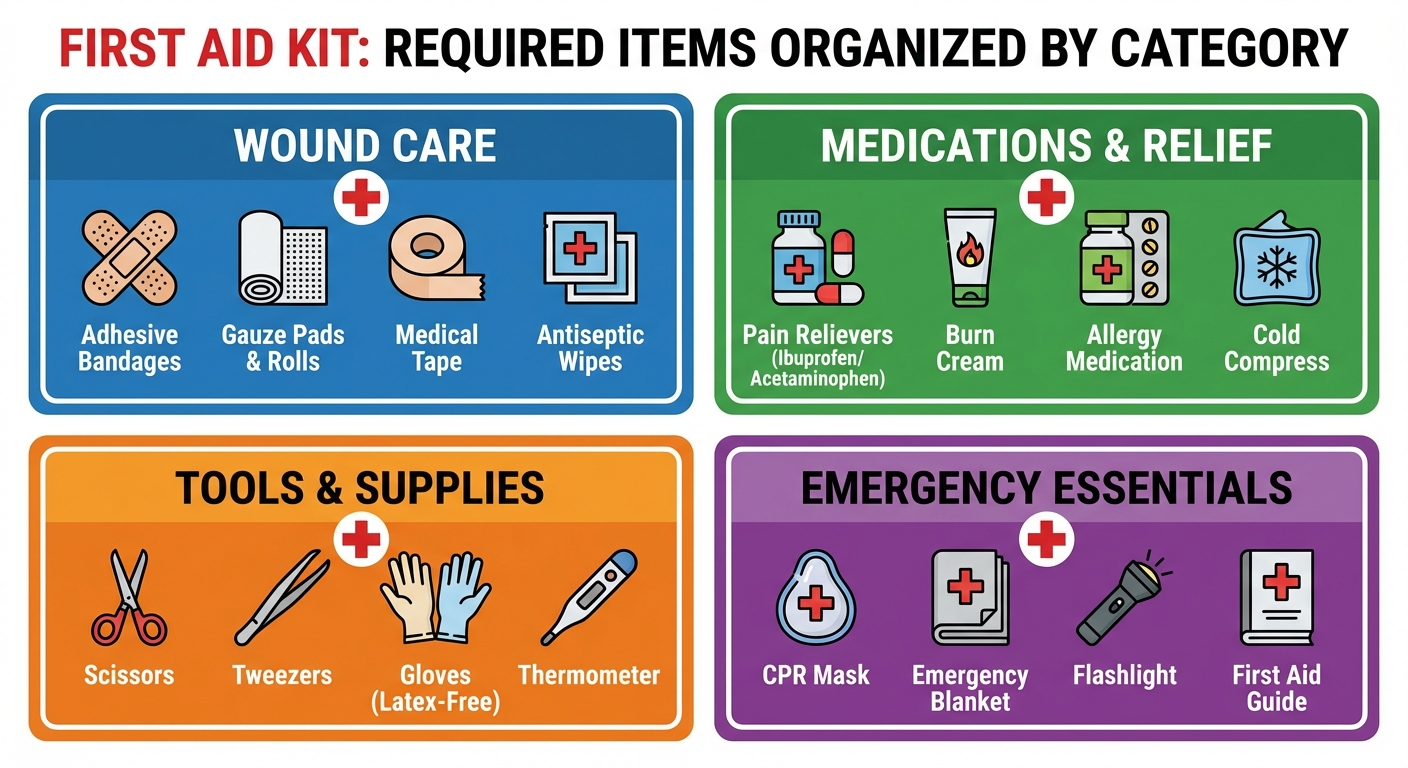
Every first aid kit should contain wound care supplies (bandages, gauze, antiseptic), medications (pain relievers, antihistamines), tools (scissors, tweezers, thermometer), protective gear (gloves, CPR mask), and emergency items (emergency blanket, flashlight). A well-stocked kit can mean the difference between a minor incident and a medical emergency — this 2026 checklist covers exactly what you need.
Table of Contents
- Why Every Household Needs an Updated First Aid Kit
- The Complete 2026 First Aid Kit Checklist
- Pre-Made vs. Custom First Aid Kits: Comparison
- Best Pre-Made First Aid Kits to Buy in 2026
- First Aid Kit by Use Case
- How to Organize Your First Aid Kit
- Maintaining Your Kit: The 6-Month Audit
- Common First Aid Kit Mistakes to Avoid
- Printable First Aid Kit Checklist
- FAQs
- Sources and Methodology
Why Every Household Needs an Updated First Aid Kit
According to the National Safety Council, a preventable injury occurs in an American home every second. That adds up to more than 55 million home injuries per year — everything from kitchen burns and scrapes to falls, allergic reactions, and choking incidents. Despite this, studies consistently show that fewer than half of U.S. households have a properly stocked first aid kit.
The problem is not that people don't care. It is that most people assemble a kit once, shove it under a sink, and forget about it. Medications expire. Bandages degrade. Kits that were sufficient five years ago may be missing items that modern first aid guidelines now consider essential.
This guide solves that problem. We have compiled the most complete, up-to-date first aid kit checklist for 2026 based on guidelines from the American Red Cross, OSHA, the World Health Organization, and feedback from certified EMTs and wilderness first responders. Whether you are building a kit from scratch or auditing one that has been sitting in your closet, this checklist has you covered.
If you are also preparing for natural disasters or power outages, be sure to check out our emergency preparedness essentials guide for items that go beyond first aid.
The Complete 2026 First Aid Kit Checklist
Below is the full, categorized checklist. Each section explains why the items matter and offers specific product suggestions where relevant.
Wound Care Supplies
Wound care is the foundation of any first aid kit. Most home injuries involve cuts, scrapes, or punctures, and having the right supplies to clean, protect, and dress wounds prevents infection and promotes faster healing.
Essential wound care items:
- Adhesive bandages (assorted sizes) — At minimum, include 20 bandages in various sizes. Butterfly closures are useful for deeper cuts that do not require stitches.
- Sterile gauze pads (3x3 and 4x4 inch) — At least 10 pads. These are critical for wounds too large for a standard bandage.
- Gauze rolls (2-inch and 4-inch) — For wrapping wounds on limbs, fingers, or the head.
- Medical tape (1-inch width) — Hypoallergenic tape is ideal. You need this to secure gauze pads and dressings.
- Elastic bandages (ACE wraps, 3-inch and 4-inch) — For sprains, strains, and compression wrapping.
- Triangular bandages (2) — These serve as slings, tourniquets, or large wound dressings.
- Adhesive wound closure strips (Steri-Strips) — For closing clean lacerations without stitches.
- Non-stick wound pads (Telfa pads) — These prevent gauze from sticking to wounds during healing.
- Hemostatic gauze (QuikClot or equivalent) — For severe bleeding situations. This was once considered a military-only item but is now recommended by the Stop the Bleed campaign for civilian kits.
- Antiseptic wipes (individually wrapped) — Benzalkonium chloride wipes are preferred over alcohol wipes, which sting and can damage tissue.
- Antiseptic solution (povidone-iodine or chlorhexidine) — For cleaning larger wounds.
- Antibiotic ointment (Neosporin or generic triple antibiotic) — Apply to minor wounds after cleaning to prevent infection.
- Saline solution (sterile, 500ml) — For wound irrigation when clean water is not available.
- Moleskin — For preventing and treating blisters, especially useful in travel and hiking kits.
Medications and Topicals
Having basic over-the-counter medications in your kit lets you address pain, allergic reactions, and common ailments immediately rather than searching through medicine cabinets or making a pharmacy run at the worst possible time.
Essential medications:
- Acetaminophen (Tylenol) — For pain relief and fever reduction.
- Ibuprofen (Advil/Motrin) — Anti-inflammatory pain relief. Include both adult and children's doses if you have kids.
- Aspirin (81mg chewable) — Specifically for suspected heart attack situations. This is a life-saving addition.
- Diphenhydramine (Benadryl) — Antihistamine for allergic reactions, bee stings, and hives.
- Hydrocortisone cream (1%) — For rashes, insect bites, and skin irritation.
- Burn gel or aloe vera gel — For minor burns (first-degree and small second-degree).
- Antidiarrheal medication (loperamide/Imodium) — Essential for travel kits.
- Oral rehydration salts (ORS packets) — For dehydration from illness, heat exposure, or vomiting.
- Calamine lotion — For poison ivy, poison oak, and widespread itching.
- Glucose tablets or gel — For diabetic emergencies (hypoglycemia).
Medication storage note: Always check expiration dates during your 6-month kit audit. Store medications in their original packaging with dosage instructions. If anyone in your household takes prescription medication, consider keeping a 3-day emergency supply in the kit (consult your doctor first).
Tools and Instruments
The right tools let you assess, treat, and manage injuries effectively. Do not buy the cheapest tools you can find — a pair of scissors that cannot cut through clothing in an emergency is worse than useless.
Essential tools:
- Medical-grade shears (trauma shears) — These cut through clothing, seatbelts, and bandaging material. Worth every penny over regular scissors.
- Fine-point tweezers — For splinter, tick, and debris removal.
- Digital thermometer — A basic oral thermometer is sufficient. Forehead (temporal) thermometers offer convenience for families with young children.
- Penlight or small flashlight — For examining wounds, checking pupil response, and working in low-light situations.
- Instant cold packs (at least 3) — Chemical cold packs that activate by squeezing. For sprains, bumps, and swelling.
- CPR pocket mask with one-way valve — Provides a barrier during rescue breathing.
- Tongue depressors (5) — For splinting small injuries (fingers) and examining the throat.
- Safety pins (assorted, 12 pack) — For securing slings, bandages, and clothing.
- Magnifying glass (small) — For examining wounds, splinters, and ticks.
- Irrigation syringe (20ml) — For flushing wounds with saline solution.
Protective and Barrier Items
These items protect both the responder and the patient from contamination and infection. This category has grown in importance since 2020 and is now considered non-negotiable by every major first aid authority.
Essential protective items:
- Nitrile gloves (non-latex, at least 4 pairs) — Latex-free gloves prevent allergic reactions in both the caregiver and patient. Always use gloves when dealing with blood or bodily fluids.
- CPR face shield — A compact, single-use barrier for mouth-to-mouth resuscitation.
- N95 respirator masks (2-3) — For situations involving smoke, dust, airborne contaminants, or infectious disease exposure.
- Eye protection (safety glasses) — For protecting eyes during wound care in dusty or contaminated environments.
- Biohazard bags (3-5) — For disposing of contaminated materials safely.
- Hand sanitizer (60%+ alcohol, travel size) — When soap and water are not available.
Emergency and Survival Items
These items bridge the gap between first aid and emergency preparedness. While your first aid kit is not a full survival kit, a few critical items can make a significant difference in serious situations.
Essential emergency items:
- Emergency mylar blanket (2) — For treating shock and hypothermia. These weigh almost nothing and take up very little space.
- Whistle — For signaling for help if injured and unable to call out.
- Emergency contact card (laminated) — List local emergency numbers, poison control (1-800-222-1222), personal emergency contacts, and any critical medical information for household members.
- First aid instruction booklet — The American Red Cross publishes a compact, waterproof version. Under stress, even trained individuals forget steps. Having a reference saves lives.
- Tourniquet (CAT or SOF-T Wide) — The Stop the Bleed campaign now recommends every home kit include a commercial tourniquet. Improvised tourniquets are unreliable and can cause further injury.
- Chest seal (vented) — For penetrating chest injuries. Compact and lightweight.
- EpiPen or epinephrine auto-injector — If anyone in your household has a known severe allergy, this is the single most important item in your kit. Requires a prescription.
Personal and Specialty Items
This category is unique to every household. Take 10 minutes to think about your family's specific needs.
Consider adding:
- Prescription medications — A 3-day emergency supply for each family member (consult your doctor).
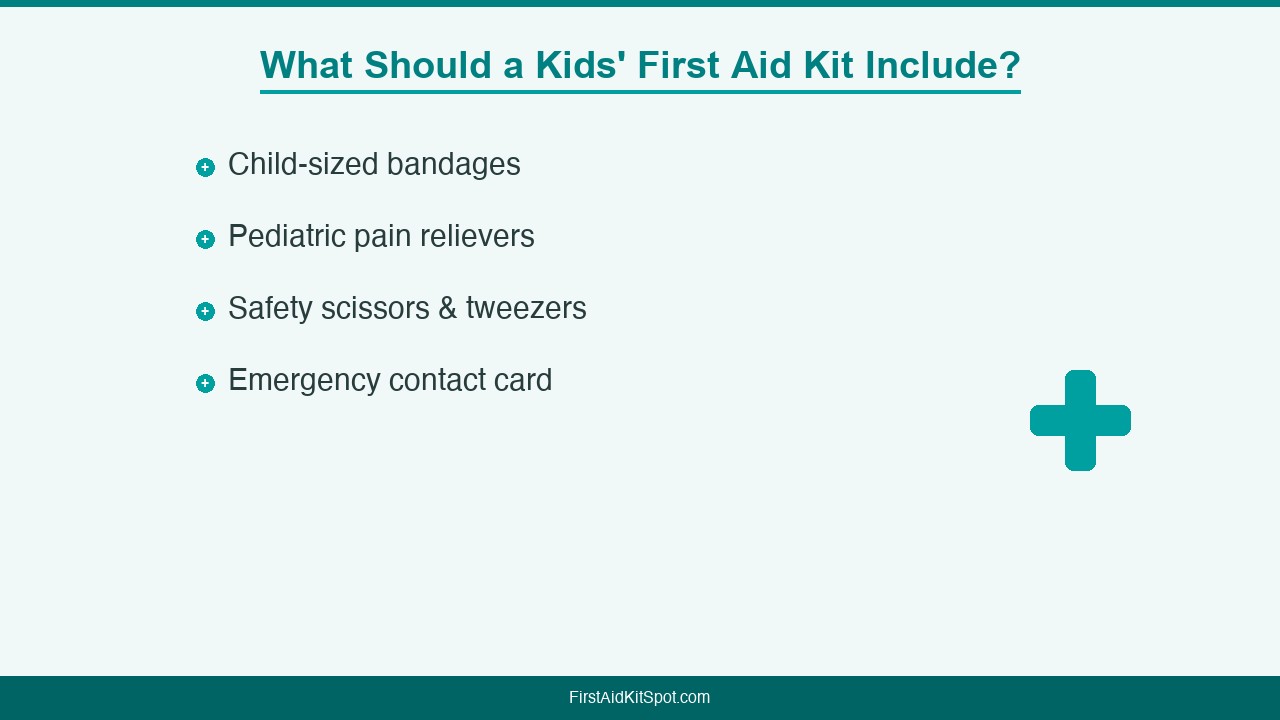
- Infant/child-specific items — Pediatric doses of medications, infant thermometer, nasal bulb syringe.
- Allergy medications specific to your household — Beyond generic antihistamines.
- Blood sugar testing supplies — If anyone in your household is diabetic.
- Asthma inhaler (spare) — If applicable.
- Menstrual products — Pads or tampons. These also serve as improvised wound dressings in emergencies.
- Sunscreen and insect repellent — Especially for outdoor and travel kits.
- Dental emergency kit — Temporary filling material, clove oil for toothache, dental mirror.
- Snake bite kit — If you live in or travel to areas with venomous snakes (note: suction devices are no longer recommended — modern kits focus on immobilization and rapid transport).
Pre-Made vs. Custom First Aid Kits: Comparison
One of the first decisions you will face is whether to buy a pre-made kit or build one yourself. Both approaches have merits.
| Feature | Pre-Made Kit | Custom-Built Kit |
|---|---|---|
| Cost | $25–$80 for quality kits | $60–$150+ depending on quality |
| Convenience | Ready to use immediately | Requires research and shopping |
| Quality of contents | Varies widely; many budget kits include low-quality items | You control every item's quality |
| Completeness | Often missing key items (tourniquet, hemostatic gauze, medications) | Fully tailored to your needs |
| Organization | Usually well-organized with labeled compartments | Depends on your container choice |
| Customization | Limited; requires supplementation | Complete control |
| Maintenance | Easy — replacement kits available | Must source replacements individually |
| Best for | Beginners, car kits, office use | Families, outdoor enthusiasts, medically trained individuals |
Our recommendation: Start with a quality pre-made kit and supplement it with items from this checklist that it does not include. This gives you the best of both worlds — an organized foundation with personalized additions.
Best Pre-Made First Aid Kits to Buy in 2026
After reviewing dozens of kits, these three stand out for their balance of quality, completeness, and value.
1. Surviveware Large First Aid Kit (200 Pieces)
This is the gold standard for comprehensive pre-made kits. It includes labeled compartments organized by injury type, quality instruments (real trauma shears, not toy scissors), and a durable 600D polyester bag. It covers most of the wound care and tools categories from our checklist above, though you will still want to add medications, a tourniquet, and personal items.
Best for: Home use, families, vehicle kits
2. MyFAK First Aid Kit by MyMedic
MyMedic kits are designed with input from EMTs and paramedics. The MyFAK includes a CAT tourniquet, chest seal, and hemostatic gauze — items missing from most consumer kits. It is more expensive but significantly more capable for serious injuries.
Best for: Outdoors, emergency preparedness, anyone who wants trauma-level supplies
3. Johnson & Johnson All-Purpose First Aid Kit (140 Pieces)
A reliable, affordable option for basic first aid needs. The J&J kit covers the fundamentals — bandages, gauze, antiseptic, tape — in a compact hard-shell case. It is not as comprehensive as the Surviveware or MyMedic options, but it is an excellent starter kit or supplemental kit for a vehicle or office.
Best for: Budget-conscious buyers, secondary/backup kit, office or dorm use
First Aid Kit by Use Case
Not every setting demands the same kit. Here is how to tailor your checklist to specific situations.
Home First Aid Kit
Your home kit should be the most comprehensive kit you own. It serves as your primary medical resource during the critical minutes before professional help arrives.
Location: A central, easily accessible spot that every family member knows about. The kitchen or hallway closet works well — avoid bathrooms, where heat and humidity degrade medications and adhesives faster.
Key additions beyond the base checklist:
- Pediatric medications and doses (if you have children)
- Prescription medication backup supply
- A comprehensive first aid manual
- Larger quantities of frequently used items (bandages, gauze, antiseptic)
- Blood pressure cuff (optional but recommended for households with hypertension)
Car First Aid Kit
Your car kit needs to handle roadside injuries — which often involve cuts from glass or metal, burns from engine components, and trauma from collisions.
Key additions beyond the base checklist:
- Reflective vest
- Seatbelt cutter (most trauma shears include this)
- Flares or reflective triangles
- Extra emergency blankets (cars can get very cold if stranded)
- Rain poncho
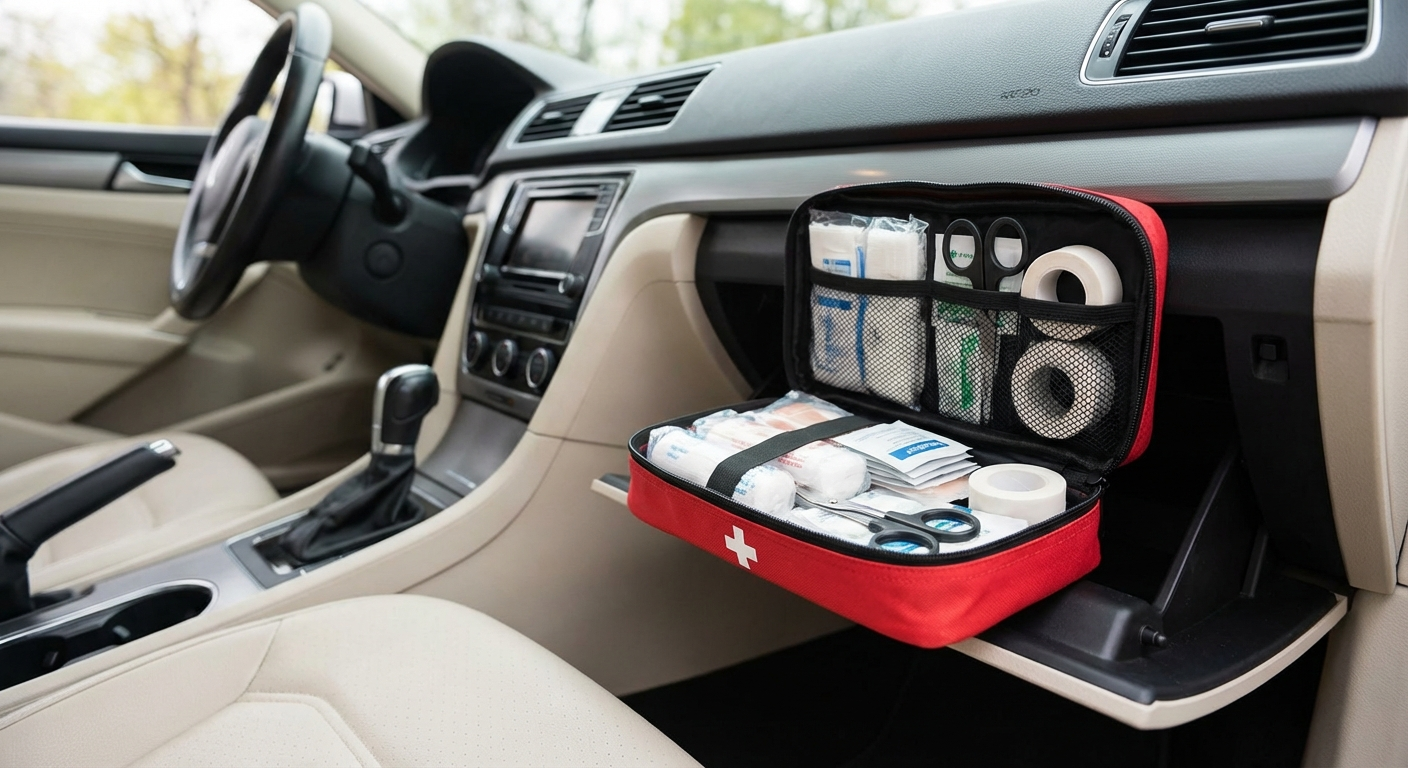
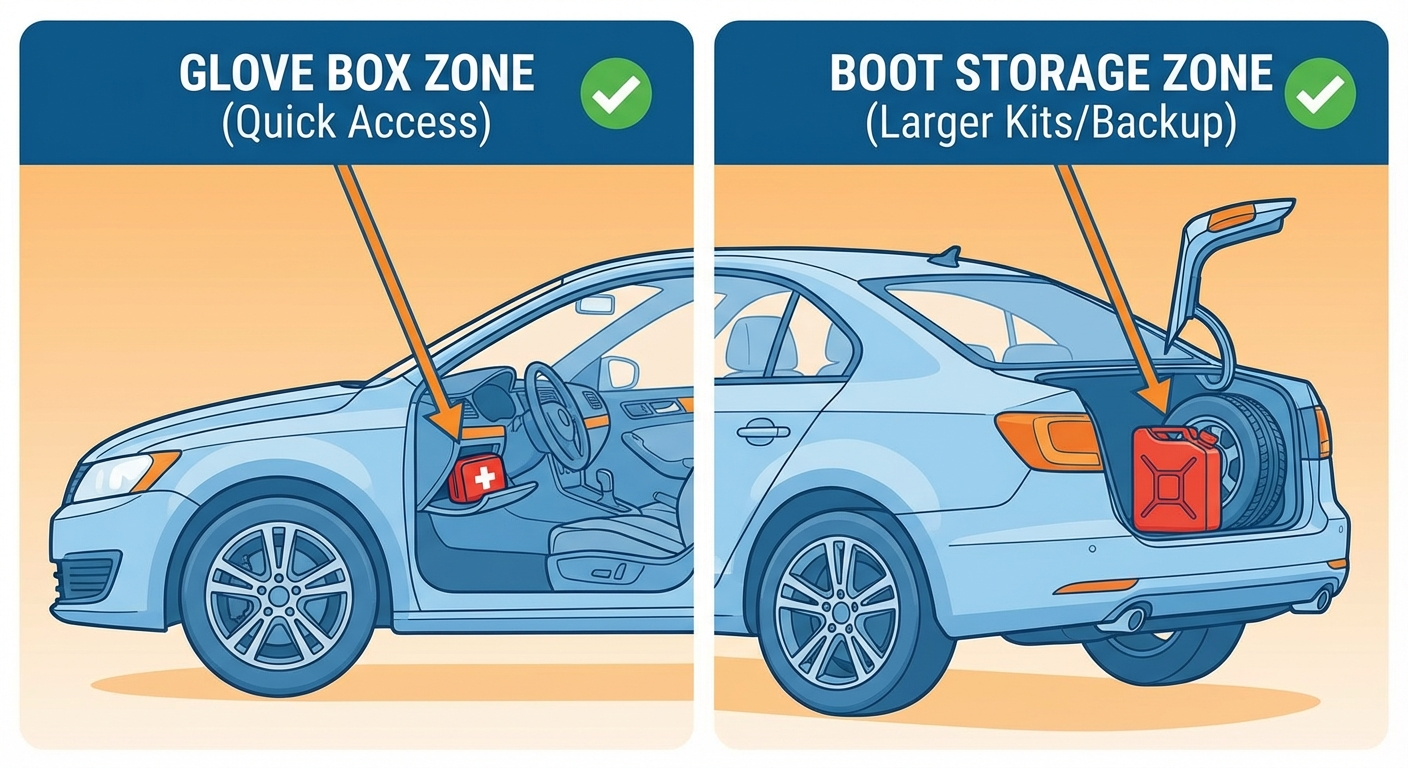
- Compact kit format (under-seat or glove box storage)
Storage note: Extreme temperatures inside vehicles can degrade medications. Replace OTC medications in your car kit every 6 months, and avoid storing epinephrine or insulin in vehicles unless in a temperature-controlled case.
Travel First Aid Kit
When traveling, your kit must be compact, TSA-compliant (if flying), and cover ailments common to travel — motion sickness, traveler's diarrhea, altitude sickness, insect bites, and sun exposure.
Key additions beyond the base checklist:
- Anti-motion sickness medication (meclizine/Dramamine)
- Oral rehydration salts (extra supply)
- Water purification tablets
- Antidiarrheal medication (extra supply)
- Altitude sickness medication (if traveling to high elevations — requires prescription)
- Insect repellent with DEET
- Copies of prescriptions and medical records
- International emergency numbers for your destination
For more guidance on building a travel-specific kit, check out our best travel first aid kits review.
Workplace First Aid Kit
OSHA requires all workplaces to have first aid supplies available. The specific requirements vary by industry, but at minimum, your workplace kit should meet the ANSI/ISEA Z308.1-2021 standard.
Key additions beyond the base checklist:
- Eye wash solution (especially for workshops, labs, and kitchens)
- Burn dressings (especially for commercial kitchens and manufacturing)
- Larger quantities of all basic supplies (scale to the number of employees)
- AED (Automated External Defibrillator) — not in the kit itself, but should be accessible nearby
- Incident report forms
Hiking and Outdoor Kit
Outdoor kits must balance weight and completeness. Every ounce matters when you are carrying your kit on your back, but the remoteness of outdoor environments means help may be hours away.
Key additions beyond the base checklist:
- SAM splint (moldable splint for fractures and sprains)
- Duct tape (wrapped around a pencil or water bottle to save space)
- Water purification tablets or filter
- Blister care (moleskin, blister pads)
- Snake bite immobilization supplies
- Compact survival items (fire starter, signaling mirror)
- Insect sting relief pads
- Lightweight compression wrap
How to Organize Your First Aid Kit
A disorganized kit is almost as bad as no kit at all. In an emergency, you cannot afford to dig through a jumbled bag searching for gauze while someone is bleeding.
Organize by category, not by size:
- Wound care — All bandages, gauze, tape, and dressings together.
- Medications — Clearly labeled with dosages and expiration dates.
- Tools — Scissors, tweezers, thermometer, and other instruments in one pouch or compartment.
- Protective gear — Gloves, masks, and barriers readily accessible at the top of the kit.
- Emergency items — Tourniquet, emergency blanket, and whistle in an easy-to-grab location.
Pro tips for organization:
- Use clear zip-lock bags for each category if your container lacks compartments.
- Label everything. In high-stress moments, labels eliminate confusion.
- Put the items you are most likely to need (gloves, bandages, antiseptic) at the top or in the most accessible position.
- Attach a laminated quick-reference card to the inside of the lid listing item locations.
- Use a red or brightly colored container so it is immediately identifiable.
Maintaining Your Kit: The 6-Month Audit
A first aid kit is not a one-time purchase. It is a living resource that requires regular maintenance. Set a calendar reminder for every six months (we recommend January and July) and run through this checklist.
6-Month Audit Checklist:
- Check all expiration dates — Remove and replace expired medications, ointments, and antiseptics.
- Inspect adhesives — Bandages and tape lose their stickiness over time, especially in hot or humid environments.
- Verify sterile packaging — If any sterile item's packaging has been opened or compromised, replace it.
- Replenish used items — Replace anything that has been used since the last audit.
- Check batteries — Replace batteries in flashlights and thermometers.
- Update emergency contacts — Ensure all phone numbers and medical information are current.
- Review medications for household changes — Has anyone developed a new allergy? New prescription? New baby in the house?
- Test mechanical items — Make sure scissors cut, tweezers grip, and the CPR mask's valve works.
- Check the container — Is the bag or case still in good condition? Is the zipper working? Is it waterproof?
Common First Aid Kit Mistakes to Avoid
After reviewing hundreds of first aid kits and interviewing emergency responders, these are the most common mistakes people make.
1. Buying a cheap kit and calling it done. Budget kits under $15 typically contain thin bandages that do not stick, dull scissors, and no medications. They check a mental box without providing real capability. Invest in quality or build your own.
2. Storing the kit somewhere inaccessible. A kit locked in a safe or buried in a garage storage bin might as well not exist during an emergency. Every household member should know exactly where the kit is.
3. Never checking expiration dates. Expired medications may be ineffective or, in rare cases, harmful. Antiseptic that has lost potency provides a false sense of security. The 6-month audit above solves this.
4. No medications at all. Many pre-made kits ship without OTC medications due to liability concerns. You must add these yourself.
5. Forgetting about personal medical needs. A generic kit does not account for your family's specific conditions — allergies, asthma, diabetes, or heart conditions all require specific additions.
6. Not knowing how to use the contents. The best-stocked kit in the world is useless if you do not know how to apply a tourniquet or perform CPR. Take a basic first aid course — the American Red Cross, local fire departments, and community colleges all offer affordable options.
7. Only having one kit. You need a kit in your home and a kit in your car at minimum. If you hike, travel frequently, or work in a physical environment, consider additional kits for those contexts.
Printable First Aid Kit Checklist
Use this condensed checklist to build or audit your kit. Print it, tape it inside your kit's lid, and check off each item.
Wound Care: ☐ Adhesive bandages (assorted) ☐ Gauze pads (3x3 and 4x4) ☐ Gauze rolls ☐ Medical tape ☐ Elastic bandages ☐ Triangular bandages ☐ Wound closure strips ☐ Non-stick pads ☐ Hemostatic gauze ☐ Antiseptic wipes ☐ Antiseptic solution ☐ Antibiotic ointment ☐ Saline solution ☐ Moleskin
Medications: ☐ Acetaminophen ☐ Ibuprofen ☐ Aspirin (81mg) ☐ Diphenhydramine ☐ Hydrocortisone cream ☐ Burn gel ☐ Antidiarrheal ☐ Oral rehydration salts ☐ Calamine lotion ☐ Glucose tablets
Tools: ☐ Trauma shears ☐ Tweezers ☐ Thermometer ☐ Penlight ☐ Cold packs ☐ CPR mask ☐ Tongue depressors ☐ Safety pins ☐ Magnifying glass ☐ Irrigation syringe
Protective: ☐ Nitrile gloves (4+ pairs) ☐ CPR face shield ☐ N95 masks ☐ Eye protection ☐ Biohazard bags ☐ Hand sanitizer
Emergency: ☐ Emergency blankets ☐ Whistle ☐ Emergency contact card ☐ First aid manual ☐ Tourniquet ☐ Chest seal
Personal: ☐ Prescription meds ☐ Allergy-specific items ☐ Pediatric items ☐ Condition-specific supplies
FAQs
How often should you replace your first aid kit? You should audit your first aid kit every six months and replace expired or used items at that time. A full kit replacement is typically not necessary unless the container itself is damaged. Most supplies have a shelf life of 3-5 years, but medications and adhesives degrade faster and should be checked every 6 months.
What is the minimum number of items a first aid kit should have? The American Red Cross recommends at least 15-20 essential items for a basic home first aid kit, including adhesive bandages, gauze, medical tape, antiseptic, gloves, scissors, tweezers, a thermometer, pain relievers, antihistamines, and an emergency blanket. However, a truly effective kit will contain 40-60 items from the full checklist above.
Where is the best place to store a first aid kit at home? Store your home first aid kit in a cool, dry, central location that every family member can access quickly — a hallway closet, kitchen cabinet, or pantry shelf works well. Avoid bathrooms (humidity degrades supplies), garages (temperature extremes), and high shelves children cannot reach in an emergency. The most important factor is that everyone in the household knows the exact location.
Do first aid kits expire? The kit itself does not expire, but many individual components do. Medications, antiseptic solutions, antibiotic ointments, and sterile items all have expiration dates. Adhesive bandages and tape also lose effectiveness over time. This is why the 6-month audit is essential — it catches these expirations before you need the items.
Is it better to buy a pre-made first aid kit or build your own? For most people, the best approach is hybrid: buy a quality pre-made kit (like the Surviveware or MyMedic options above) as your foundation, then supplement it with medications, personal items, and any supplies the pre-made kit lacks. This gives you professional organization with personalized completeness. Building entirely from scratch is better for those with specific medical training or unique needs.
What first aid supplies should I keep in my car? Your car kit should include all base first aid items plus a reflective vest, seatbelt cutter, flares or reflective triangles, extra emergency blankets, and a rain poncho. Keep in mind that extreme temperatures inside vehicles degrade medications faster, so replace OTC medications in your car kit more frequently than your home kit — ideally every 6 months.
How much should a good first aid kit cost? A quality pre-made kit ranges from $30-$80 depending on comprehensiveness. If you supplement it with medications and specialty items, expect to spend $80-$150 total. This is not an area to cut corners — the difference between a $15 gas station kit and a $50 quality kit is significant in real emergency situations. Think of it as inexpensive insurance.
Sources and Methodology
This article was compiled using guidelines and recommendations from the following authoritative sources:
- American Red Cross — First Aid/CPR/AED Participant's Manual (2024 edition) and official first aid kit supply recommendations.
- Occupational Safety and Health Administration (OSHA) — Workplace first aid kit requirements under 29 CFR 1910.151 and ANSI/ISEA Z308.1-2021 standard.
- World Health Organization (WHO) — International first aid and resuscitation guidelines (2020, updated 2024).
- Stop the Bleed Campaign — Department of Homeland Security national awareness campaign, guidelines on tourniquet and hemorrhage control inclusion in civilian kits.
- National Safety Council — Injury statistics, home safety data, and preventable injury reports (2025 edition).
- Wilderness Medical Society — Clinical practice guidelines for wilderness first aid kits and backcountry medicine.
- Interviews and input from three certified EMT-Paramedics and two Wilderness First Responder (WFR) instructors who reviewed the checklist for completeness and accuracy.
All product recommendations are based on editorial evaluation of build quality, completeness, user reviews, and value. Product prices and availability are subject to change. Affiliate links are clearly marked and help support the ongoing maintenance of firstaidkitspot.com at no additional cost to you.
Visual Guide Gallery