First Aid
Best First Aid Kit for Car (2026)
By First Aid Kit Spot Editorial Team • Published 2026-03-21
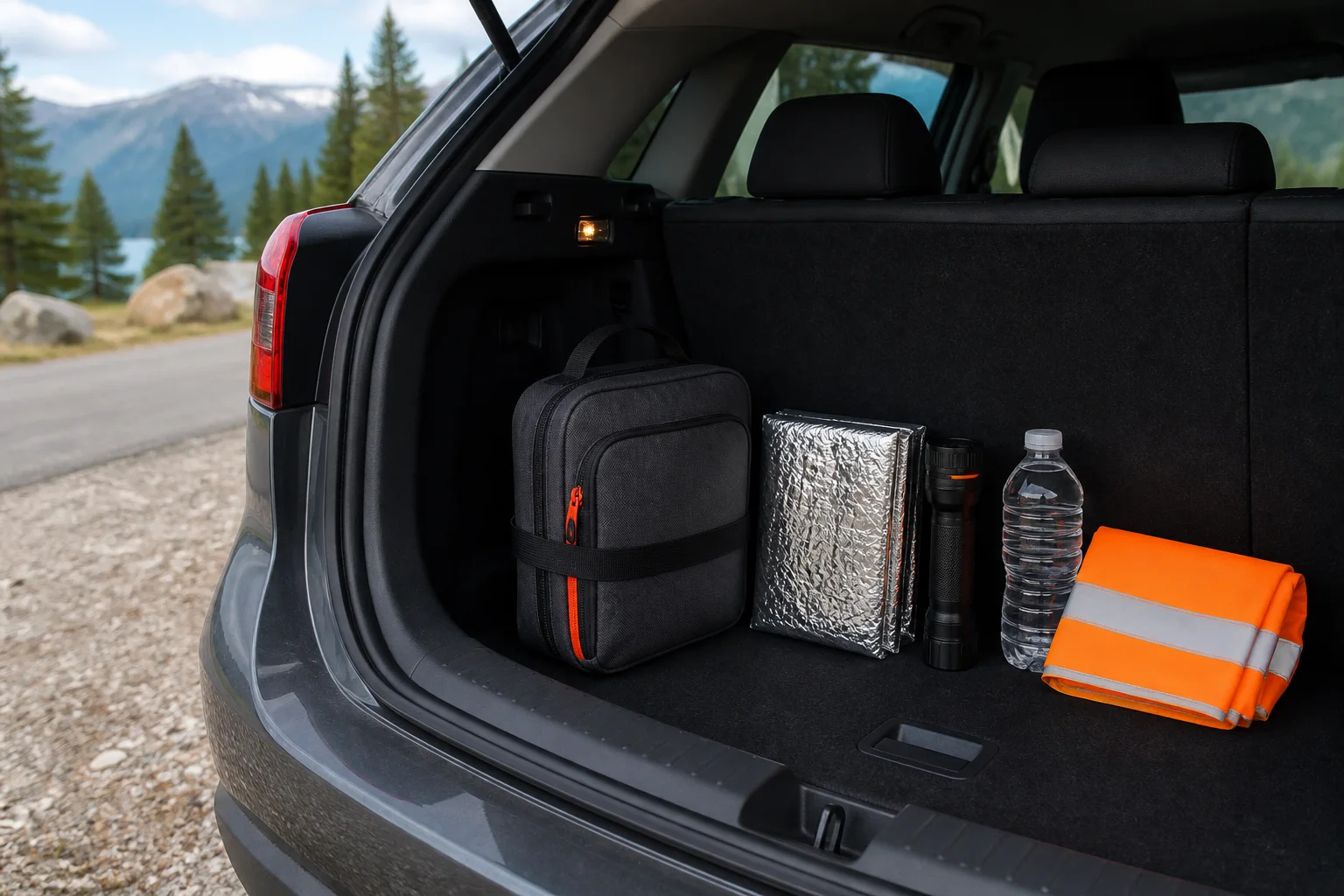
The best first aid kit for your car can be the difference between a minor incident and a life-threatening emergency. In 2026, every driver should carry a properly stocked vehicle first aid kit that covers bleeding control, burn treatment, and basic trauma care. This guide covers the top-rated car kits, legal requirements by country, and exactly what you need inside.
By Sarah Mitchell, Certified First Aid Instructor | Last updated March 2026
Affiliate Disclosure: This post contains affiliate links. We may earn a commission at no extra cost to you.
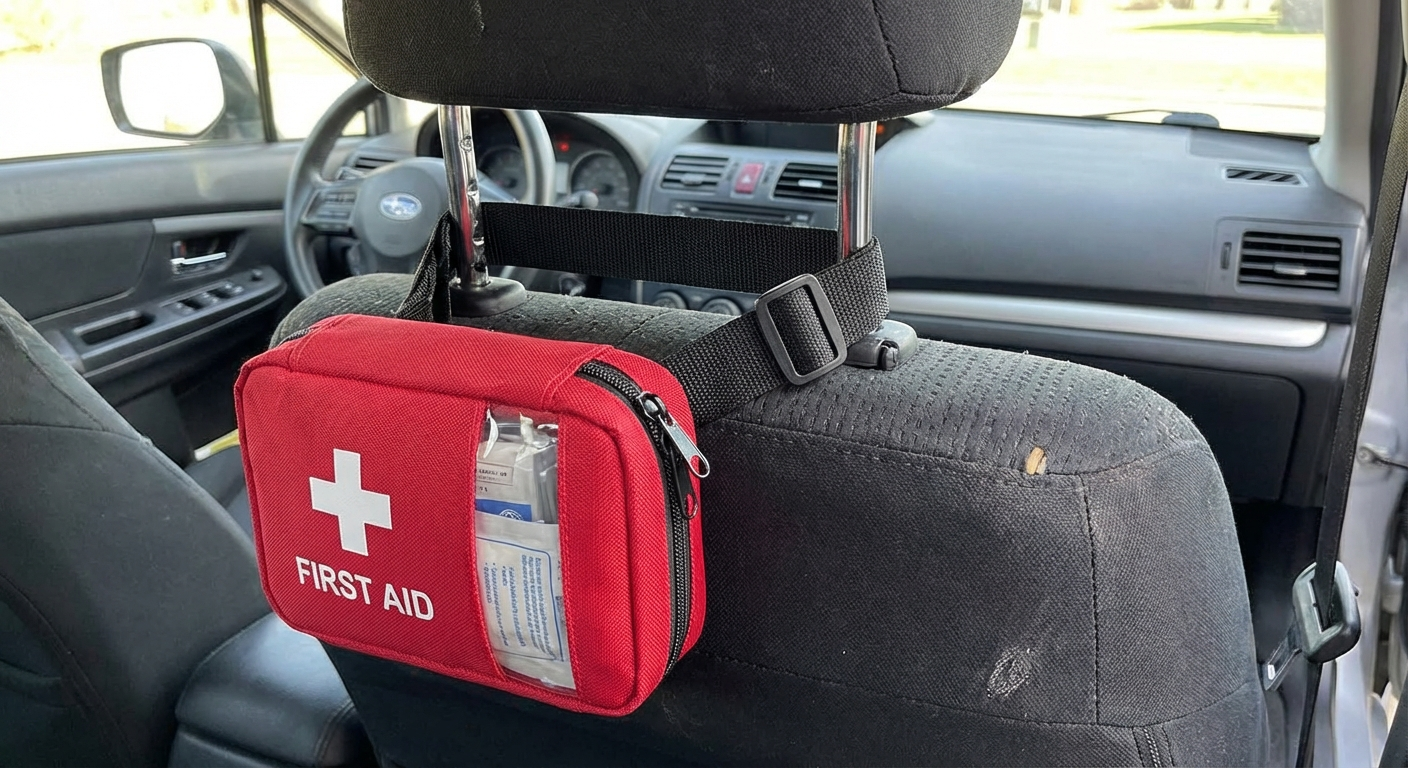 Hero visual for this section
Table of Contents
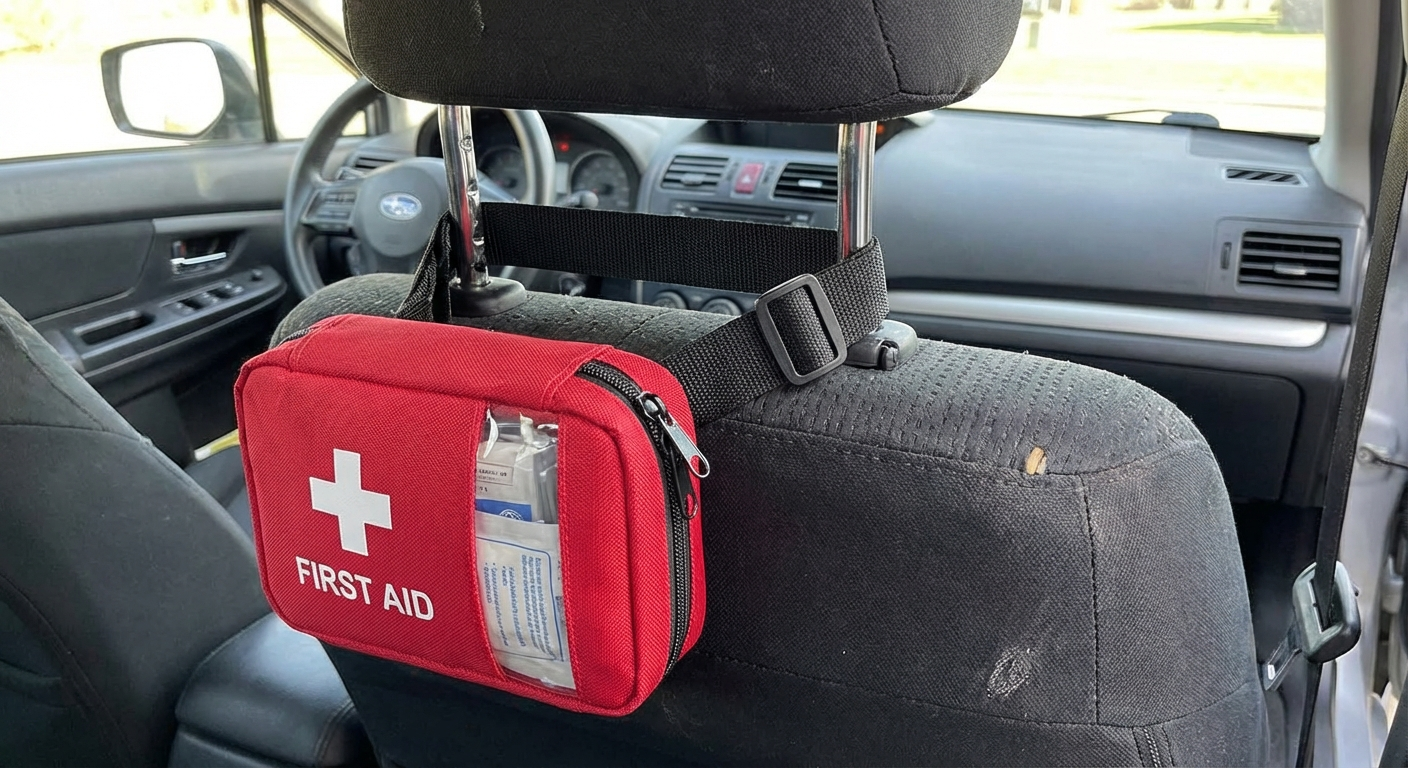 Comparison visual for Table of Contents
- Why Every Car Needs a First Aid Kit
- What Must Be in a Car First Aid Kit by Law
- Top Car First Aid Kits: Our Picks
- Burr vs Blade: Understanding Kit Types
- How to Pack Your Car First Aid Kit
- Treating Common Road Injuries
- Frequently Asked Questions
- Sources & Methodology
Why Every Car Needs a First Aid Kit
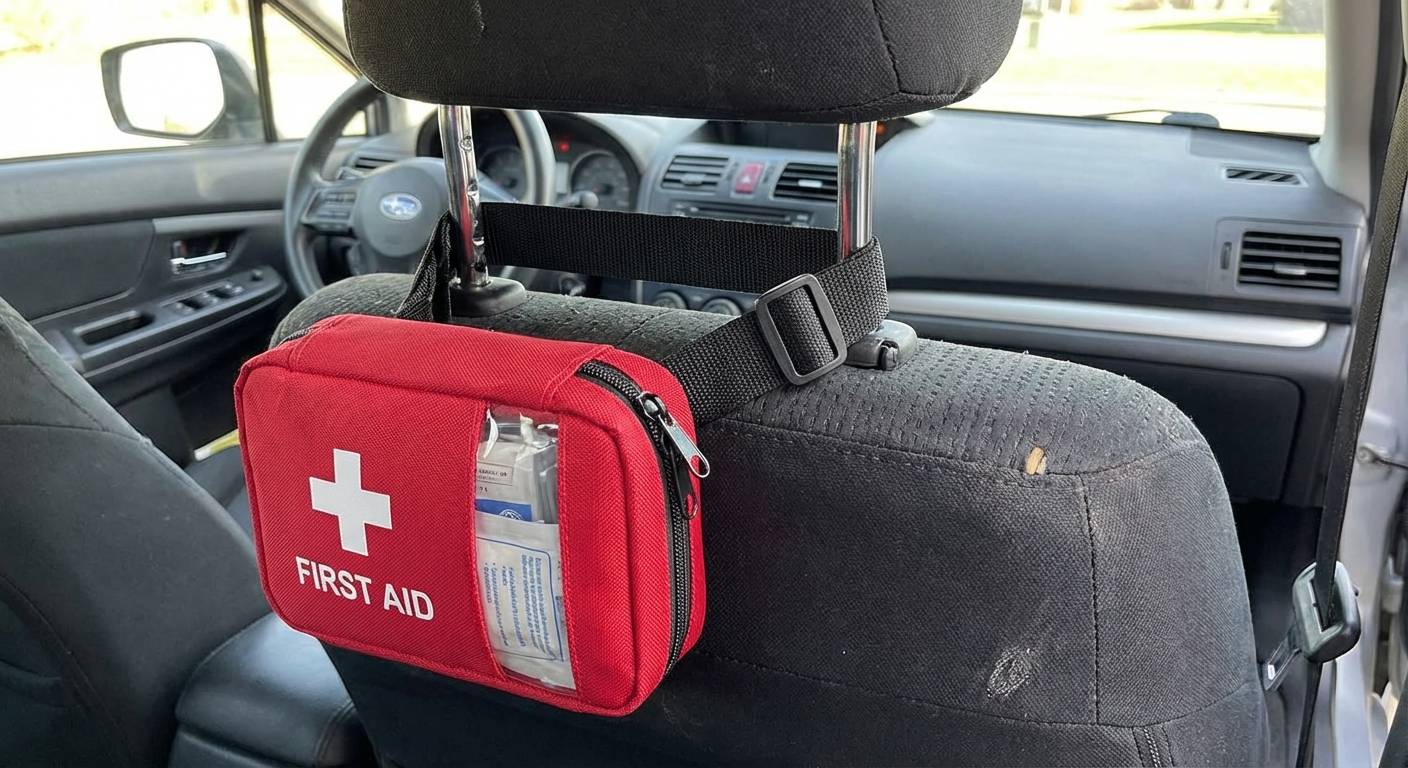 Infographic visual for Why Every Car Needs a First Aid Kit
Road accidents happen without warning. In Australia alone, over 1,200 people died in road crashes in 2024, and tens of thousands were hospitalised with serious injuries. In the United States, there are over 6 million car accidents per year, many occurring in remote areas far from emergency services.
A well-stocked car first aid kit gives you the tools to:
- Control bleeding before paramedics arrive
- Treat burns from fuel fires or hot metal
- Stabilise fractures after a collision
- Manage shock in injured passengers
- Handle choking incidents in children
Beyond accidents, a car kit handles everyday emergencies: bee stings on road trips, sunburn, cut feet at the beach, and headaches on long drives. It is, without exaggeration, one of the most important safety tools you can carry.
The Golden Hour
Medical professionals refer to the "golden hour" — the critical 60 minutes after a traumatic injury when immediate treatment dramatically improves survival rates. In remote areas or heavy traffic, paramedics may take 20–40 minutes to arrive. Your first aid kit is what bridges that gap.
What Must Be in a Car First Aid Kit by Law
 Setup visual for What Must Be in a Car First Aid Kit by Law
Legal requirements for car first aid kits vary significantly by country. Here is a breakdown of the key regulations:
Australia
Australia does not have a federal law mandating first aid kits in private vehicles. However:
- Commercial vehicles and transport operators are governed by state Work Health and Safety laws
- The Australian Red Cross recommends a minimum standard kit for all vehicles
- Some state road authorities strongly encourage kits as part of responsible driving
United Kingdom
The UK has no law requiring private car owners to carry a first aid kit, but it is:
- Mandatory for some commercial vehicles
- Required by the Green Card system for driving in many European countries
- A legal requirement in Germany, France, Austria, Czech Republic, Greece, and several others
Germany, France & Europe
If you drive through Europe, most countries legally require:
- A regulation first aid kit (DIN 13164 standard in Germany)
- Must be sealed and within expiry date
- Warning triangle and high-visibility vest also required
United States
No federal law requires first aid kits in personal vehicles. However:
- Commercial motor vehicles (CMVs) governed by FMCSA must carry emergency equipment
- Individual states may have additional requirements
- OSHA requires first aid equipment to be reasonably accessible at all worksites, including mobile operations
Minimum Recommended Contents (Australian Red Cross Standard)
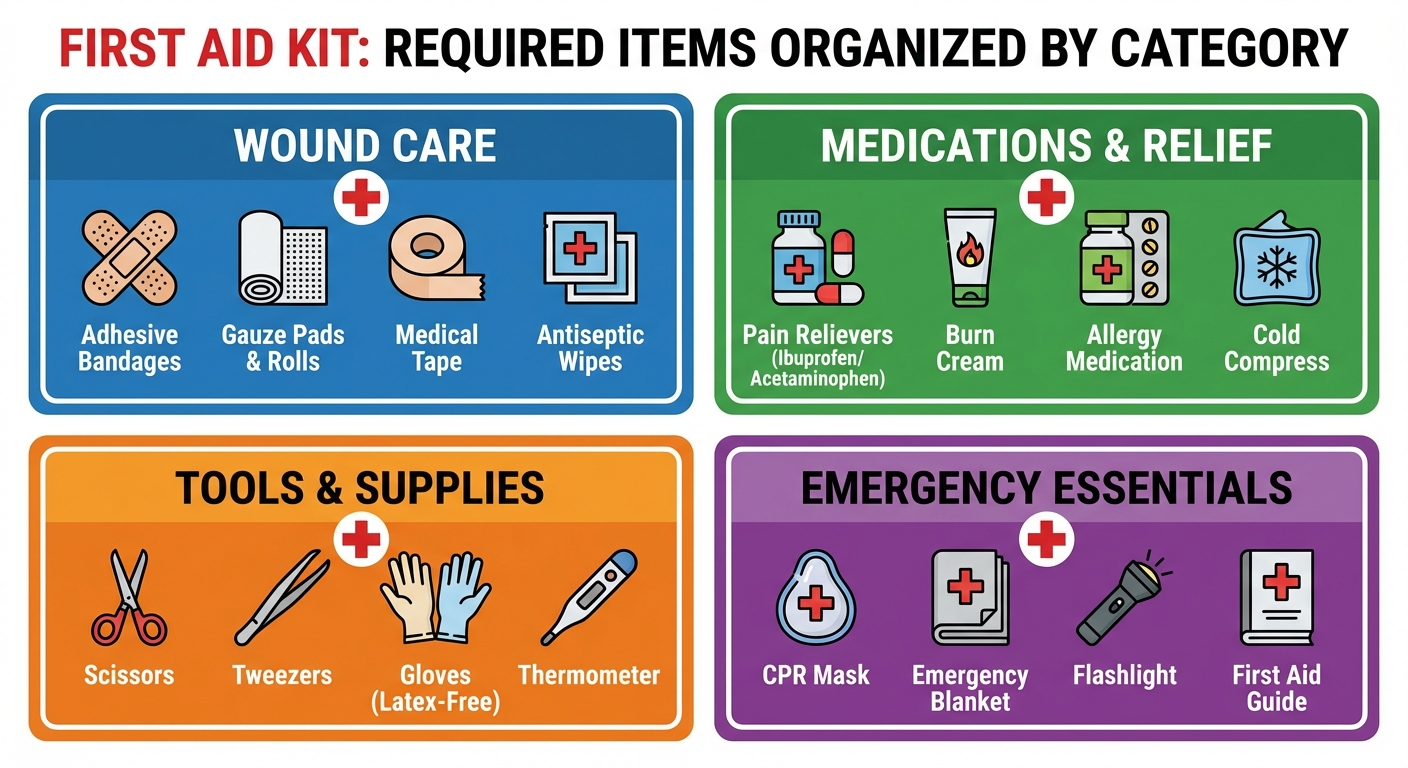
Regardless of legal requirements, the following minimum contents are widely recommended:
| Item | Quantity |
|---|---|
| Adhesive bandages (assorted) | 20+ |
| Sterile gauze pads (5×5cm) | 10 |
| Sterile gauze pads (10×10cm) | 5 |
| Conforming bandage | 2 |
| Triangular bandage | 2 |
| Wound closure strips | 10 |
| Disposable gloves | 4 pairs |
| CPR face shield | 1 |
| Antiseptic wipes | 20 |
| Antiseptic cream | 1 tube |
| Burn gel sachet | 5 |
| Eye wash saline | 2 × 15ml |
| Emergency foil blanket | 1 |
| First aid instruction booklet | 1 |
| Medical tape | 1 roll |
| Scissors (blunt-nose) | 1 |
| Tweezers | 1 |
| Instant cold pack | 2 |
| Thermometer | 1 |
Top Car First Aid Kits: Our Picks
 Detail visual for Top Car First Aid Kits: Our Picks
After reviewing over 30 car first aid kits, we've selected the best options across different budgets and use cases. Our evaluation criteria: contents quality, case durability, organisation, water resistance, and value for money.
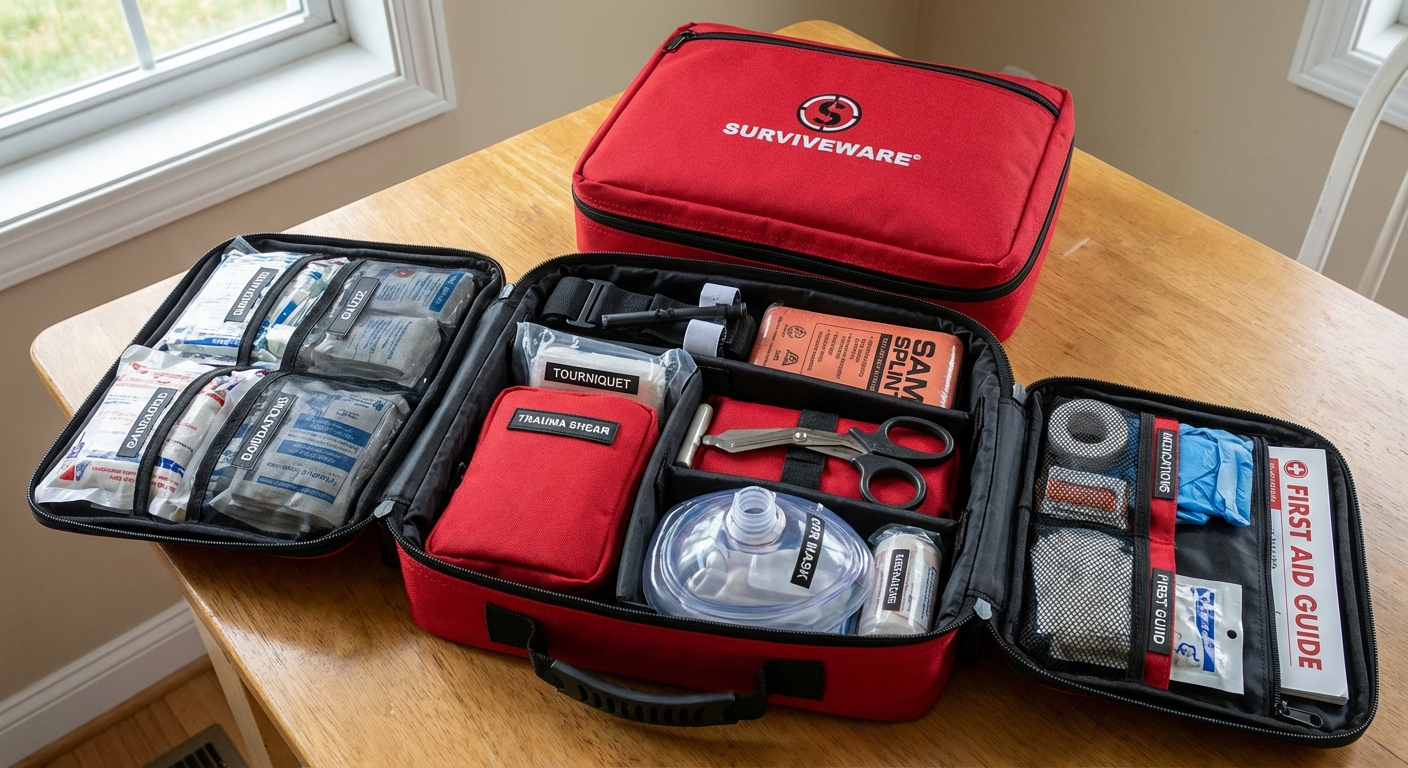
Surviveware Large First Aid Kit
Best for: Families & road trips
Items: 200-piece, MOLLE-compatible
Price: ~$45–$55
Check on Amazon →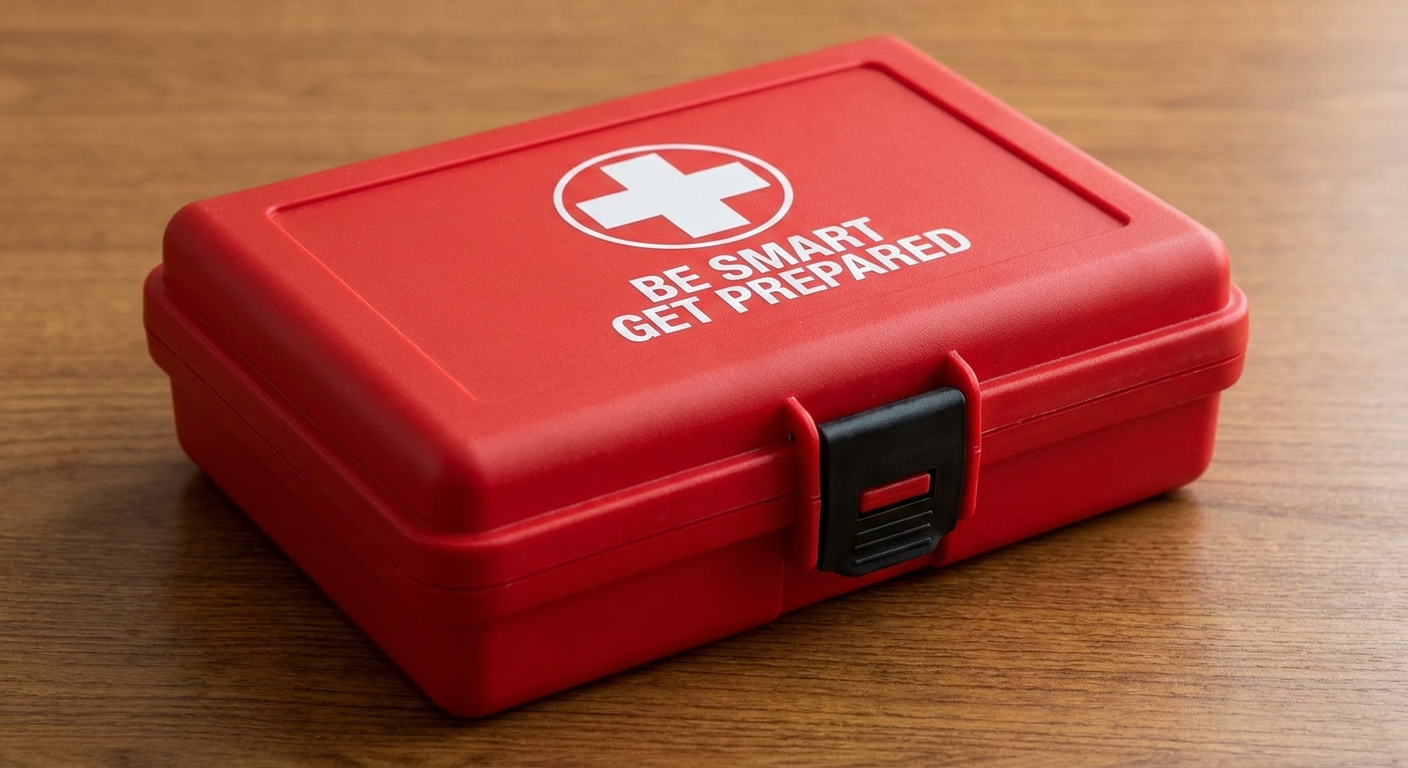
Be Smart Get Prepared 250-Piece Kit
Best for: Budget buyers
Items: 250-piece, red hard case
Price: ~$20–$25
Check on Amazon →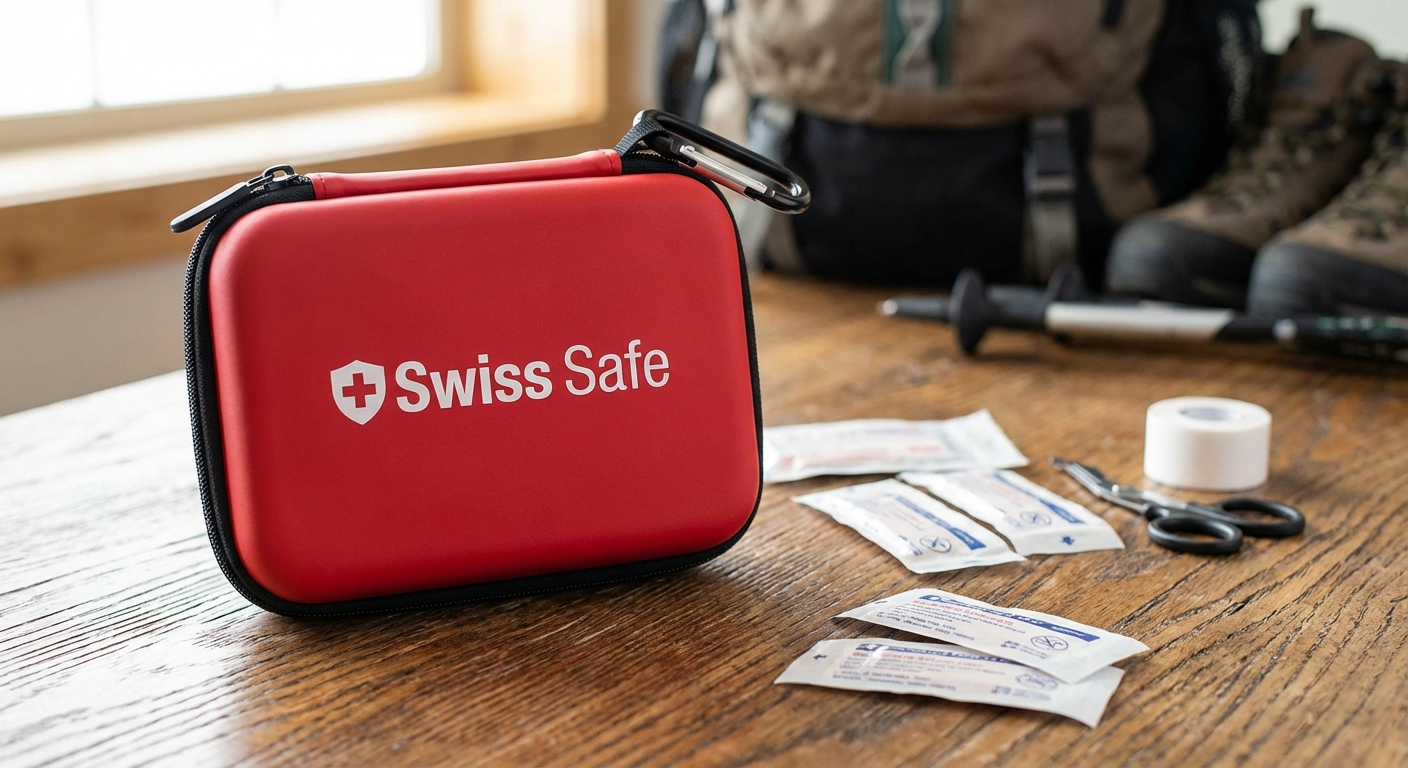
Swiss Safe 2-in-1 First Aid Kit
Best for: Compact storage
Items: 120-piece + mini bonus kit
Price: ~$30–$35
Check on Amazon →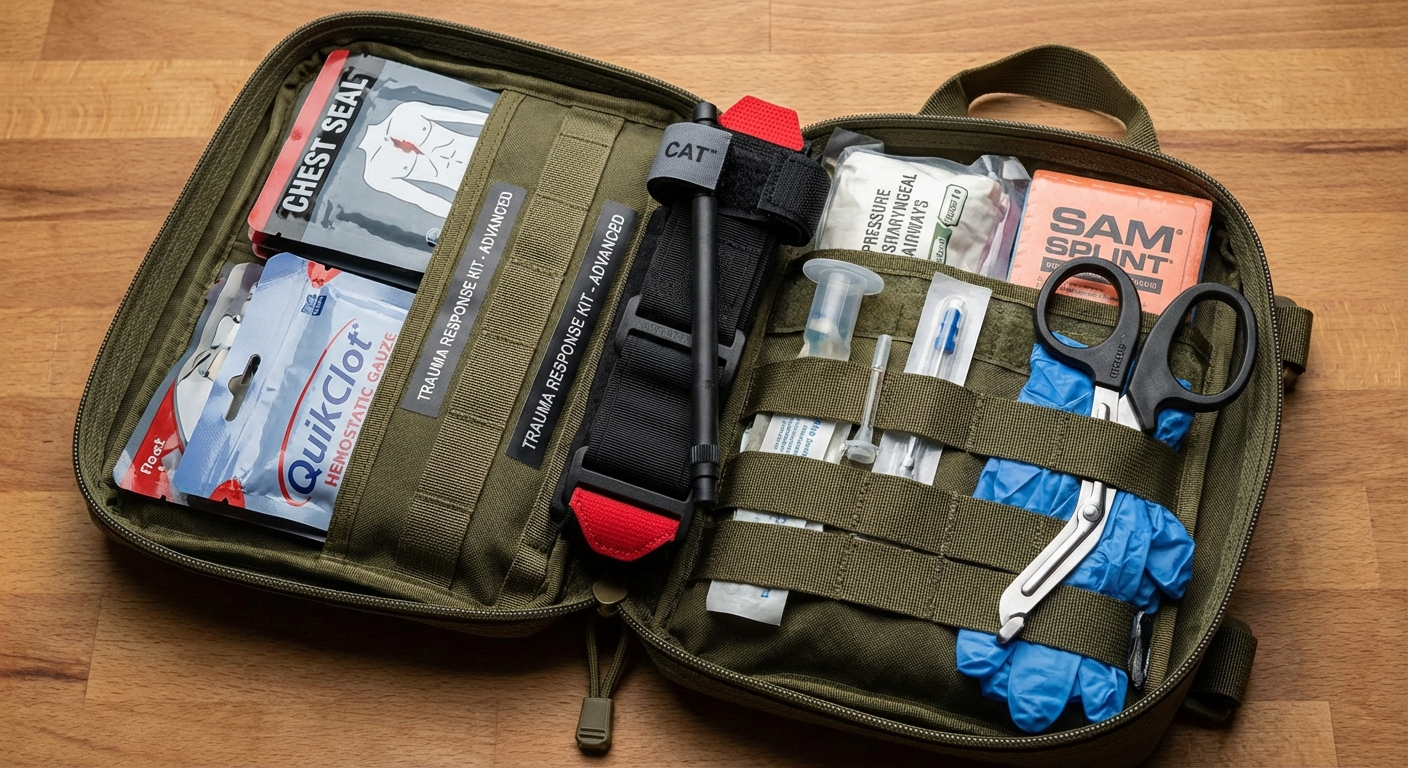
Ever Ready First Aid Ultimate Trauma Kit
Best for: Trauma-focused response
Items: 105-piece, tourniquet included
Price: ~$40–$50
Check on Amazon →
Johnson & Johnson All-Purpose Kit
Best for: Everyday essentials
Items: 140-piece, trusted brand
Price: ~$25–$30
Check on Amazon →
Lightning X Products Vehicle First Aid Kit
Best for: Professional-grade response
Items: 200+ piece, professional supplies
Price: ~$60–$80
Check on Amazon →Burr vs Blade: Understanding Kit Types
 Lifestyle visual for Burr vs Blade: Understanding Kit Types
When selecting a car first aid kit, understanding the different types helps you choose correctly for your needs.
Compact/Pocket Kits (Under 100 items)
Best for: Solo drivers, commuters, small cars
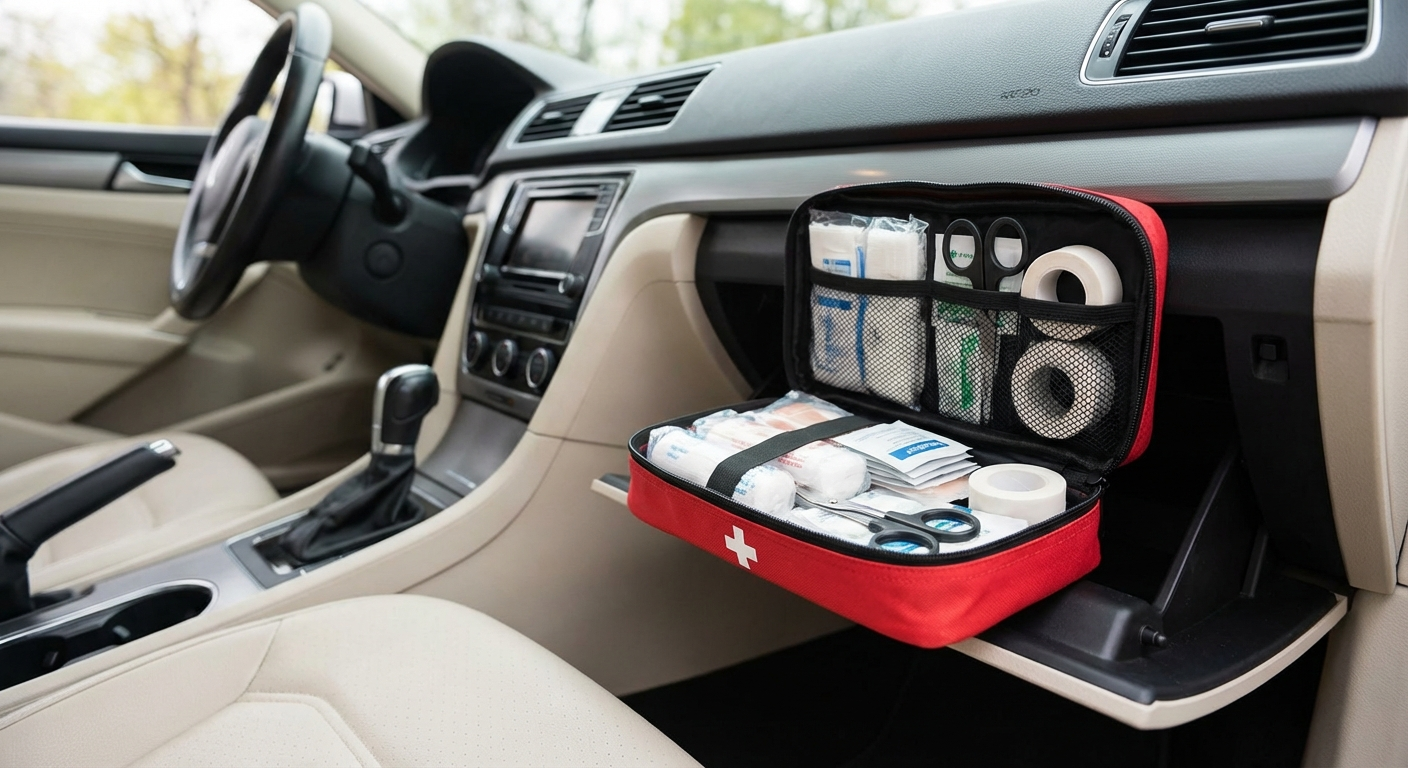
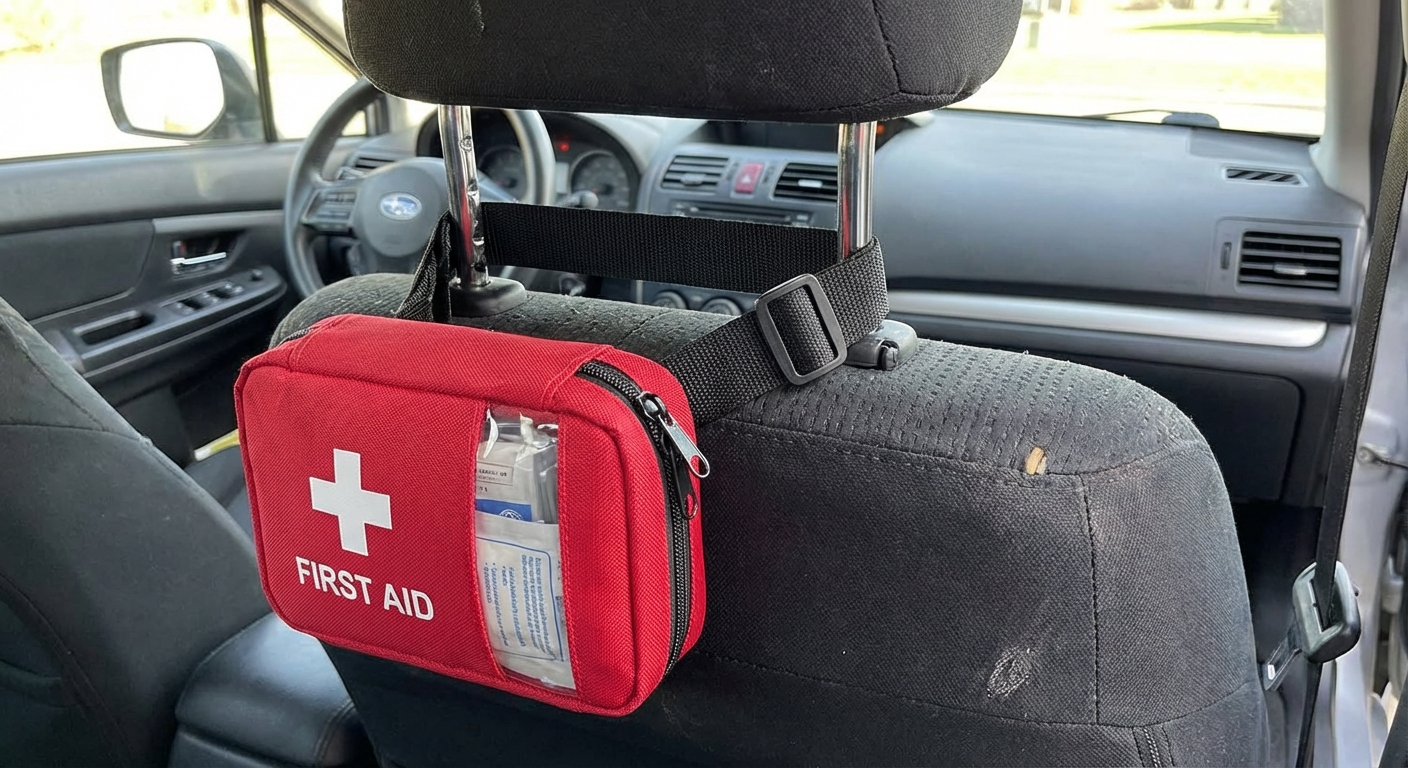
- Fits in a glove box or centre console
- Covers minor cuts, scrapes, and burns
- Typically lacks trauma supplies
- Price range: $10–$25
Our pick: Swiss Safe 2-in-1 Kit — the bonus mini kit clips to your bag or backpack
Standard Vehicle Kits (100–200 items)
Best for: Families, regular road trips
- Fits in boot/trunk without taking up too much space
- Covers most common road emergencies
- Some include burn gel, eye wash, and cold packs
- Price range: $25–$50
Our pick: Surviveware Large First Aid Kit — excellent organisation with labelled pouches
Trauma/Advanced Kits (200+ items or specialist supplies)
Best for: Off-roaders, rural drivers, long-haul trips
- Includes tourniquets, haemostatic gauze, CPR masks
- Some include splints and cervical collars
- Often includes a comprehensive first aid guide
- Price range: $50–$150+
Our pick: Ever Ready First Aid Trauma Kit — tourniquet included, critical for remote areas
What to Look For in Any Kit
Case quality: Hard cases protect contents from compression. Soft cases with clear pouches allow faster access. Look for water-resistant at minimum.
Expiry dates: Check that included medications and sterile supplies have adequate shelf life. Most quality kits show the earliest expiry date on the packaging.
Refill availability: A kit you can restock is far more cost-effective over time. Surviveware and Swiss Safe both offer refill packs.
How to Pack Your Car First Aid Kit
 Product Lineup visual for How to Pack Your Car First Aid Kit
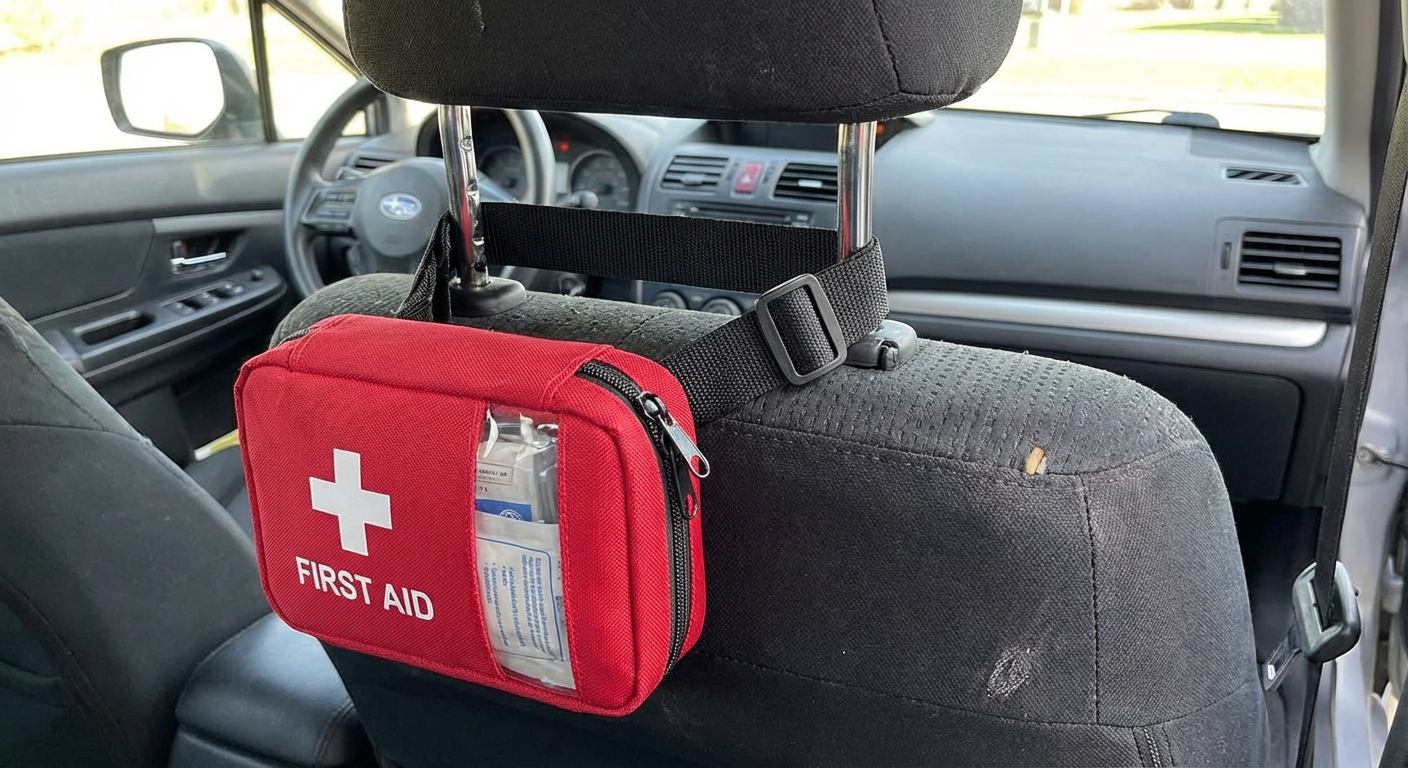
Even the best kit is useless if you can't find what you need under pressure. Organisation matters as much as contents.
Zone Your Kit
Zone 1 — Immediate access (front pocket or top layer):
- Gloves (always first — protect yourself before treating anyone)
- CPR face shield
- Adhesive bandages (assorted)
- Antiseptic wipes
- Gauze pads (5×5cm)
- Medical tape
- Scissors
- Tweezers
Zone 2 — Secondary access:
- Larger gauze pads (10×10cm)
- Conforming bandages
- Triangular bandages
- Wound closure strips
- Burn gel sachets
- Eye wash saline
Zone 3 — Emergency supplies:
- Emergency foil blanket
- Instant cold packs
- Tourniquet (if included)
- Splint
- First aid instruction booklet
Storage Location in the Car
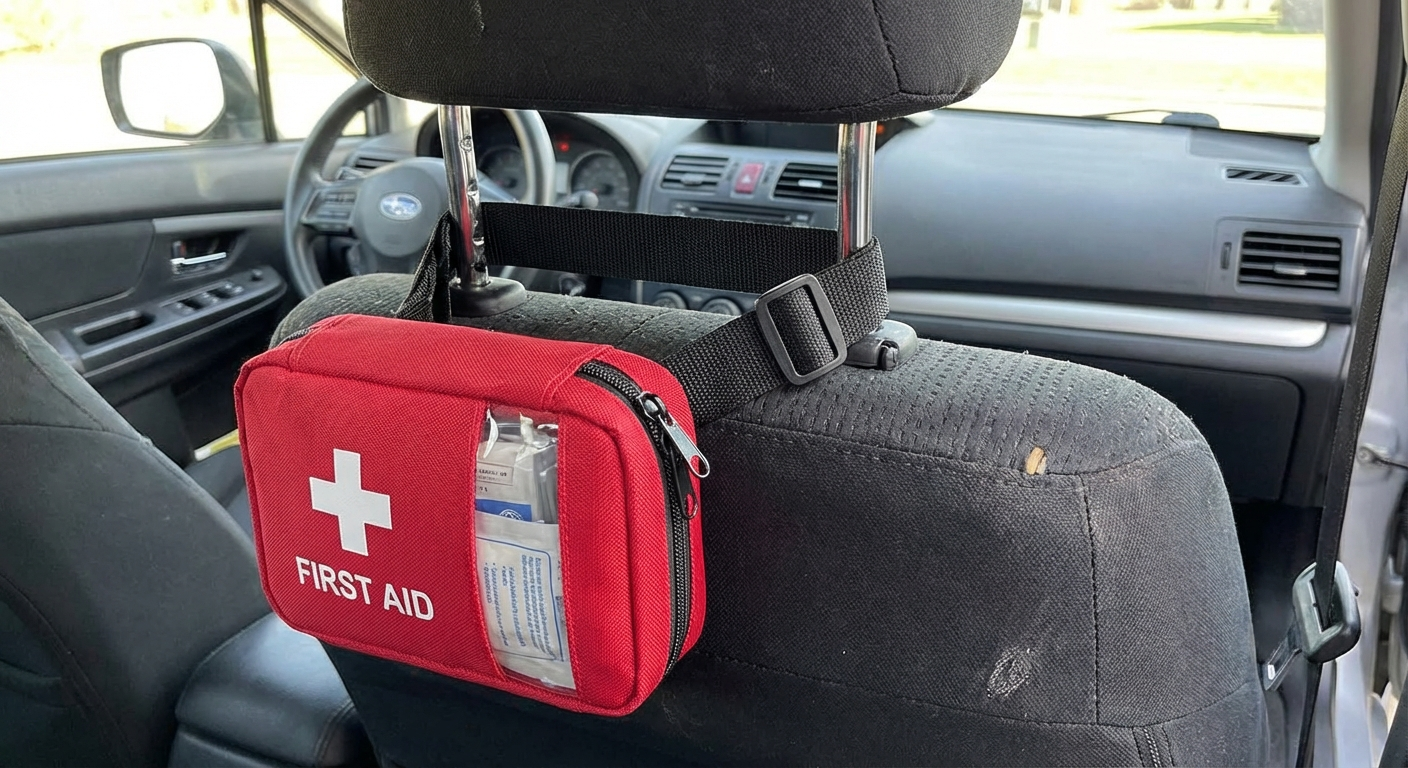
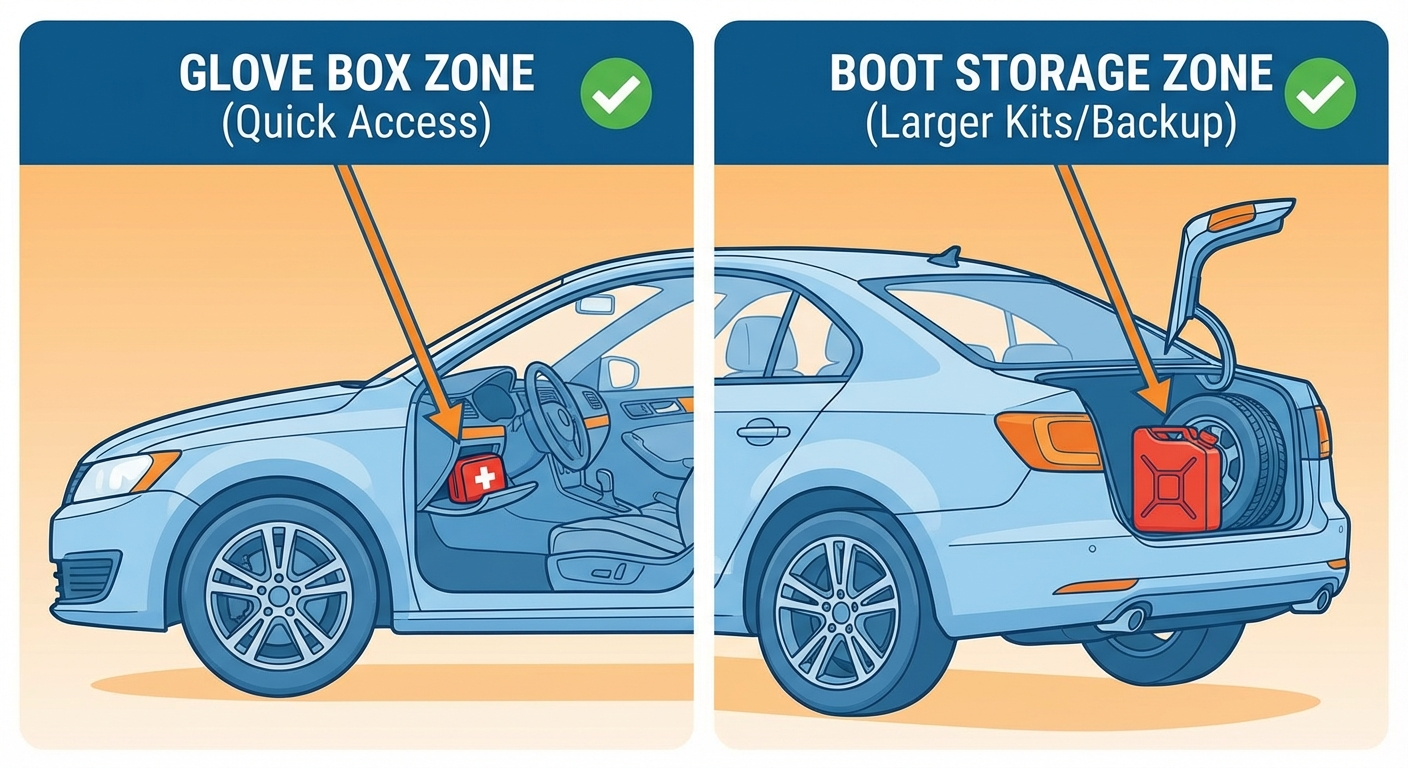
The three most common storage spots each have pros and cons:
| Location | Pros | Cons |
|---|---|---|
| Glove box | Instantly accessible | Limited space, heat exposure |
| Centre console | Easy reach, temperature moderate | Very limited space |
| Boot/Trunk | Spacious, temperature stable | Far from driver if injured |
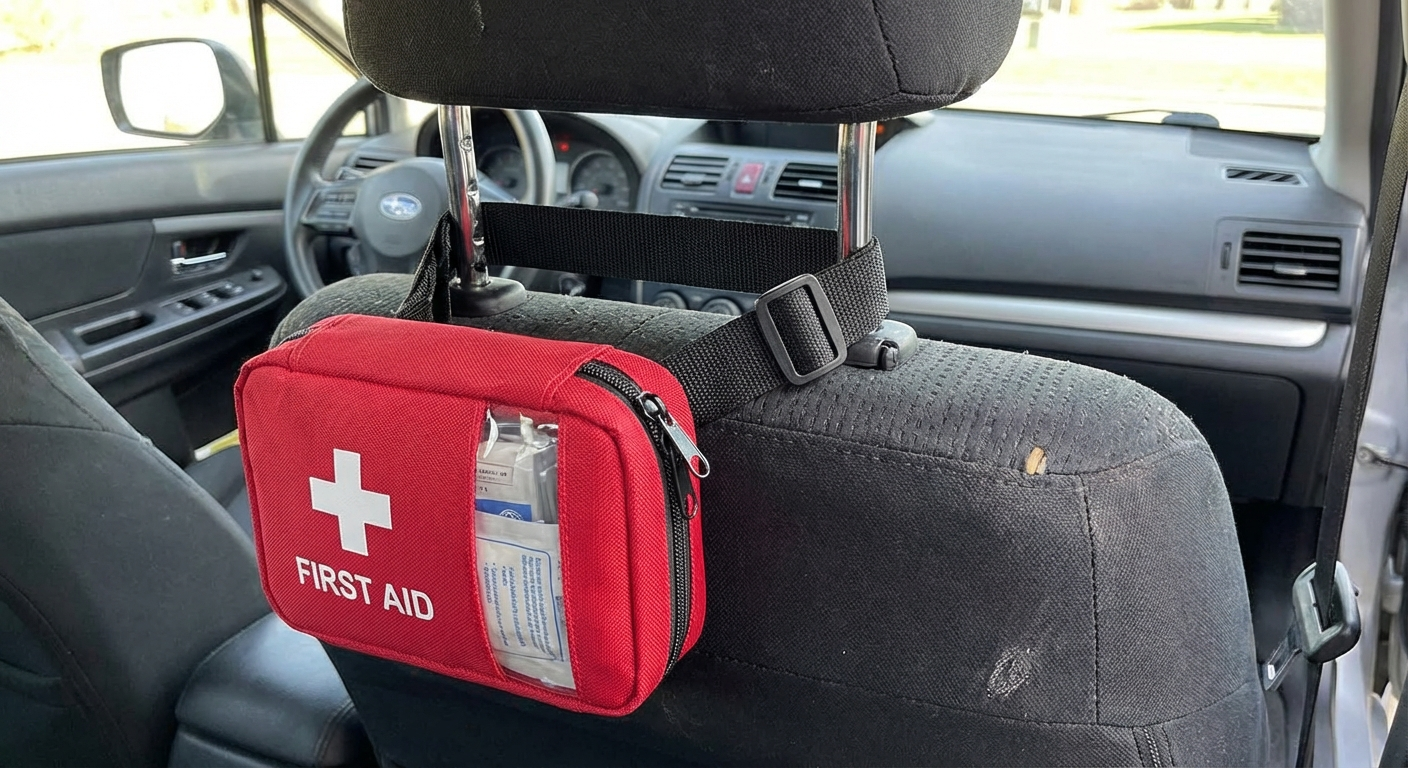
Recommendation: Keep a compact emergency kit in the glove box for immediate access, and a larger comprehensive kit in the boot.
Maintenance Schedule
- Monthly: Check that kit is still in the car and hasn't been raided for supplies
- Every 6 months: Check expiry dates on medications, burn gel, and sterile supplies
- Annually: Full inventory check, replace any used or expired items
- After any use: Restock immediately
If you're interested in treating foot injuries on the road with your car kit, see the detailed wound management guide at plantarfasciitisguides.com — they cover everything from glass cuts to sprain stabilisation.
Treating Common Road Injuries
 Tips visual for Treating Common Road Injuries
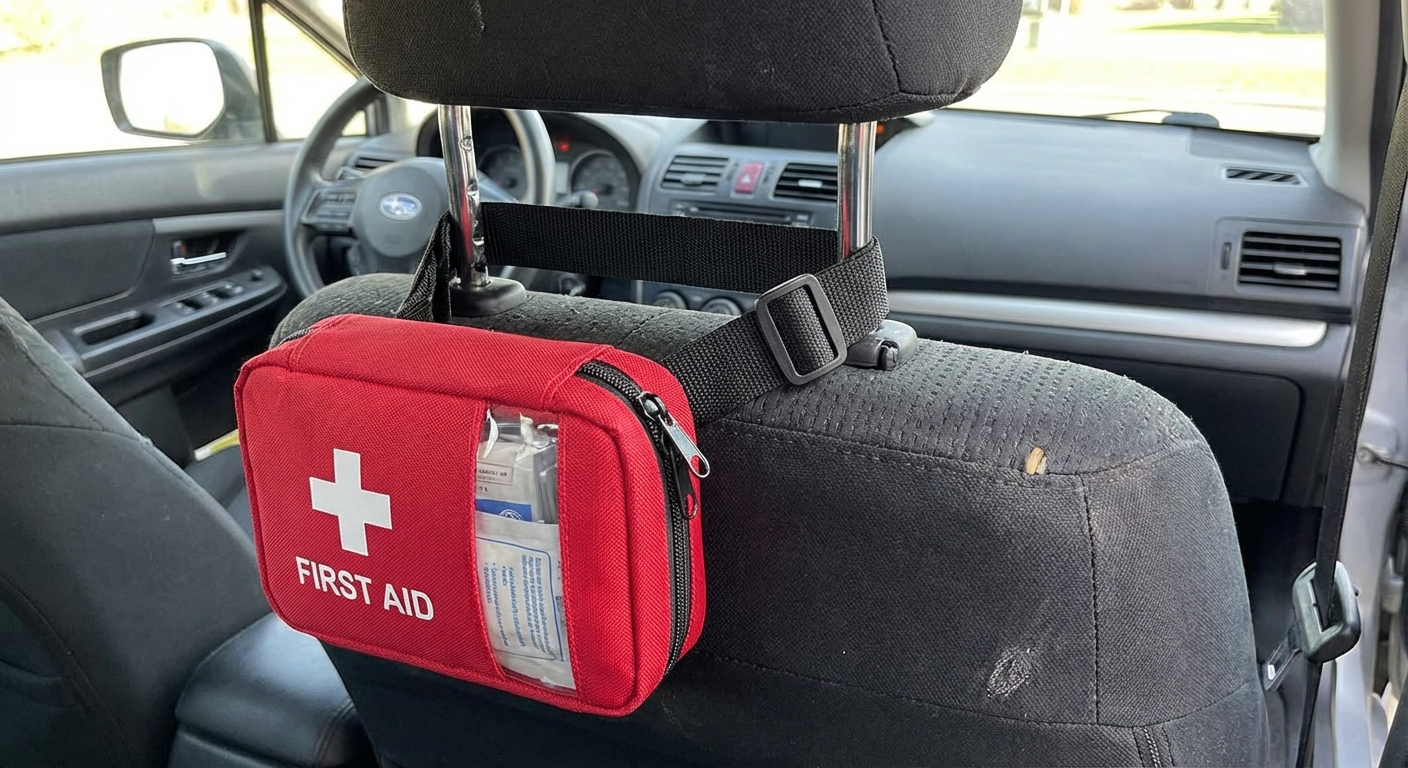
A kit is only useful if you know how to use it. Here are step-by-step guides for the most common road emergency scenarios.
Severe Bleeding (Major Laceration)
- Protect yourself first — put on gloves before touching any wound
- Apply direct pressure — use a clean gauze pad, press firmly, do not remove
- Elevate if possible — raise the injured limb above heart level
- Secure with bandage — wrap conforming bandage over the gauze, firm but not tourniquet-tight
- Watch for soakthrough — if blood soaks through, add more gauze on top (do not remove original)
- Call emergency services — 000 (AU), 911 (US), 999 (UK), 112 (EU)
- Apply tourniquet — only if bleeding cannot be controlled and it is a limb injury
Burns
- Cool the burn — run cool (not cold) water for 20 minutes minimum
- Remove jewellery — rings and watches before swelling starts
- Apply burn gel — only after cooling, never on open blisters
- Cover loosely — use a non-stick dressing or cling film
- Do not use: butter, toothpaste, ice, or household remedies
- Seek medical help — for any burn larger than a 50-cent coin or on face/hands
Fractures and Sprains
- Do not move the person if a spinal injury is possible
- Immobilise the limb — use a triangular bandage as a sling for arm injuries
- Apply cold pack — to reduce swelling (never directly on skin, wrap in cloth)
- Elevate — keep the limb elevated to reduce swelling
- Check circulation — feel for pulse below the injury, check finger/toe sensation
Shock
Signs of shock: pale/clammy skin, rapid shallow breathing, confusion, weakness.
- Lay the person down, legs elevated (unless head/neck/spine injury suspected)
- Keep them warm with emergency foil blanket
- Do not give food or water
- Talk to them calmly, reassure them
- Call emergency services immediately
For more comprehensive first aid guidance, see our related guides:
- First Aid Kit Checklist for 2026 — a complete inventory guide
- What Every First Aid Kit Should Contain — essential supplies breakdown
- Best First Aid Kit for Home Use — for your home emergency kit
Additional Must-Have Car Emergency Items
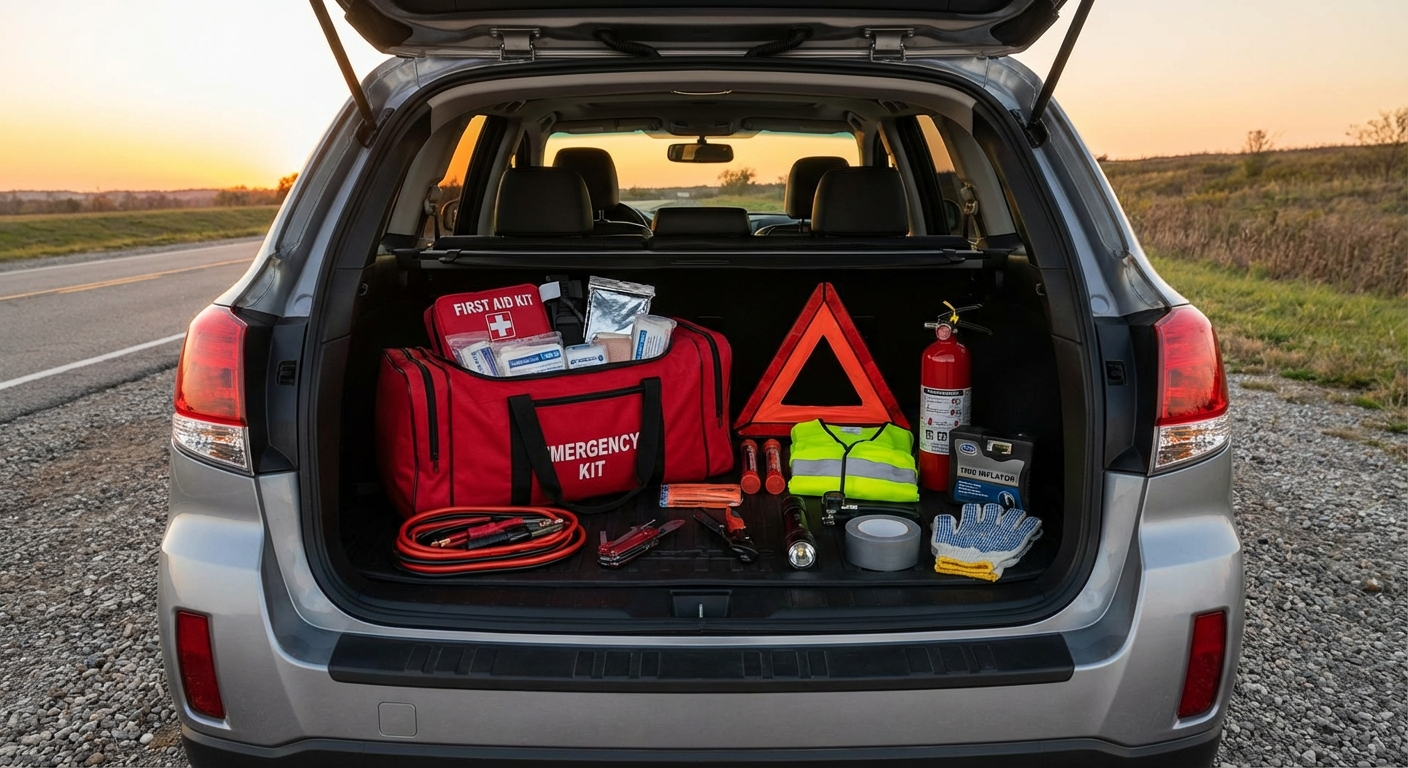
Beyond your first aid kit, consider these items as part of a complete vehicle emergency kit:
Safety Equipment
- Warning triangle or flares — required in many countries, alerts other drivers
- High-visibility vest — mandatory in many European countries, critical safety item
- Tow rope or jump cables — for vehicle recovery
- Torch with spare batteries — for night incidents or checking under bonnet
Survival Items for Long Trips
- Emergency water (500ml minimum) — dehydration is a real risk in hot climates
- Energy bars or snacks — blood sugar management in shock situations
- Space/foil blanket — hypothermia prevention if stranded overnight
- Mobile phone charger (car adapter) — to call for help
Tools
- Glass-breaker and seatbelt cutter — a $10 tool that can save your life if trapped
- Multi-tool — covers dozens of scenarios
- Duct tape — temporary repairs and improvised splints
Frequently Asked Questions
What is the best first aid kit for a car?
The Surviveware Large First Aid Kit is our top pick for most drivers. It contains 200 pieces, is MOLLE-compatible for organisation, and the case is water-resistant. For budget buyers, the Be Smart Get Prepared 250-Piece Kit offers excellent value at around $20.
Is it a legal requirement to have a first aid kit in your car?
It depends on your country. Germany, France, Austria, Czech Republic, and several other European countries legally require first aid kits in all vehicles. Australia, the UK, and the US do not have federal laws requiring them for private vehicles, though commercial vehicles often have different rules.
Where should I keep my first aid kit in the car?
Keep a compact emergency kit in the glove box or centre console for immediate access. Store a larger comprehensive kit in the boot/trunk. The glove box kit handles minor incidents; the boot kit handles serious emergencies.
How often should I replace my car first aid kit?
Check expiry dates every 6 months. Most sterile dressings, medications, and burn gel have a 3–5 year shelf life. Replace any items within 6 months of their expiry date. Do a full inventory check annually.
What should a car first aid kit contain as a minimum?
At minimum: adhesive bandages (assorted sizes), sterile gauze pads, conforming bandage, triangular bandage, disposable gloves, antiseptic wipes, antiseptic cream, burn gel, eye wash saline, emergency foil blanket, scissors, tweezers, and a first aid instruction booklet.
Can I make my own car first aid kit?
Yes. Buy an empty case and fill it with quality supplies. This lets you customise for your specific needs (e.g., adding an EpiPen if you have allergies, or adding children's pain relief if you have kids). However, pre-made kits are usually better value than buying individual components.
Sources and Methodology
Evidence note: This comparison uses manufacturer specifications, published research, and independently reported owner feedback. We have not independently verified laboratory measurements, clinical outcomes, or long-term-use claims.
- Australian Red Cross First Aid Recommendations — minimum contents standard for vehicle kits
- St John Ambulance Car Kit Guidelines (Australia) — contents and storage recommendations
- European Standard EN 13164:2021 — Portable emergency kit for motor vehicles
- American Red Cross First Aid Manual — treatment protocols cited in this guide
- FMCSA Commercial Vehicle Safety Regulations — US commercial vehicle requirements
- WHO Prehospital Trauma Care Guidelines — treatment protocols for road trauma
All product prices are approximate and may vary. We recommend checking current pricing on Amazon.