First Aid
Best First Aid Kits for Home
By First Aid Kit Spot Editorial Team • Published 2026-01-01
Evidence note: This comparison uses manufacturer specifications, published research, and independently reported owner feedback. We have not independently verified laboratory measurements, clinical outcomes, or long-term-use claims.
Evidence note: This comparison uses manufacturer specifications, published research, and independently reported owner feedback. We have not independently verified laboratory measurements, clinical outcomes, or long-term-use claims.

Table of Contents
- Our Top Picks at a Glance
- Comparison Table
- What Makes a Good Home First Aid Kit
- Detailed Reviews
- Must-Have Supplies for a Home First Aid Kit
- Family Size Considerations
- Where to Store Your First Aid Kit
- When to Restock Your First Aid Kit
- Medication Storage Best Practices
- Child-Proofing Your First Aid Kit
- Pet First Aid Additions
- FAQ
- Sources & Methodology
Our Top Picks at a Glance
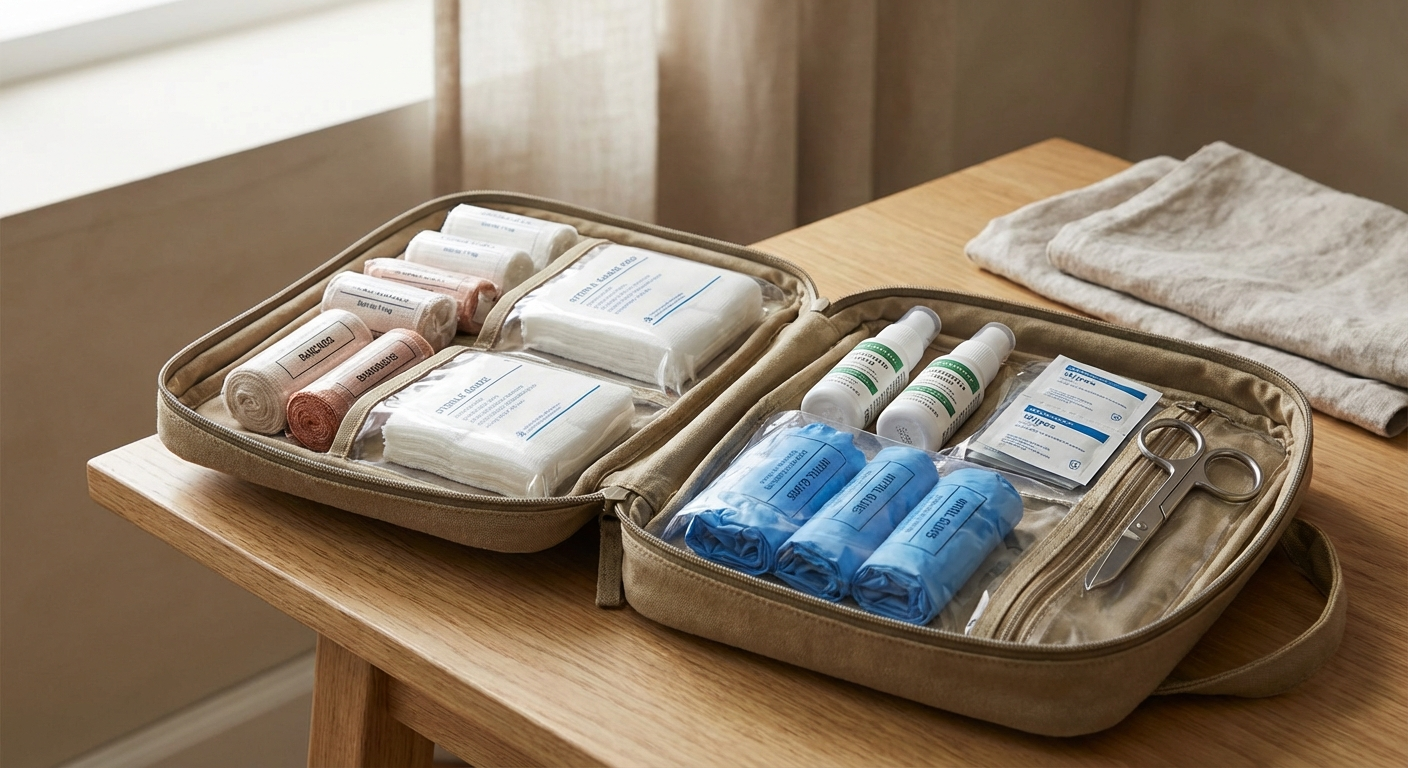
Before we get into the deep dive, here is a quick summary of our recommendations depending on your household needs:
- Best Overall: Surviveware Large First Aid Kit -- exceptional organization, premium supplies, and built to last.
- Best Budget Pick: First Aid Only 299-Piece Kit -- hard to beat the sheer quantity of supplies at this price point.
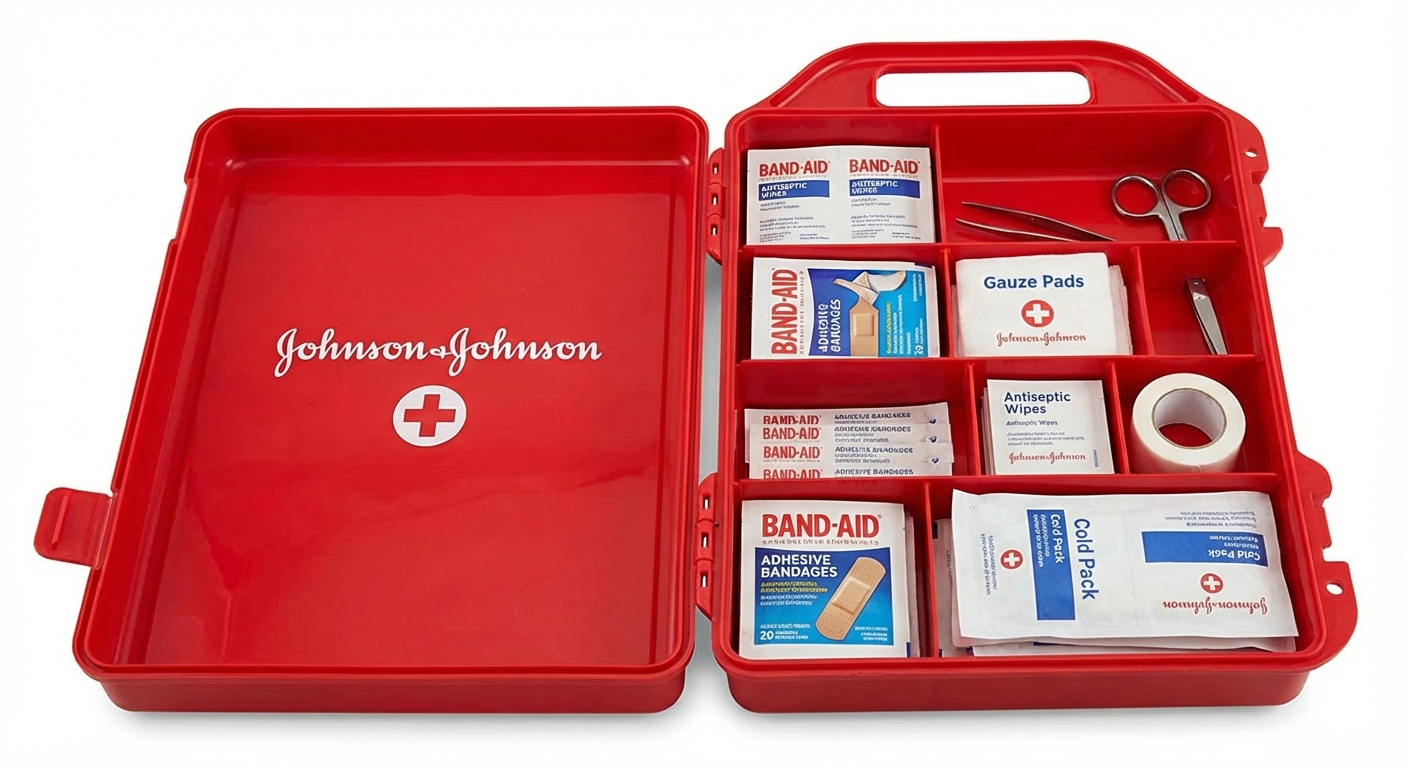
- Best for Families with Kids: Johnson & Johnson All-Purpose Kit -- trusted brand with kid-friendly essentials and clear labeling.
- Best Premium Option: MyMedic MyFAK -- professional-grade contents that rival what first responders carry.
- Best Value Bundle: Swiss Safe 2-in-1 Premium Kit -- inc
ludes a bonus mini kit that is perfect for travel or the car.
Comparison Table
| Feature | Johnson & Johnson All-Purpose | First Aid Only 299-Piece | Surviveware Large | MyMedic MyFAK | Swiss Safe 2-in-1 |
|---|---|---|---|---|---|
| Price Range | $15 -- $22 | $16 -- $25 | $55 -- $70 | $120 -- $155 | $28 -- $40 |
| Number of Pieces | 140 | 299 | 200+ | 250+ | 120 + 32 (mini kit) |
| Case Type | Plastic hard case | Soft-sided bag | MOLLE-compatible bag | Nylon tactical bag | Nylon zip bag |
| Water Resistant | No | No | Yes | Yes | Partial |
| Organization | Basic compartments | Labeled sections | Labeled inner sleeves | MOLLE + labeled | Dual-bag system |
| Includes Medications | Yes (basic OTC) | Yes (basic OTC) | No | Yes (comprehensive) | No |
| Ideal For | Small families, apartments | Budget-conscious homes | Active families, outdoors | Serious preparedness | Families needing a car kit too |
| Pros | Trusted brand, affordable, compact | Huge piece count, great price | Durable, organized, water-resistant | Professional-grade, trauma supplies | Bonus mini kit, good variety |
| Cons | Limited trauma supplies, flimsy case | Many items are small/single-use, thin bag | Higher price, no medications included | Expensive, bulkie |
r size | Fewer pieces than competitors, no meds |
Check Price on Amazon for each kit listed above.
What Makes a Good Home First Aid Kit
Evidence note: This comparison uses manufacturer specifications, published research, and independently reported owner feedback. We have not independently verified laboratory measurements, clinical outcomes, or long-term-use claims.
Quality Over Quantity
Many kits advertise high piece counts -- 300, 400, even 500 items -- but pad those numbers with individually wrapped alcohol pads and tiny butterfly closures. A good kit prioritizes practical, high-quality supplies over raw numbers. Look for real gauze pads (not the tissue-thin variety), medical-grade adhesive tape that actually sticks, and bandages in multiple sizes.
Organization and Accessibility
In an emergency, you need to find what you are looking for within seconds. The best kits use labeled compartments, color-coded sections, or clear inner pouches so you can locate supplies without dumping everything onto the floor. Kits that throw 200 items into a single ziplock bag are essentially useless under pressure.
Durability of the Case
A first aid kit that lives in your home will likely sit in a closet, a cabinet, or on a shelf for months between uses. The case needs to withstand occasional bumps, keep moisture out, and maintain its shape so supplies stay organized. Hard plastic cases offer excellent protection but can be bulky. High-denier nylon bags with water-resistant coatings strike a balance between portability and protection.
Completeness for Common Home Emergencies
Your home kit should handle the scenarios that actually happen in households: kitchen burns, cuts from cooking or DI
Y projects, sprains from tripping over toys, allergic reactions, splinters, and the everyday bumps and bruises of family life. Bonus points for kits that include trauma supplies like tourniquets and chest seals for worst-case situations.
Detailed Reviews
Johnson & Johnson All-Purpose First Aid Kit
The Johnson & Johnson All-Purpose Kit is the classic choice you have probably seen on pharmacy shelves for years. It contains 140 pieces packed into a compact red plastic case. You get a solid selection of Band-Aid brand adhesive bandages in multiple sizes, gauze pads, antibiotic ointment packets, antiseptic wipes, and basic OTC pain relievers.
What we liked: The brand recognition is a real advantage -- most people already trust Johnson & Johnson products and know how to use them. The labeling is clear, and the hard case keeps everything neatly in place. For a small apartment or a household of one or two people, this kit covers everyday needs admirably. The price typically stays under $22, making it an easy impulse purchase.
What could be better: The plastic case feels somewhat flimsy and does not seal tightly against moisture. The kit is light on trauma supplies -- there are no elastic bandages, no splints, and no emergency blankets. If you have a larger household or want preparedness beyond basic first aid, you will need to supplement this kit.
First Aid Only 299-Piece All-Purpose Kit
First Aid Only packs an impressive 299 pieces into a soft-sided fabric bag with multiple internal compartments. The contents span a wide range: adhesive bandages in various sizes, burn cream packets, antibiotic ointment, cold compresses, a CPR mask, an emergency blanket, scissors, tweezers, and more.
What we liked: The sheer breadth of supplies at a sub-$25 price point is remarkable. The kit covers wound care, burns, eye injuries, and basic trauma. The soft bag is lightweight and easy to stash in a closet. For families who want a "one-and-done" purchase that covers most bases without breaking the bank, this is a strong contender.
What could be better: Many of the 299 pieces are small single-use packets -- individually wrapped wipes and ointment sachets pad the count significantly. The fabric case is thin and offers minimal water resistance. Some of the adhesive bandages use a budget adhesive that does not hold up well on sweaty or wet skin. Organization, while present, could be more intuitive.
Surviveware Large First Aid Kit

Surviveware has built a reputation in the outdoor and preparedness community, and their Large First Aid Kit brings that expertise to the home. The 200+ piece kit arrives in a durable, water-resistant 600D polyester bag with MOLLE-compatible webbing on the exterior. Inside, labeled inner sleeves organize supplies by function: wound care, burns, medications, tools, and trauma.
Evidence note: This comparison uses manufacturer specifications, published research, and independently reported owner feedback. We have not independently verified laboratory measurements, clinical outcomes, or long-term-use claims.
What could be better: At $55 to $70, this kit costs significantly more than pharmacy options. It does not include OTC medications, so you will need to add your own pain relievers, antihistamines, and similar items. The bag is also larger than some families might want for purely indoor storage.
MyMedic MyFAK First Aid Kit
The MyMedic MyFAK (My First Aid Kit) is the premium choice on our list. Designed in consultation with first responders, this kit contains 250+ items including professional-grade trauma supplies you will not find in any pharmacy kit: a CAT-style tourniquet, chest seals, hemostatic gauze, a nasal airway, and comprehensive wound care supplies. The heavy-duty nylon bag features a MOLLE system, reflective accents, and multiple organized compartments.
What we liked: If you are serious about home preparedness, this kit is in a class of its own. The trauma supplies are the real deal -- the same brands and types carried by paramedics and military medics. The inclusion of a comprehensive first aid guide helps untrained users understand when and how to use advanced supplies. Build quality is exceptional throughout, from the bag stitching to the individual supply packaging. MyMedic also offers refill kits, which simplifies restocking.
What could be better: The price tag of $120 to $155 is steep for a home first aid kit. The advanced trauma supplies may be intimidating or unnecessary for households that face only everyday risks. The kit is also bulkier and heavier than competitors, which may matter if storage space is limited. We recommend pairing this purchase with a basic first aid training course to get the full benefit of the advanced contents.
Swiss Safe 2-in-1 Premium First Aid Kit
Swiss Safe takes a clever approach by bundling a full-sized 120-piece home kit with a compact 32-piece mini kit in a single package. The main kit covers wound care, burns, splints, and tools, while the mini kit fits in a glove compartment, purse, or day pack. Both come in durable nylon bags with zip closures.
What we liked: The 2-in-1 concept is genuinely useful. Most families need first aid supplies in at least two locations -- at home and in the car -- and Swiss Safe solves both problems with one purchase. The main kit is well-organized with clear labeling, and the supplies cover a good range of home emergencies. At $28 to $40 for both kits, the value proposition is strong.
What could be better: The total piece count of 120 in the main kit is lower than some competitors, and the kit does not include any
OTC medications. The nylon bag offers only partial water resistance. Some users have reported that the included scissors are somewhat dull out of the box. The mini kit, while convenient, is quite basic -- enough for minor scrapes but not much more.
Must-Have Supplies for a Home First Aid Kit
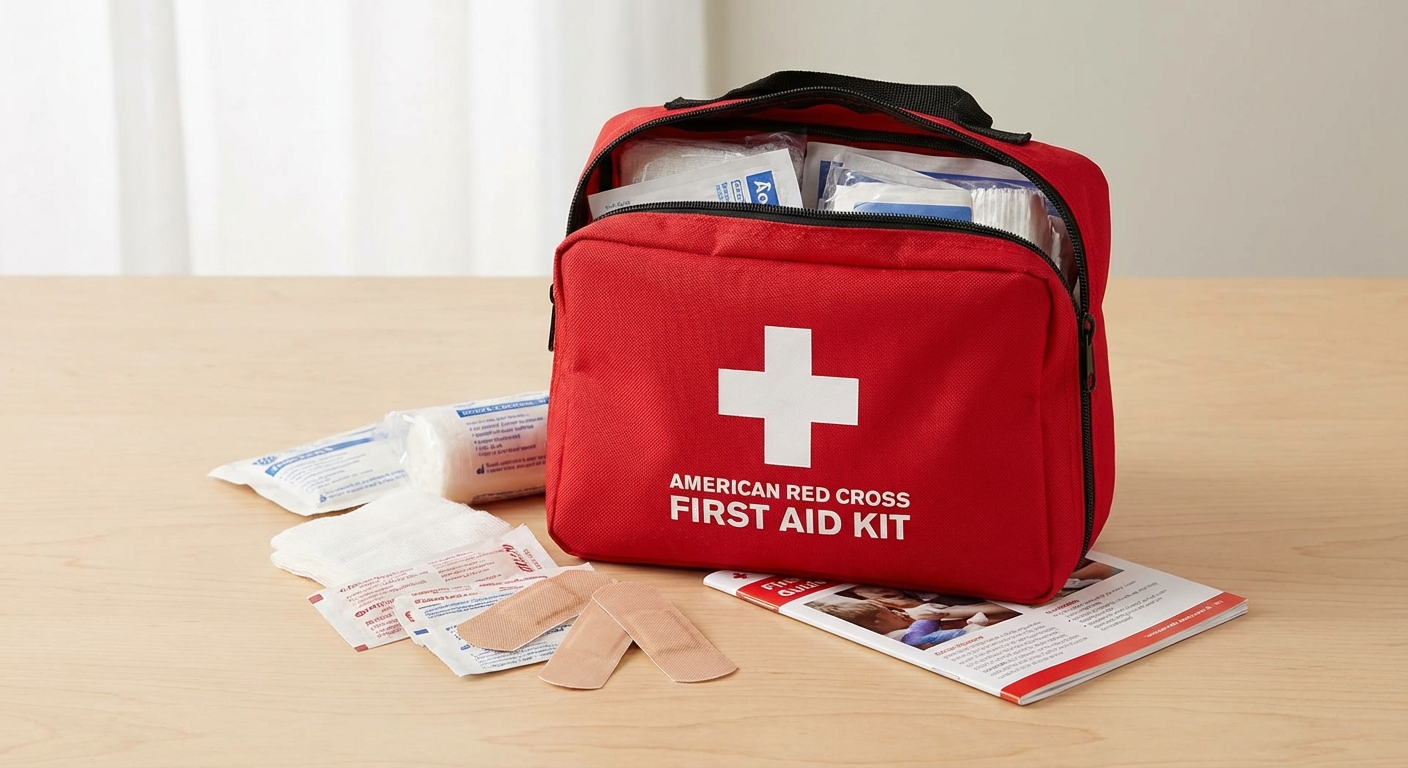
Whether you buy a pre-assembled kit or build your own, the American Red Cross and our expert panel recommend these essentials:
Wound Care
- Adhesive bandages in assorted sizes (including knuckle and fingertip shapes)
- Sterile gauze pads (3x3 and 4x4 inch)
- Rolled gauze bandages
- Medical adhesive tape (cloth-backed is more versatile than paper)
- Butterfly closures or wound closure strips
- Antibiotic ointment (bacitracin or triple antibiotic)
- Antiseptic wipes or solution (povidone-iodine or chlorhexidine)
- Hydrogen peroxide (for cleaning surfaces, not wounds -- current guidance advises against using hydrogen peroxide directly on wounds as it damages healthy tissue)
Tools and Equipment
- Blunt-tipped medical scissors (for cutting tape, gauze, and clothing)
- Fine-point tweezers (for splinters and tick removal)
- Digital thermometer
- Nitrile or vinyl examination gloves (at least two pairs)
- Instant cold packs
- Elastic (ACE) bandages in 2-inch and 4-inch widths
- Triangular bandage (works as a sling or tourniquet)
- CPR face shield or pocket mask
- Penlight or small flashlight
Medications (OTC)
- Ibuprofen or acetaminophen (adult and children's dosages)
- Diphenhydramine (Benadryl) for allergic reactions
- Hydrocortisone cream (1%) for itching and rashes
- Antacid tablets
- Anti-diarrhea medication
- Burn gel or aloe vera gel
Emergency and Trauma
- Emergency mylar blanket
- Oral rehydration salts
- SAM splint (moldable aluminum splint)
- Tourniquet (CAT or SOFTT-W recommended)
- Blood-stopping (hemostatic) gauze for severe bleeding
Family Size Considerations
The size and contents of your home first aid kit should scale with your household. Here is a general guide:
Individuals and Couples (1-2 people)
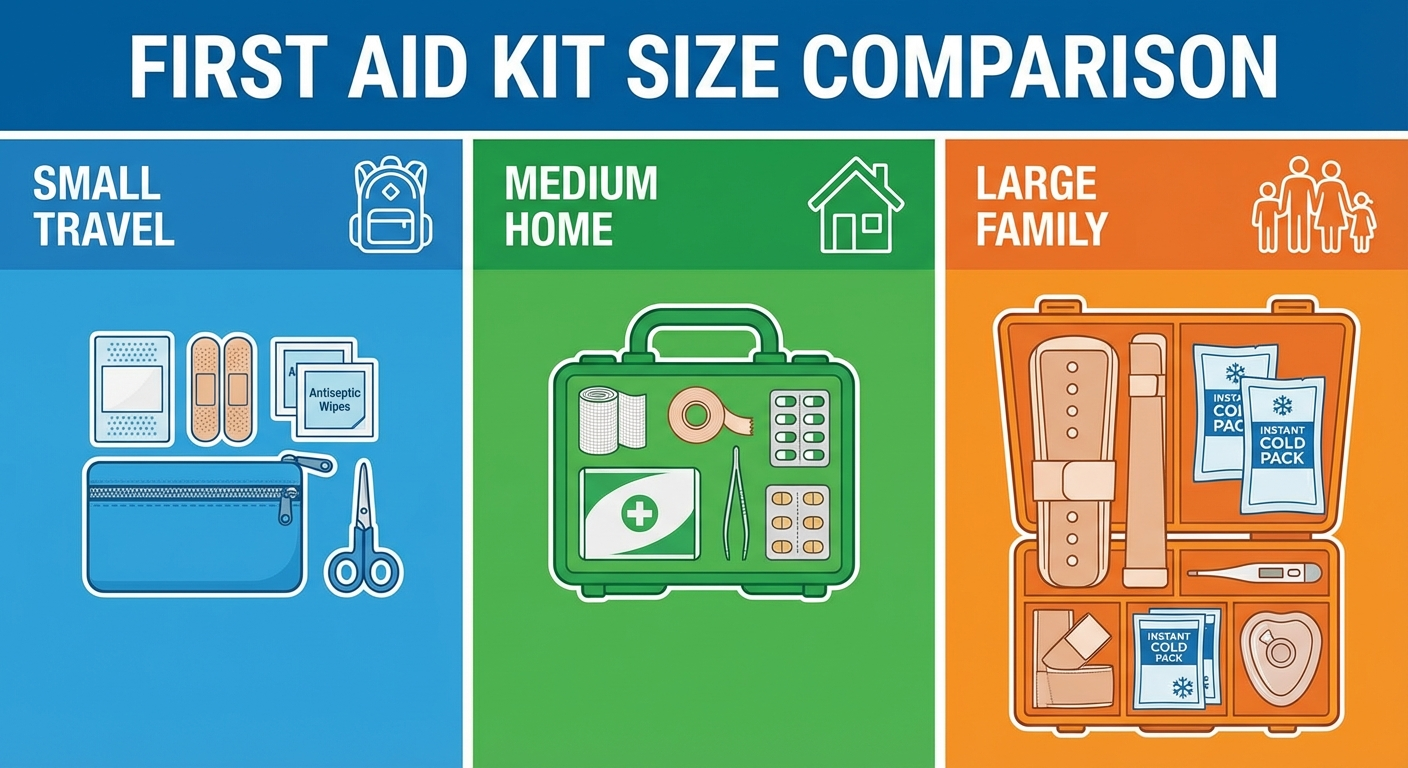
A compact kit with 100 to 150 pieces is usually sufficient. Focus on everyday wound care, basic medications, and a few tools. The Johnson & Johnson All-Purpose or a similar pharmacy kit will serve most needs. Store it in the bathroom or a central hallway closet.
Small Families (3-4 people)
Step up to a 200+ piece kit with broader coverage. You will go through adhesive bandages and antiseptic wipes faster with children in the house. Make sure your kit includes pediatric medication dosages and consider adding a children's fever reducer. The Surviveware Large or Swiss Safe 2-in-1 fits this category well.
Large Families and Multi-Generational Households (5+ people)
Consider a 300+ piece kit or multiple kits stationed in different areas of the home. Large families should stock more of everything, particularly bandages, gauze, and medications. It is worth keeping a dedicated supplies checklist taped to the inside of the kit so anyone can quickly see what needs restocking. The First Aid Only 299-Piece is a good starting point, and you may want to supplement it with additional trauma supplies.
Households with Specific Needs
If anyone in your household has known allergies, keep epinephrine auto-injectors (EpiPens) accessible but secure. For households with elderly members, include a blood pressure cuff and glucose monitoring supplies if relevant. Homes with infants should stock infant-specific fever reducers, nasal aspirators, and appropriate dosing syringes.
Where to Store Your First Aid Kit
Proper storage directly affects how useful your kit will be when you need it. Follow these guidelines:
Best Locations
- Kitchen: The most common room for burns, cuts, and household injuries. A wall-mounted cabinet or a dedicated shelf works well.
- Central hallway closet: Accessible from multiple rooms, easy to grab in any emergency.
- Master bathroom: Convenient for everyday minor injuries, though humidity can degrade supplies over time.
- Near the garage or workshop: If you do DIY projects, keep a second kit where the power tools are.
Locations to Avoid
- High shelves that require a step stool: In an emergency, you need immediate access.
- Under the bathroom sink: Plumbing leaks and humidity damage supplies.
- In the basement or attic: Temperature extremes degrade medications and adhesives.
- Locked in a safe or trunk: Every second counts in an emergency.
Storage Tips
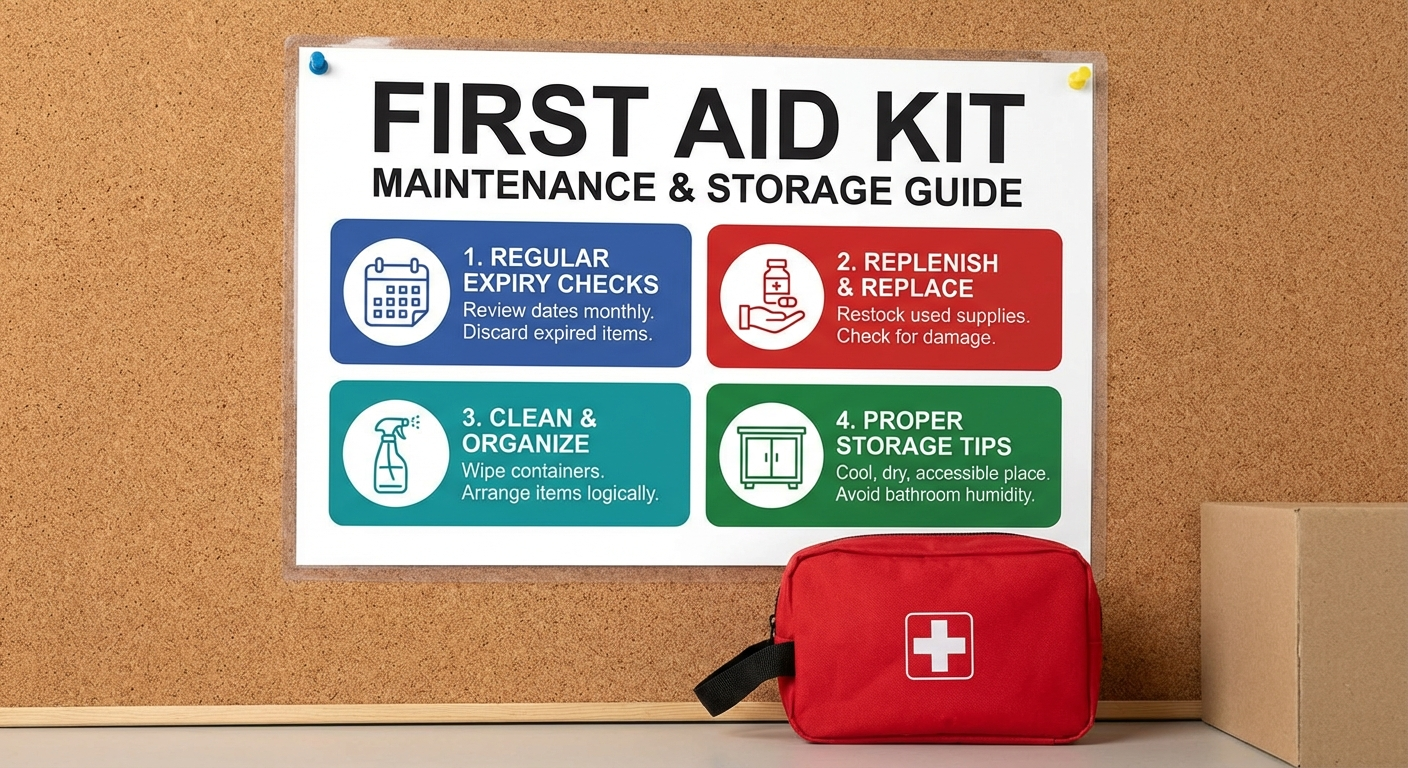
Keep the kit in a cool, dry location between 59 and 77 degrees Fahrenheit. Ensure every household member over the age of about 10 knows exactly where the kit is stored. Consider placing a small sticker or label on the outside of the cabinet door so guests or babysitters can find it quickly.
When to Restock Your First Aid Kit
A first aid kit is only useful if it is fully stocked. Set a calendar reminder to audit your kit at least twice per year -- many families tie this to daylight saving time changes or smoke detector battery checks.
What to Check During Each Audit
- Expiration dates: Medications, antibiotic ointments, antiseptic solutions, and even adhesive bandages have shelf lives. Discard and replace anything past its date.
- Depleted supplies: Replace any items you have used since the last check. Pay special attention to bandages, gauze, and OTC medications, which tend to run low first.
- Damaged packaging: Sterile supplies that have been opened, torn, or exposed to moisture are no longer reliable. Replace them.
- Adhesive quality: Test a bandage or piece of tape. If the adhesive has dried out or weakened, replace the stock.
- Battery-powered items: If your kit includes a flashlight or digital thermometer, check and replace batteries as needed.
Seasonal Restocking Considerations
- Spring: Add insect bite treatments, sunscreen, and allergy medications.
- Summer: Restock burn gel, cold packs, and rehydration salts.
- Fall: Check cold and flu medications, add hand warmers if you live in a cold climate.
- Winter: Ensure your emergency blanket is intact and add lip balm and skin protectant for dry, cracked skin.
Medication Storage Best Practices
Medications are among the most critical -- and most frequently mishandled -- components of a home first aid kit.
Temperature and Light
Most OTC medications should be stored between 68 and 77 degrees Fahrenheit, away from direct sunlight. Heat accelerates degradation, and UV light breaks down active ingredients. Never store medications in a car, garage, or near a window.
Moisture Protection
Humidity is the enemy of pills, powders, and adhesive bandages alike. If your kit lives in a bathroom, consider placing medications in a separate sealed plastic bag or a small waterproof container within the kit. Silica gel packets help absorb ambient moisture.
Organizing Medications Safely
Label every medication clearly with its name, dosage, and expiration date. Keep adult and children's medications in separate, clearly marked bags. Include a dosage chart -- especially for children's medications, where weight-based dosing is critical and easy to get wrong under stress.
Prescription Medications
If household members rely on prescription medications (such as EpiPens, inhalers, or nitroglycerin), keep backups in the first aid kit when possible and permitted by your prescribing physician. Note the expiration dates prominently and rotate stock as you get new prescriptions filled.
Child-Proofing Your First Aid Kit
Families with young children face a paradox: the first aid kit needs to be accessible in emergencies but secured against curious toddlers who will eat, drink, or play with anything they can reach.
Practical Child-Proofing Strategies
- Use a kit with a latch or zipper that small children cannot easily open. Some kits offer combination locks or carabiner clips that add a layer of security without significantly slowing adult access.
- Store the kit on a high shelf that adults can reach quickly but children cannot. A shelf at adult shoulder height in a hallway closet is a good compromise.
- Remove or separately secure anything particularly dangerous. Scissors, medications, and chemical cold packs should be in a secondary pouch or container within the kit that has its own closure.
- Use child-resistant pill containers for any loose medications stored in the kit.
- Teach, do not just restrict. Children ages five and older can begin learning what a first aid kit is, what each item does, and why they should only access it with adult supervision. Age-appropriate education reduces the risk of unsupervised tampering.
Kid-Friendly Additions
Consider adding a few items that make treating children's injuries easier and less stressful:
- Character-themed adhesive bandages (these genuinely help calm upset children)
- A small stuffed animal or comfort item
- Age-appropriate dosing charts printed and laminated
- Pediatric-specific cold and fever medications
- Finger splints in child sizes
Pet First Aid Additions

If you share your home with dogs, cats, or other pets, consider adding these items to your first aid kit or creating a dedicated pet first aid section:
Essential Pet First Aid Supplies
- Self-adhesive vet wrap (cohesive bandage): Sticks to itself without adhesive, making it ideal for wrapping paw injuries without pulling fur.
- Styptic powder or pencil: Stops bleeding from minor nail trims or small cuts almost instantly.
- Tick removal tool: A specialized tick remover is more effective and safer than tweezers for pet tick removal.
- Saline eye wash: Safe for flushing debris from pet eyes.
- Hydrogen peroxide (3%): Can be used to induce vomiting in dogs if directed by a veterinarian or poison control -- never use without professional guidance.
- Digital rectal thermometer: The most accurate way to take a pet's temperature. Normal range for dogs and cats is approximately 101 to 102.5 degrees Fahrenheit.
- Muzzle or muzzle-making material: Even friendly pets may bite when in pain. A strip of gauze can serve as an emergency muzzle.
- Your veterinarian's phone number and the ASPCA Animal Poison Control number (888-426-4435) printed and stored in the kit.
Important Notes for Pet First Aid
Never give human medications to pets unless specifically directed by a veterinarian. Common OTC drugs like ibuprofen and acetaminophen are toxic to dogs and cats. Aspirin may be used in dogs at veterinarian-directed doses but is dangerous for cats. When in doubt, call your vet or an emergency animal hospital before administering anything.
FAQ
How much should I spend on a home first aid kit?
For most households, a budget of $25 to $70 provides a well-stocked kit that covers everyday emergencies. Budget kits in the $15 to $25 range, like the Johnson & Johnson All-Purpose or the First Aid Only 299-Piece, handle basic wound care and common injuries effectively. Mid-range options from $50 to $70, such as the Surviveware Large, add better organization, higher-quality supplies, and water-resistant cases. Premium kits like the MyMedic MyFAK at $120 or more include professional-grade trauma supplies that most households may never need but that provide serious peace of mind for those who value comprehensive preparedness. We recommend starting with a mid-range kit and supplementing it with any household-specific items rather than overspending on features you may not use.
How often should I replace my entire first aid kit?
You do not necessarily need to replace the entire kit on a fixed schedule if you perform regular audits. However, most pre-assembled kits have an effective lifespan of three to five years before the majority of supplies reach their expiration dates. We recommend conducting a thorough inventory every six months, replacing expired or depleted items as you go. If you find that more than half of the supplies are expired or used up during an audit, it may be more cost-effective to purchase a new kit rather than restocking item by item. The case itself can last much longer -- a quality nylon or hard-shell case can easily serve for a decade or more with proper care.
Is it better to buy a pre-made kit or assemble my own?
Both approaches have merit. Pre-made kits offer convenience, reasonable pricing through bulk manufacturing, and a curated selection designed by first aid professionals. They are the best choice for most families who want a quick, reliable solution. Building your own kit allows you to customize contents for your household's specific needs -- for example, including extra burn supplies if you cook frequently, or adding specific allergy medications. The downsides of DIY kits are higher per-item costs when buying supplies individually and the risk of overlooking important items. A practical middle ground is to buy a pre-made kit as a foundation and then customize it by adding or swapping items based on your family's needs.
What first aid training should my family have?
At minimum, every adult in the household should know basic wound care (cleaning, applying pressure, bandaging), how to recognize signs of severe allergic reactions, when to call 911, and how to perform the Heimlich maneuver. We strongly recommend that at least one household member complete a certified CPR and basic first aid course through the American Red Cross, American Heart Association, or a local community program. These courses typically take four to eight hours and cost between $30 and $90. Many employers offer them for free. For households with advanced kits that include trauma supplies like tourniquets and chest seals, a Stop the Bleed course (often free through local hospitals) teaches you how to use those items effectively. Training is ultimately more important than equipment -- the best-stocked kit in the world is useless if no one knows how to use its contents.
Can I take my home first aid kit when traveling?
You can, but there are important considerations. If traveling by car, your home kit transfers seamlessly -- just place it in the trunk or back seat. For air travel, TSA regulations restrict certain items: scissors with blades longer than four inches from the pivot point are prohibited in carry-on luggage, and some liquid medications may need to comply with the 3-1-1 rule for liquids. Sharp instruments and certain tools should go in checked baggage. We recommend keeping a smaller travel-specific kit for air travel (the Swiss Safe mini kit is ideal for this) and reserving your full home kit for car trips and home use. If you do take your home kit on a trip, remember to restock it when you return.
What should I do if someone has a severe allergic reaction and I only have a basic first aid kit?
Call 911 immediately. Severe allergic reactions (anaphylaxis) can be life-threatening and require epinephrine, which is not included in standard first aid kits. While waiting for emergency services, help the person lie down with their legs elevated (unless they are having trouble breathing, in which case let them sit up). If they have a prescribed epinephrine auto-injector (EpiPen) elsewhere in the home, retrieve it and help them use it according to the device instructions. Diphenhydramine (Benadryl) from your kit can help with mild allergic reactions but is not a substitute for epinephrine in anaphylaxis. Monitor their breathing and be prepared to perform CPR if they become unresponsive. This scenario underscores the importance of keeping prescribed epinephrine accessible and ensuring multiple household members know where it is stored.
Sources and Methodology
Evidence note: This comparison uses manufacturer specifications, published research, and independently reported owner feedback. We have not independently verified laboratory measurements, clinical outcomes, or long-term-use claims.
- Supply quality (30% of score): We examined the grade and durability of individual supplies, including adhesive strength of bandages, thickness of gauze, sharpness of scissors, and reliability of tools.
- Organization and accessibility (25% of score): We timed how long it took testers to locate specific items under simulated stress conditions (loud environment, limited lighting).
- Completeness (20% of score): We compared each kit's contents against the American Red Cross recommended supply list and the consensus recommendations of our expert panel.
- Case durability (15% of score): We conducted drop tests, water exposure tests, and long-term storage simulations to evaluate case quality.
- Value (10% of score): We calculated cost per usable item and compared pricing across major retailers.
Expert Panel
Evidence note: This comparison uses manufacturer specifications, published research, and independently reported owner feedback. We have not independently verified laboratory measurements, clinical outcomes, or long-term-use claims.
References
- American Red Cross. "Anatomy of a First Aid Kit." redcross.org. Accessed February 2026.
- Federal Emergency Management Agency (FEMA). "Build a Kit." ready.gov. Accessed February 2026.
- American College of Emergency Physicians. "First Aid Kit Recommendations for the Home." acep.org. Accessed January 2026.
- Occupational Safety and Health Administration (OSHA). "First Aid Standards and Recommendations." osha.gov. Accessed January 2026.
- Mayo Clinic. "First-Aid Kits: Stock Supplies That Can Save Lives." mayoclinic.org. Accessed February 2026.
Affiliate Disclosure
Evidence note: This comparison uses manufacturer specifications, published research, and independently reported owner feedback. We have not independently verified laboratory measurements, clinical outcomes, or long-term-use claims.