First Aid Kit Checklists
First Aid Kit Refill Supplies Checklist and Audit Guide (2026)
By First Aid Kit Spot Editorial Team • Published 2026-08-18
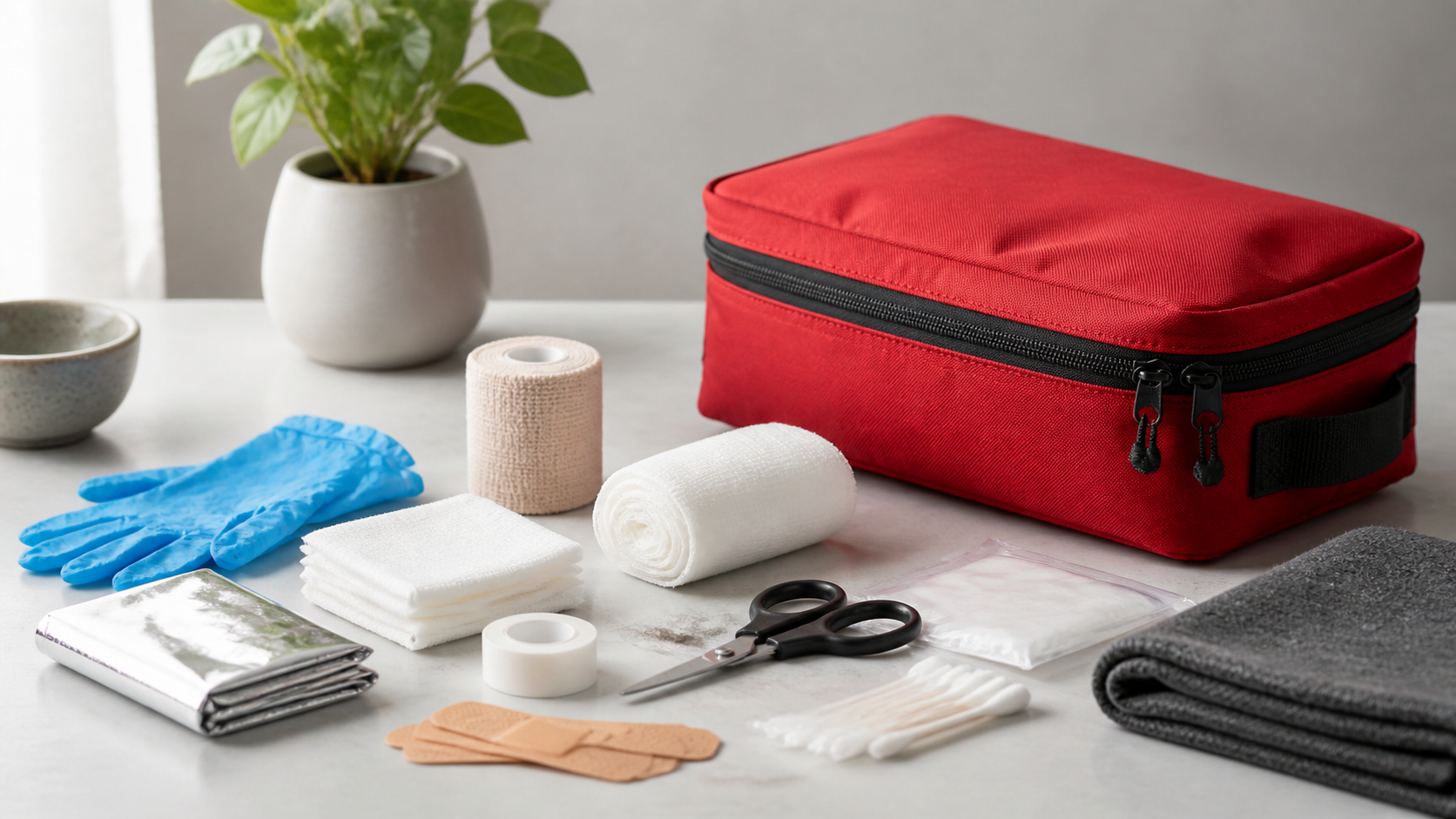
Quick answer: refill a first aid kit by auditing it against a written inventory, not by buying the largest “piece count” bundle. Replace anything used, expired, unsealed, wet, heat-damaged, illegible or unsuitable for the people and setting. Check dressing sizes, glove material, medication instructions, device batteries and emergency information. Record the audit date and schedule the next review.
Affiliate disclosure: First Aid Kit Spot may earn a commission from qualifying purchases made through clearly marked Amazon links. We have not hands-on tested the refill products returned by the retailer search in this article. This guide compares inventory and packaging criteria, not brands.
A restocked pouch does not replace first aid training or emergency care. Use supplies only within your training and product instructions. Call the local emergency number for severe bleeding, breathing difficulty, chest pain, stroke signs, major burns, serious allergic reaction, loss of consciousness, significant trauma or any situation that may be life-threatening.
Table of Contents
- Why kits become unreliable
- Set the correct inventory standard
- Refill checklist by category
- Expiration, sterility and damage
- Medication and ointment rules
- Home, car, workplace and travel differences
- How to compare refill packs
- Build an audit record
- A 20-minute refill process
- Buying checklist
- Frequently asked questions
- Sources and editorial method
Why kits become unreliable
First aid kits usually fail quietly. The case remains on a shelf, so everyone assumes it is ready. Inside, commonly used bandages are gone, glove packets have split, adhesive has dried, liquid has leaked, batteries are dead, or the emergency contact belongs to a former employee.
The American Red Cross recommends checking kits regularly, replacing used or out-of-date contents, and including personal items, medications and emergency phone numbers as appropriate.
Common failure paths include:
- One injury uses most of one dressing size.
- Someone takes pain medication without recording it.
- Vehicle heat damages adhesive, gloves or medicine.
- Moisture enters an outdoor pouch.
- A mixed refill bundle adds many tiny bandages but omits gauze and tape.
- Supplies expire at different times.
- A manufacturer recalls or changes an item.
- Children grow and dosing or sizing needs change.
- A workplace headcount or hazard changes.
- Instructions become outdated or unreadable.
A reliable kit is a maintained system: defined contents, known location, trained users, documented inspection and a replenishment path.
Set the correct inventory standard
Start with people and setting
Record:
- Number and ages of intended users.
- Known allergies and personal medical plans.
- Location: home, vehicle, workplace, boat, sport, travel or remote activity.
- Expected response time for professional help.
- Environmental exposure: heat, cold, moisture, dust or vibration.
- Applicable workplace or local rules.
- User training.
Do not publish or display private medical information where unauthorized people can see it.
Use a recognized baseline
The Red Cross family-of-four list includes absorbent dressings, assorted adhesive bandages, cloth tape, ointment and wipe packets, emergency blanket, breathing barrier, instant cold compress, nonlatex gloves, roller and triangular bandages, sterile gauze, thermometer, tweezers and emergency instructions.
That is a starting point, not a universal legal standard. Workplace kits may be governed by occupational rules and hazard assessment. Remote or wilderness use requires different training and supplies. A home kit may need personal medical items.
Create a master inventory
Use columns for:
| Item | Target quantity | Current quantity | Earliest expiry | Condition | Refill action |
|---|---|---|---|---|---|
| Adhesive bandages, small | |||||
| Adhesive bandages, large | |||||
| Sterile gauze, 3 × 3 in | |||||
| Sterile gauze, 4 × 4 in | |||||
| Nonlatex gloves | |||||
| Medical tape |
Keep the master outside sealed sterile packages. A laminated card or secure digital copy works if it can be updated.
Refill checklist by category
Adhesive bandages
Check:
- Useful range of sizes and shapes.
- Individually sealed wrappers.
- Adhesive condition.
- Package integrity and readable lot/date information.
- Material or adhesive sensitivity where known.
Replace swollen, open, stained or brittle wrappers. Do not count loose bandages as sterile.
Sterile dressings and gauze
Include multiple sizes appropriate to the inventory standard. Inspect wrapper seals and corners. A sterile pad with a punctured package is no longer a sterile packaged item even if it looks clean.
Keep larger absorbent dressings visible and accessible. Refill packs often emphasize small gauze because it is cheaper and compact.
Tape and wraps
Medical tape can dry, fuse, fray or lose adhesion. Check the roll edge and packaging without contaminating it. Elastic wraps may lose stretch or become soiled. Follow cleaning or replacement instructions.
Do not use an elastic wrap too tightly. Training and circulation checks matter.
Gloves
Use nonlatex gloves where possible to reduce latex-allergy concerns. Stock sizes that intended responders can actually wear. Count pairs, not individual gloves.
Replace packets that are brittle, sticky, torn or heat damaged. Vehicle storage can shorten practical life even before a printed date.
Cleaning and antiseptic supplies
Inspect wipe and solution packets for leaks, evaporation, swelling and date. Keep item identity readable. Do not mix unmarked liquids into the pouch.
First aid cleaning does not replace medical assessment for deep, contaminated, bite or puncture wounds.
Barrier devices
Check the CPR barrier model, one-way valve, package seal, instructions and user training. Replace after use or when the manufacturer directs. Do not assume every face shield provides the same barrier.
Cold packs and emergency blanket
Instant cold packs can leak or activate accidentally. Inspect the outer package and chemical pack. Emergency blankets can tear at folds; keep them sealed until needed.
Apply cold according to instructions and protect skin. A chemical pack is not a substitute for assessment of significant injury.
Tools
Inspect tweezers, scissors, safety pins, thermometer, light and any other permitted tools. Check rust, cleanliness, batteries, calibration guidance and storage covers. Remove tools users are not trained or authorized to use.
Instructions and contacts
Replace water-damaged or outdated first aid guides. Update:
- Local emergency number.
- Poison-control contact where applicable.
- Household or workplace contacts.
- Address and access instructions.
- Allergy or medical plan under appropriate privacy controls.
- Inspection owner.
Waste and documentation
Add small waste bags, note paper and pencil if included in the plan. A record of item use makes restocking faster, but do not delay care to complete paperwork.
Expiration, sterility and damage
Printed expiration date
Follow the manufacturer’s date and storage instructions. Do not extend dates based on appearance. Sterile package, adhesive, chemical and medication performance may decline without visible change.
No visible expiration date
Look for lot code, manufacture date and manufacturer guidance. If the item cannot be identified or its history is unknown, replace it with traceable stock.
Sterile versus clean
“Sterile” applies while validated packaging remains intact and within specified conditions. A loose pad transferred from a damaged wrapper is not restored by putting it in a plastic bag.
Heat and cold damage
Vehicles, garages and outdoor sheds can exceed storage ranges. Replace supplies exposed outside labeled limits when manufacturer guidance requires it. Do not assume a future printed date overrides improper storage.
Moisture
Water marks, mold, rust, delamination, swollen packets and illegible labels justify replacement. Drying a wrapper does not restore its sterile barrier.
Adhesive failure
Test only a non-sterile sample from the same lot if needed; do not open emergency inventory just to test it. Replace products known to have lost adhesion.
Recalls
Keep brand, model, lot and purchase information for devices and medications where practical. Check official recall sources when notified or when an item appears defective.
Medication and ointment rules
Medication management requires more care than replacing gauze.
Keep labels and instructions
Do not place loose pills in an unlabeled compartment. Preserve drug name, strength, dosing directions, warnings, lot and expiration. Child-resistant storage may be necessary.
Respect individual suitability
Over-the-counter does not mean safe for everyone. Allergies, pregnancy, age, other medicines, kidney or liver conditions, bleeding risk and other factors can change suitability. A pharmacist or clinician can help plan household items.
Separate personal prescriptions
Personal emergency medication should be clearly associated with the person and their clinician-directed plan, while protected from unauthorized access. Monitor expiration and temperature. Train designated people where allowed.
Do not refill from a bulk bottle into anonymous packets
Repackaging can remove identification, warnings and stability controls. Use manufacturer-sealed units suitable for the setting or follow professional pharmacy guidance.
Ointment and cream packets
Check leakage, separation, date and label. Replace after opening. Do not apply topical products to serious burns, deep wounds or allergic reactions without appropriate guidance.
Home, car, workplace and travel differences
Home
A home kit can be larger and organized near emergency contacts. Keep it locked or inaccessible to young children while known to responsible adults. Include household-specific medical plans.
Car
Temperature extremes, vibration and theft affect inventory. Inspect more often, and move heat-sensitive medication out of the vehicle. Separate first aid from roadside tools, flares and chemicals.
Workplace
The inventory must reflect workforce size, hazards, response arrangements and applicable occupational requirements. A consumer refill bundle may not satisfy the employer’s obligations. Assign inspection responsibility and document corrective actions.
Travel
Security, airline and destination rules affect scissors, liquids, aerosols, medicine and sharps. Our carry-on travel kit checklist covers those checks. Restock immediately after each trip.
Camping and remote activity
Remoteness and evacuation time change training and supply needs. The Red Cross camping checklist recommends customization by activity, group, duration and location and regular expiration checks.
How to compare refill packs
Count categories, not pieces
Build a gap list first. Then compare only packs that close those gaps. A 300-piece bundle may be a poor value if 200 pieces are the wrong bandage size.
Require exact quantities and sizes
Reject listings that say “gauze included” without dimensions and count. Check whether gloves are listed as pairs or pieces. Confirm tape length and width.
Check dates before opening everything
Ask the seller about minimum remaining shelf life, while recognizing that inventory changes. On arrival, inspect dates before mixing new stock into the kit. Return unsuitable short-dated goods according to policy.
Verify manufacturer and model
Medical supplies should be traceable. Check manufacturer identity, packaging consistency, instructions and seller. Avoid unmarked products.
Beware compliance claims
“OSHA,” “FDA,” “ANSI” or “medical grade” on a listing is not enough. Identify the exact standard, edition, product classification and setting. Employers should obtain competent compliance advice.
Compare per-useful-item cost
Divide price by the number of items on your actual refill list, not total pieces. Include shipping, wasted extras, storage space and expected expiry.
Prefer modular replenishment
Buying dressings, gloves and wipes by needed category often produces a more balanced kit than a universal bundle. Modular stock also makes lot and date rotation easier.
Inspect seller and packaging consistency
Marketplace inventory can come from different sellers even when the product page looks the same. Confirm the seller, manufacturer, model or catalog number and package quantity at checkout and again on arrival. Compare the physical label with the manufacturer’s current documentation where available. Misspellings, missing lot information, inconsistent branding, damaged seals or instructions that do not match the item are reasons to quarantine the supply and contact the manufacturer or seller.
Do not mix questionable stock into the kit while a refund or authenticity question is pending. Mark it clearly so another person does not use it by mistake. If a medical device appears counterfeit, defective or unsafe, follow the relevant regulator and manufacturer reporting process.
Avoid one-date replenishment cliffs
Replacing the entire kit from one short-dated bundle can make most contents expire together. When practical, buy only the quantities you can use or rotate and record the earliest date by category. Staggered, traceable replenishment reduces the chance that one future audit turns into an expensive emergency order.
Keep unopened reserve stock in its labeled storage conditions, separate from the active kit, and record where it is. A reserve box is useful only if responsible users can find it and its dates are inspected too.
Build an audit record
Use one row per kit:
| Field | Record |
|---|---|
| Kit ID and location | |
| Intended users/setting | |
| Inventory standard | |
| Audit date | |
| Auditor | |
| Items used | |
| Items expired/damaged | |
| Earliest remaining expiry | |
| Refill order | |
| Corrective action complete | |
| Next audit |
For privacy, do not include unnecessary diagnoses or medication details in a publicly accessible workplace log.
Choose inspection triggers
Audit:
- On a fixed schedule.
- Immediately after use.
- Before and after travel or seasonal activity.
- After extreme heat, cold, moisture or contamination.
- When users, hazards or location change.
- After a product recall or supplier change.
Rotate stock
Place earlier-expiring items where they will be used first when clinically and operationally appropriate. Do not move items between kits without updating both inventories.
A 20-minute refill process
Minutes 0–3: secure the area
Choose a clean, dry surface away from children, food and pets. Wash hands. Bring the master inventory, waste container and replacement stock.
Minutes 3–8: empty by category
Keep sterile packages closed. Group dressings, barriers, tools, medicines and information. Count against target quantities.
Minutes 8–12: inspect
Read dates and labels. Remove used, damaged, wet, heat-exposed, recalled or unsuitable items. Record the reason.
Minutes 12–16: refill and organize
Add traceable replacement stock. Put high-priority barrier and bleeding-control supplies where they are visible. Keep personal medicines clearly separated and secured.
Minutes 16–18: test devices
Follow instructions for thermometer, light or other reusable device. Do not open sterile single-use products.
Minutes 18–20: close the loop
Update the inventory, earliest expiry and next audit date. Return the kit to its labeled location. Notify responsible users of material changes.
If the audit exposes major gaps or unknown contents, leave the kit marked “inspection incomplete” until corrected rather than creating false confidence.
Buying checklist
- I have a written gap list and target quantities.
- The pack states exact item sizes and counts.
- Gloves are nonlatex and listed by pairs.
- Sterile packages are individually sealed.
- Manufacturer and product identity are traceable.
- Remaining shelf life is acceptable on arrival.
- Storage conditions fit the kit location.
- Medicines remain labeled and suitable for intended users.
- No piece-count padding is driving the purchase.
- Regulatory or compliance claims were verified specifically.
- The seller offers practical return or defect terms.
- I can replenish high-use categories separately next time.
After completing the gap list, you can compare current first aid refill inventories on Amazon. This is a retailer search, not a tested recommendation or compliance guarantee. Verify sizes, quantities, labels, dates, manufacturer and seller.
Use our complete first aid kit checklist to set the baseline and home kit guide to review household organization.
Frequently asked questions
How often should a first aid kit be checked?
Check on a regular schedule and immediately after every use, exposure event or material change. Frequency depends on setting and applicable rules. Record the next audit date.
Can I use expired bandages?
Follow the manufacturer’s date and package instructions. Adhesive and sterile-barrier performance may decline without visible damage. Replace expired inventory rather than assuming appearance proves performance.
What gets used most often?
Small and medium adhesive bandages, gauze, wipes, gloves and tape are common refill categories, but actual use varies. Your kit’s use log is a better purchasing guide than a universal ranking.
Are refill packs cheaper than individual boxes?
Sometimes. Calculate cost per item you actually need. Large bundles can waste money when sizes are wrong or shelf life expires before use.
Should medicine be included?
Only with appropriate labels, storage, user suitability and management. Obtain pharmacist or clinician advice where needed. Workplace medication policies may differ from home use.
How do I know if sterile packaging is damaged?
Look for tears, punctures, open seams, moisture, stains, swelling, delamination or illegible labels. When integrity is uncertain, replace the item.
Can I refill a workplace kit myself?
Only within the employer’s assigned process and applicable standards. Workplace hazards, headcount and legal duties may require competent assessment and documentation.
What should I do with expired medicine?
Use official medicine take-back or disposal guidance in your area. Do not flush or discard medicine casually, and keep it secure until disposal.
Sources and editorial method
This guide was prepared by the First Aid Kit Spot Editorial Team. We used Red Cross and federal preparedness sources, separated consumer maintenance from workplace compliance, and did not claim hands-on testing or approval for unverified refill packs.
Sources:
- American Red Cross: anatomy of a first aid kit
- American Red Cross: camping first aid kit checklist
- American Red Cross: emergency supply checklist
- Ready.gov: emergency supply kit checklist
Last reviewed: August 18, 2026. Product dates, recalls, standards and official guidance can change; verify replacement stock when purchased and at every audit.