First Aid for Head Injuries: When to Worry (2026)
By Sarah Mitchell, Emergency Medicine Specialist • Published 6/20/2026

First Aid for Head Injuries: When to Worry
Most minor head injuries heal with rest and basic first aid. However, some head injuries can cause concussion or life-threatening bleeding inside the skull. This guide covers the red flag symptoms to watch for, the correct first aid steps to take, how to monitor someone after a head injury, and exactly when to call for an ambulance.
Table of Contents
- Understanding Head Injuries: Types and Severity
- Red Flag Symptoms: When to Act Fast
- Step-by-Step First Aid for Head Injuries
- Monitoring After a Head Injury: The 24-Hour Rule
- When to Call Emergency Services vs. Urgent Care
- Head Injuries in Children: Special Considerations
- Preventing Head Injuries at Home and Outdoors
- Frequently Asked Questions
- Sources & Methodology
Understanding Head Injuries: Types and Severity {#understanding-head-injuries-types-and-severity}
Not every head injury is the same. Medical professionals classify head injuries into several categories based on how they occur and how severe they are. Understanding the types helps you assess what you are dealing with and respond appropriately.
Closed Head Injuries
A closed head injury occurs when the head experiences a blunt impact but the skull remains intact. These are the most common type of head injury and include bumps, concussions, and contusions. Even without a visible break in the skin, the brain can be injured by the force of impact. Shaking an infant violently, for example, can cause a closed head injury without any external signs of trauma. This is why monitoring behaviour changes after any head impact is so important, even if there is no visible wound. The brain floats within the skull surrounded by cerebrospinal fluid that acts as a cushion — but a strong enough impact can overwhelm this protection, causing the brain to collide with the inside of the skull and sustain damage even when the scalp shows nothing more than a small bump.
Open (Penetrating) Head Injuries
An open head injury involves a break in the skull, sometimes with an object penetrating the brain tissue. These injuries are immediately obvious and always require emergency medical care. Do not attempt to remove any object lodged in the head. Keep the person still, control any bleeding around the wound by applying gauze pads on either side of the object (never directly on top of it), and call emergency services immediately. Open head injuries carry a high risk of infection in addition to direct brain damage, which is why intravenous antibiotics are often given in the emergency department as part of initial treatment.
Concussions
A concussion is a type of traumatic brain injury caused by a blow, bump, or jolt to the head that disrupts normal brain function. According to the Centers for Disease Control and Prevention (CDC), concussions are the most common form of traumatic brain injury in the United States, with millions occurring each year across all age groups. Symptoms can range from mild to severe and do not always involve loss of consciousness. What makes concussions particularly tricky is that symptoms may not appear for hours or even days after the initial injury. A person who appears fine immediately after a fall could develop serious symptoms by the following morning.
Contusions
A cerebral contusion is a bruise on the brain tissue itself. Like a bruise on your skin, this involves bleeding and swelling in a localised area of the brain. Contusions often occur at the site of impact but can also develop on the opposite side of the brain due to the brain slamming against the inside of the skull (a coup-contrecoup injury). Severe contusions may require surgical intervention to relieve pressure on the brain. CT scans and MRI imaging are the tools neurologists use to assess contusions and determine whether surgery is necessary.
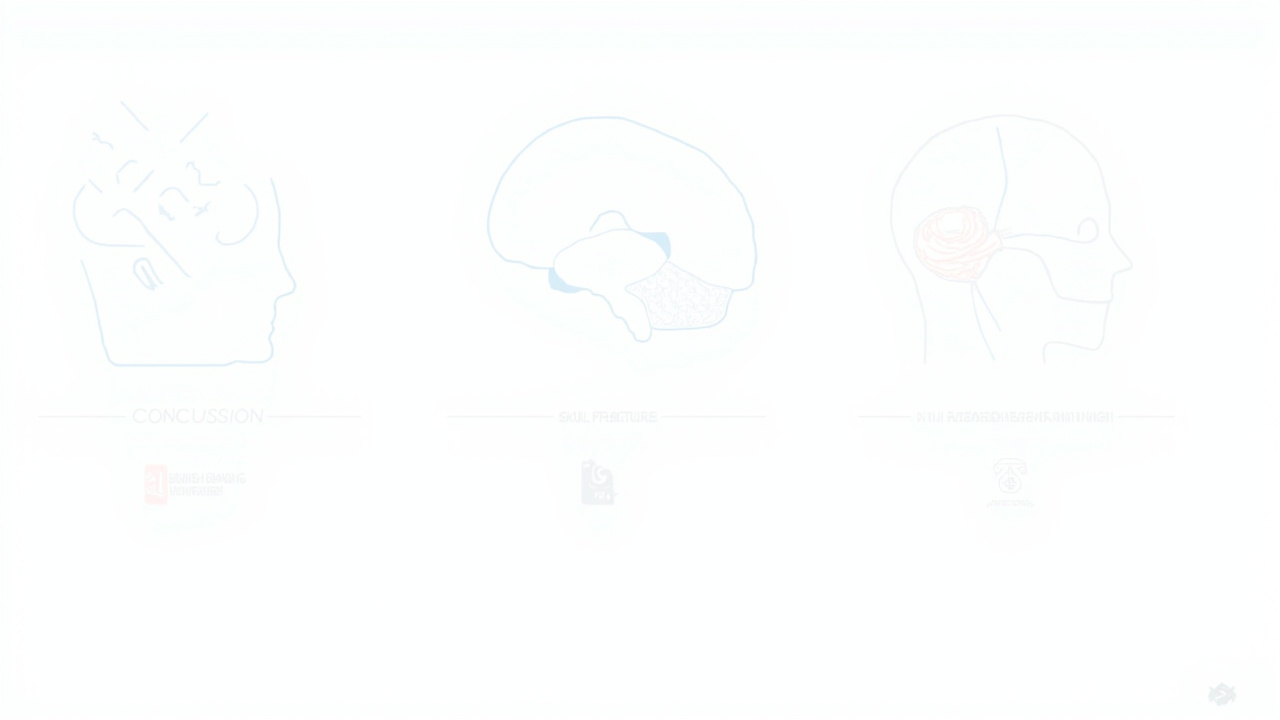
Understanding the type of head injury helps determine the appropriate first aid response and whether emergency care is needed.
Red Flag Symptoms: When to Act Fast {#red-flag-symptoms-when-to-act-fast}
Some symptoms following a head injury indicate that the brain may be under serious strain or bleeding may be occurring inside the skull. These red flag symptoms require immediate medical attention. Do not wait to see if they improve on their own.
Immediate Emergency Signs
The following symptoms after any head injury should trigger a call to emergency services right away:
- Loss of consciousness, even briefly — even 30 seconds of unconsciousness is a significant sign that warrants emergency evaluation
- Seizures or convulsions — uncontrolled shaking or jerking movements indicate serious neurological disturbance
- Repeated vomiting — more than once or twice suggests increased intracranial pressure
- Clear fluid or blood leaking from the nose or ears — this may indicate a skull fracture, particularly a basal skull fracture
- One pupil larger than the other, or pupils that do not react to light — this is called anisocoria and suggests pressure on the nerves controlling the pupils
- Inability to recognise people or places, confusion, or extreme agitation — these are signs of altered mental status
- Slurred speech or difficulty forming words — this can indicate damage to the brain's language centres
- Weakness or numbness in arms or legs, or inability to move one side of the body — this suggests damage to the motor cortex or spinal cord
- Severe and worsening headache that does not respond to standard pain relief — this is one of the most commonly reported symptoms in patients with intracranial bleeding
- Bleeding from the scalp that does not stop after 10–15 minutes of direct pressure
Subtle Warning Signs to Monitor
Even without these dramatic symptoms, watch for these additional warning signs that should prompt a medical review within 24 hours:
- Difficulty concentrating or remembering new information
- Sensitivity to light and noise
- Balance problems, dizziness, or feeling unsteady on feet
- Changes in sleep patterns — sleeping much more or much less than usual
- Unexplained mood changes such as increased irritability, anxiety, or sadness
- Ringing in the ears (tinnitus) that does not resolve
- Blurred vision or seeing double
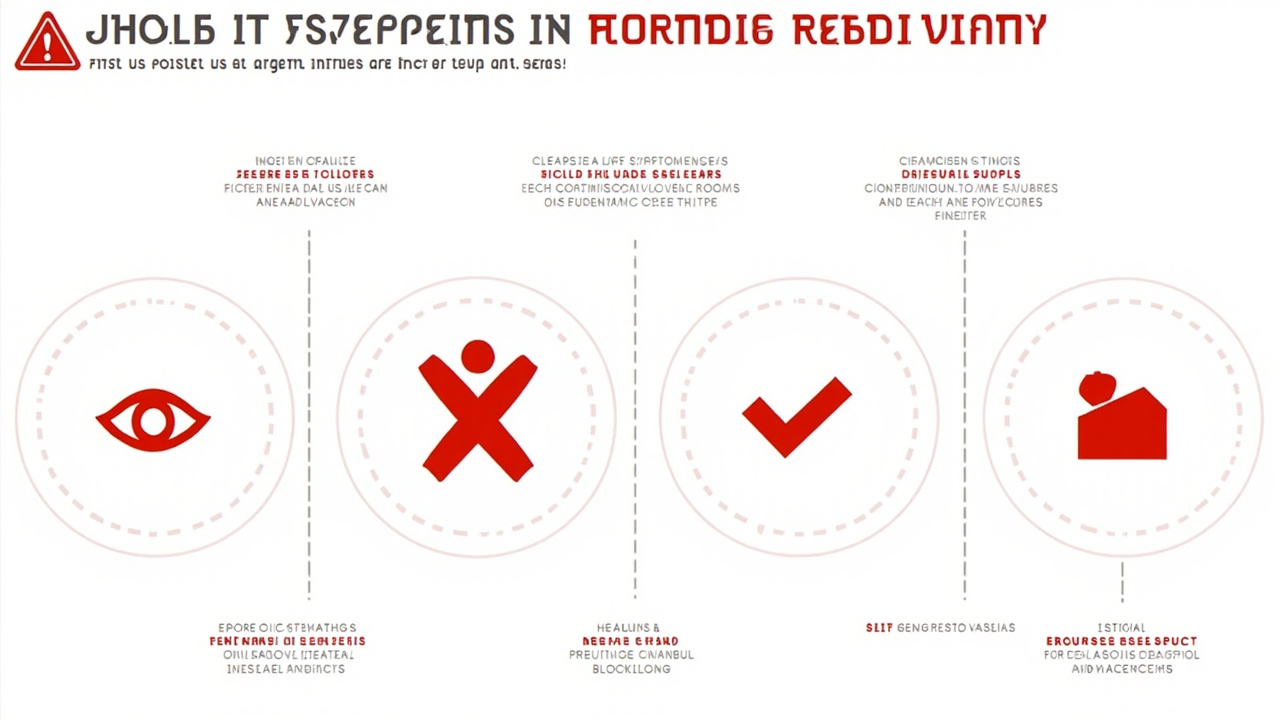
If any of these red flag symptoms appear after a head injury, call emergency services immediately. Do not drive the person to hospital yourself if these signs are present.
Step-by-Step First Aid for Head Injuries {#step-by-step-first-aid-for-head-injuries}
Following the correct first aid steps after a head injury can prevent further damage and help the person recover more quickly. These steps apply to adults and children alike, with some modifications for infants noted separately.
Step 1: Do Not Move the Person (If Spinal Injury is Suspected)
If the head injury resulted from a fall from height, a motor vehicle accident, or any high-impact event, there is a possibility of a spinal injury. Do not move the person unless they are in immediate danger (such as from fire or further collapse). If you must move them — for example, to perform CPR — stabilise the head and neck in line with the body and move them as a single unit. The NHS recommends calling 111 for any head injury where you are unsure, and 999 if there is any loss of consciousness, vomiting, or seizure.
Step 2: Apply Cold Therapy to Reduce Swelling
For a minor bump with no red flag symptoms, apply a cold compress to the affected area as soon as possible. Wrap an ice pack or bag of frozen peas in a clean cloth — never apply ice directly to the skin, as this can cause ice burn. Apply for 20 minutes on, then 20 minutes off. This constricts blood vessels, reduces swelling, and can relieve pain. A disposable instant cold pack stored in a home first aid kit is an excellent option when no freezer ice is readily available.

A cold compress applied within minutes of a head injury helps reduce swelling and minimises bruising on the scalp.
Step 3: Control Any Bleeding
Scalp wounds can bleed significantly because the scalp has a rich blood supply. Apply firm direct pressure with a clean cloth or sterile gauze pad for 10–15 minutes without lifting to check. Most scalp wounds will stop bleeding with consistent pressure. If the wound is deep, gaping, or longer than a centimetre, it may require stitches at an urgent care centre or emergency department. For a deep wound with a visible skull fracture, do not apply pressure to the depressed area — call emergency services.
Step 4: Assess and Monitor Responsiveness
Once bleeding is controlled, check the person's responsiveness. Ask them their name, what day it is, and what happened. A person who is fully alert and oriented has a lower risk of serious brain injury than someone who is confused or drowsy. Note any changes from their normal behaviour and continue to reassess every few minutes. The Glasgow Coma Scale (GCS) is a tool used by paramedics and emergency doctors to objectively measure consciousness — it scores eye opening, verbal response, and motor response out of a total of 15. A GCS of 15 means the person is fully alert; anything below 8 indicates severe brain injury requiring emergency intervention.
Step 5: Rest, But Do Not Leave Them Alone
The person should rest in a comfortable position, ideally lying down with their head slightly elevated. Avoid giving aspirin or ibuprofen in the first 24–48 hours, as these can increase bleeding risk. Paracetamol is generally considered safer for managing headache pain after a minor head injury. Do not leave the person alone for at least the first 24 hours — wake them every 2–4 hours during the first night to check they are still arousable and can answer basic questions coherently.
Monitoring After a Head Injury: The 24-Hour Rule {#monitoring-after-a-head-injury-the-24-hour-rule}
The first 24 hours after a head injury are the most critical for monitoring. Symptoms of a concussion or more serious brain injury often develop gradually. Establishing a monitoring routine can catch problems early.
What to Check and How Often
During the first 24 hours after a head injury, you should:
- Check every 2–4 hours during sleep: Gently wake the person and ask them a simple question or get them to open their eyes. They should wake easily and be able to speak coherently. If they are difficult to rouse or cannot be awakened, call emergency services immediately.
- Monitor for worsening symptoms: Keep a written log of symptoms and their severity. Headache that gets worse over time is a significant warning sign of intracranial bleeding.
- Assess memory and concentration: Ask the same simple questions each time (their name, where they are, what happened) to check consistency of response.
- Watch for balance and coordination issues: Even if they seemed fine initially, new clumsiness, stumbling, or weakness developing later is a red flag.
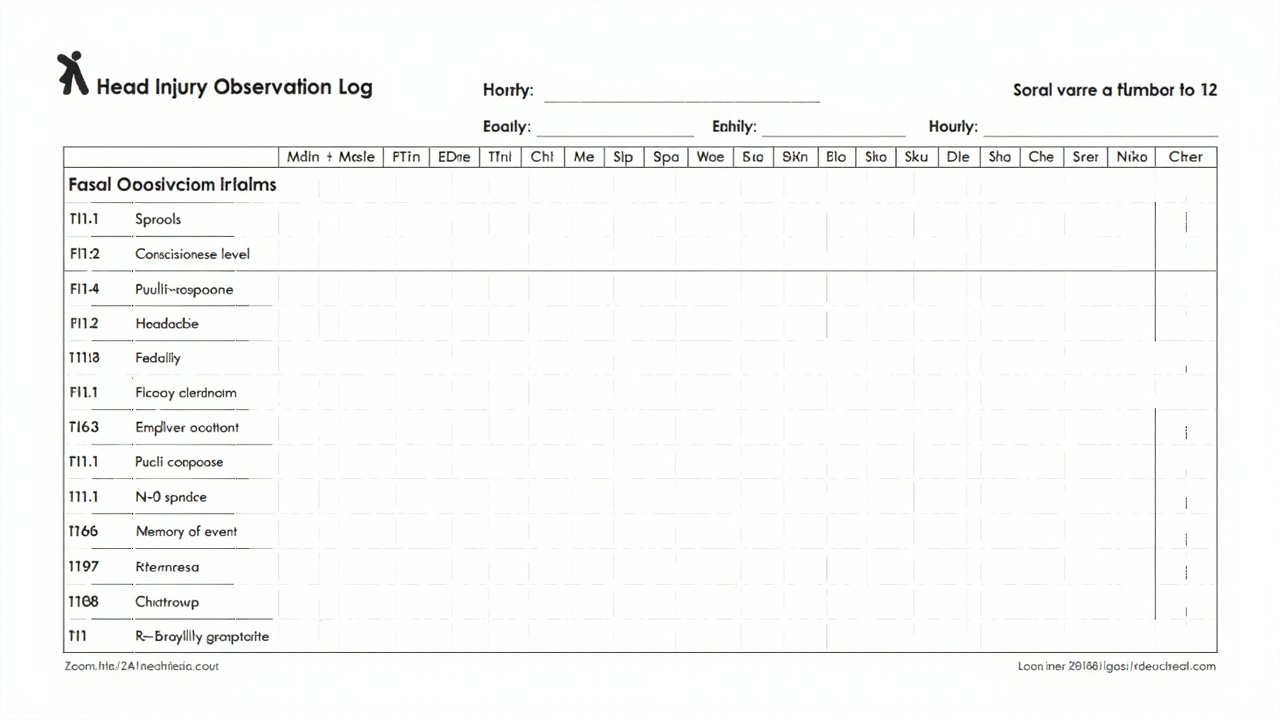
A written symptom log during the 24 hours after a head injury helps medical professionals understand the progression of symptoms.
Activities to Avoid During Recovery
While monitoring for serious symptoms, also avoid activities that could worsen a concussion or cause additional injury:
- Avoid screens and reading if they worsen headache or cause eye strain
- No physical exercise, sport, or strenuous activity until cleared by a doctor
- Avoid alcohol — it slows brain recovery and can mask worsening symptoms
- Do not take sleeping pills or sedatives unless specifically prescribed
- Avoid driving until cleared by a medical professional, as reaction times may be impaired
Post-Concussion Syndrome
In some cases, concussion symptoms persist for weeks or months after the initial injury. This is known as post-concussion syndrome. Symptoms can include ongoing headaches, difficulty concentrating, dizziness, anxiety, and disrupted sleep. If symptoms persist beyond two weeks, a review with a doctor who specialises in concussion management is recommended. The Mayo Clinic notes that rest is the cornerstone of treatment, with a gradual return to normal activities as symptoms improve.
When to Call Emergency Services vs. Urgent Care {#when-to-call-emergency-services-vs-urgent-care}
One of the most common questions after a head injury is whether to go to the emergency department, urgent care, or manage at home. Here is a practical decision guide.
| Situation | Action |
|---|---|
| Loss of consciousness, seizure, repeated vomiting, one pupil larger than other, weakness, confusion, skull fracture, open wound | Call 000 / 911 immediately |
| No red flags but visible scalp wound needing stitches | Visit urgent care or emergency department |
| Infant under 12 months with any head impact | See a doctor — do not manage at home |
| Persistent headache, dizziness, or nausea lasting more than a few hours | Visit urgent care or emergency department |
| Small bump, no symptoms, behaving normally | Manage at home with monitoring |
| Confusion developing hours after injury | Return to emergency department — symptoms may be progressing |
A useful tool used by emergency physicians is the Canadian CT Head Rule, which helps determine when a CT scan of the brain is needed. According to this clinical rule, a CT scan is required if the patient is 65 years or older, had a dangerous mechanism of injury (fall from height, motor vehicle accident), or shows signs of dangerous bleeding such as vomiting more than once or experiencing a seizure. For any doubt about the severity of a head injury, the safest course of action is always to seek emergency medical assessment.
Head Injuries in Children: Special Considerations {#head-injuries-in-children-special-considerations}
Children are particularly prone to head injuries — from learning to walk, to playground falls, to sporting knocks. Assessing head injuries in children requires additional care and sometimes different thresholds for seeking medical help.
Infants and Toddlers (Under 2 Years)
Babies have thin skulls and rapidly developing brains, making them more vulnerable to injury from relatively minor impacts. A fall from a change table, bed, or high chair is common and often alarming for parents. Seek medical attention if the infant:
- Has a visible dent or soft spot on the skull
- Will not stop crying or cannot be consoled
- Is excessively drowsy or difficult to arouse
- Has vomited more than once
- Has any fit, convulsion, or abnormal movement
- Has fluid or blood coming from the nose or ears
- Has a bruise behind the ear (Battle's sign) or around the eyes (raccoon eyes)
It is worth noting that infants cannot tell you they have a headache, so behavioural changes are often the only clue that something is wrong. Parents and caregivers should trust their instincts — if a child seems off in any way after a head injury, seeking medical review is the right call.
School-Age Children and Teenagers
School-age children frequently sustain head injuries through sport, playground activities, and cycling. Concussion is a real risk in contact sports, and the developing brain is more vulnerable to the effects of concussion than an adult brain. According to headsafe, a leading concussion education organisation, children and adolescents who sustain a concussion should not return to sport or physical activity until they have been symptom-free for a minimum period and have completed a graded return-to-play protocol under medical supervision. Returning to play too early significantly increases the risk of second-impact syndrome, a rare but potentially fatal condition where a second concussion occurs before the first has fully healed.
Key warning signs in older children include:
- Dazed look or confusion that does not clear quickly
- Changes in behaviour or personality (more irritable or tearful than usual)
- Difficulty with schoolwork that was previously easy
- Changes in sleep patterns or difficulty waking in the morning
- Sensitivity to noise or light
The Importance of Rest After Paediatric Concussion
Research published in the British Journal of Sports Medicine found that strict physical and cognitive rest in the acute phase (first 24–48 hours) after paediatric concussion leads to faster symptom resolution. Cognitive rest means limiting schoolwork, screen time, and any mentally demanding activities. Parents should communicate with the child's school about academic accommodations during recovery, which may include reduced workload, extra time for tests, and permission to take breaks in a quiet room.

Children who cannot yet verbalise symptoms require careful observation of behaviour, appetite, and sleeping patterns after any head injury.
Preventing Head Injuries at Home and Outdoors {#preventing-head-injuries-at-home-and-outdoors}
While knowing first aid for head injuries is essential, prevention is always preferable. A few practical measures can significantly reduce the risk of head injuries in the home and during outdoor activities.
Home Safety Measures
- Secure rugs and mats with non-slip backing or remove them from high-traffic areas to prevent trips and falls
- Install handrails on both sides of stairs and use safety gates at the top and bottom of stairs for homes with infants or elderly residents
- Use non-slip mats in bathrooms, particularly in the shower and near the toilet
- Keep floors clear of clutter, electrical cords, and toys that can cause trips
- Ensure adequate lighting throughout the home, especially on stairs and in hallways
- Pad sharp furniture edges if there are toddlers learning to walk or elderly residents at risk of falls
Outdoor and Sporting Safety
- Always wear a properly fitted helmet when cycling, skateboarding, rollerblading, or riding a horse — check that the helmet meets current safety standards (ASTM, CPSC, or equivalent in your country)
- Use age-appropriate safety equipment for children during sport, including helmets, mouthguards, and padding
- Ensure playground surfaces are soft (rubber mats, bark, or sand) beneath equipment that children could fall from
- Wear non-slip footwear on wet or uneven surfaces
- Supervise children closely on playground equipment and during activities with fall risk

A correctly fitted helmet reduces the risk of serious head injury during cycling and contact sports by up to 70 percent.
Workplace Head Injury Prevention
For those working in environments with head injury risk (construction, warehousing, manufacturing), OSHA regulations typically require hard hat use in areas where there is a risk of falling objects or impact hazards. Employers must provide appropriate personal protective equipment and ensure it is maintained and replaced when damaged.
Frequently Asked Questions {#frequently-asked-questions}
What should I do immediately after someone hits their head?
Stop and assess. Keep the person still and do not move them if you suspect a neck or spinal injury. Apply a cold compress to the bump for 20 minutes to reduce swelling. Monitor closely for any red flag symptoms such as loss of consciousness, confusion, vomiting, severe headache, or weakness. If any red flags appear, call emergency services immediately.
How do I know if a head injury is serious enough for an ambulance?
Call 000 (Australia) or 911 (US) if the person loses consciousness even briefly, has repeated vomiting, cannot recognize people or places, has seizures or convulsions, has one pupil larger than the other, is unable to use arms or legs, has slurred speech, or has a worsening or severe headache. When in doubt, always seek emergency medical care.
What are the signs of a concussion in adults?
Concussion symptoms include headache or feeling of pressure in the head, temporary loss of consciousness, confusion or feeling as if in a fog, nausea or vomiting, dizziness and balance problems, blurred or double vision, ringing in the ears, sensitivity to light or noise, slurred speech, delayed response to questions, and mood changes including irritability and sadness.
When should a child with a head injury see a doctor?
Children should see a doctor if they are an infant under 12 months with any head impact, lost consciousness, have a headache that worsens, are repeatedly vomiting, are difficult to arouse or cannot be consoled, have fluid or blood leaking from the nose or ears, cannot remember the injury, or show changes in behaviour such as increased fussiness or lethargy.
How long should someone be monitored after a head injury?
You should monitor someone closely for at least 24 hours after a head injury. During this time, check them every 2 to 4 hours during the first night to ensure they are arousable and oriented. Do not leave the person alone for the first 24 hours if they are experiencing concussion symptoms. Avoid screens, strenuous activity, and alcohol during recovery.
Sources & Methodology
This article was written using the following authoritative sources and is reviewed for accuracy against current first aid and medical guidelines:
- Centres for Disease Control and Prevention (CDC) — Heads Up: Preventing Concussions and Managing Mild Traumatic Brain Injury. https://www.cdc.gov/head-injury/brain_injury_research.html
- National Health Service (NHS) — Head Injury and Concussion: Assessment and Treatment. https://www.nhs.uk/conditions/head-injury/
- Mayo Clinic — Post-Concussion Syndrome: Symptoms, Causes, and Treatment. https://www.mayoclinic.org/diseases-conditions/post-concussion-syndrome/symptoms-causes/syc-20353321
- St John Ambulance Australia — First Aid for Head Injuries. https://www.stjohnvic.com.au/resources/first-aid-advice
- British Journal of Sports Medicine — Paediatric Concussion: Cognitive Rest and Graduated Return to Sport. https://www.bjsportsmedicine.com
- Canadian CT Head Rule — Clinical decision tool for CT scanning in minor head injury, validated in multiple emergency medicine settings.
- headsafe (Concussion Education) — Return to Play Protocol for Children and Adolescents. https://www.sportsinjurybulletin.net
Last updated: June 2026
Sarah Mitchell is an Emergency Medicine Specialist with over 15 years of clinical experience in emergency departments across Australia and the United Kingdom. She is a certified instructor with St John Ambulance and writes evidence-based first aid content to help everyday Australians respond effectively in medical emergencies. This article is for informational purposes only and is not a substitute for professional medical advice. Always seek qualified medical care for any head injury you are concerned about.
Internal Links
- Essential First Aid Kit Supplies Every Home Needs
- How to Perform CPR: A Complete First Aid Guide
- How to Treat Cuts and Wounds at Home
- First Aid for Burns: What to Do and What to Avoid
Cross-network reference: For related nerve pain and injury information, see sciaticaspot.com's guide to nerve pain after injury.